

9:11:52 AM | 4/11/2025

To build an integrated tax administration system that focuses on redesigning business processes, supporting maximum automation of work processing flows and placing people and businesses at the heart of service, the Tax Department recently hosted the workshop “Restructuring information technology systems to meet digital transformation requirements in tax administration” chaired by Deputy Director Mai Son and attended by representatives of regional tax subdepartments/offices, solution providers and independent consultants.
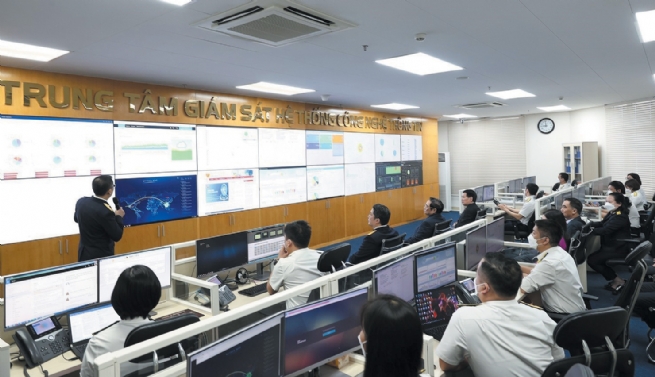
Adopting technology in tax management is important for enhancing efficiency, transparency, and reducing costs and time for both authorities and taxpayers
Digital transformation is required
Deputy Director Mai Son of the Tax Department said that Resolution 57-NQ/TW dated December 22, 2024 of the Politburo on the development of science, technology and innovation defines science and technology as the core driving force of socioeconomic development and national competitiveness enhancement in the context of globalization and the Fourth Industrial Revolution. Science and technology are not only a guarantee for sustainable development but also a key for Vietnam to make breakthroughs and narrow the gap with advanced countries.
Given strong evolutions of science and technology, information technology (IT) and digital transformation in the world and in Vietnam, the tax sector is affected by scientific and technological development like other sectors, he said.
“With the increased application and acceleration of digital transformation in tax administration, the tax sector proves that the change is not only a trend but also an urgent requirement to improve administration, enhance transparency and reduce costs and time for both tax authorities and taxpayers,” Son emphasized.
Clearly stating the two goals of the tax sector in redesigning tax administration processes and restructuring the IT system, he pointed out the necessity for change to meet digital transformation requirements in tax administration:
First, comprehensively modernizing tax administration in line with international practices and Vietnamese laws, focusing on a consistent, public, transparent and fair tax administration institution, applying risk management to tax administration, facilitating taxpayers to voluntarily comply with regulations, empowering tax authorities with sufficient capacity to effectively and efficiently manage taxes, providing an integrated, centralized information technology system to meet processing requirements, deliver information for tax administration, direction and operation of tax authorities and offer electronic services and digital services for taxpayers.
Second, developing an integrated, centralized tax administration system, ensuring people and businesses at the center, enhancing transparency and efficiency, accelerating administrative reform, improving taxpayer experiences through IT application in line with the Government’s approach to e-Government and digital transformation, ensuring connectivity, data integration and high security.
Tech solutions to promote digital transformation in the tax sector
Solution providers and tax authorities assessed the current status of the tax sector's IT system, exchanged, discussed and proposed specific solutions for redesigning business processes and restructuring the IT system to boost performance, reduce administrative procedures and create the best convenience for taxpayers based on international practices as well as applicability in Vietnam.
Emphasizing the importance of applying artificial intelligence (AI) in supporting taxpayers, an FPT representative analyzed: Applying AI Chatbot and Voicebot will help taxpayers fraught with difficulties in looking up information or sending questions through the electronic information portal. These systems can provide instant feedback and accurately support questions about tax policies, thereby improving user experiences.
AI technology helps the tax sector with reducing workload for tax officers, optimizing internal resources, providing quick and accurate feedback, helping taxpayers easily fulfill their tax obligations, and creating a database to support tax policy building and amendment.
Regarding the blockchain application in tax document reconciliation, which is also considered a breakthrough, an EY representative said that blockchain will help ensure transparency and accuracy in circulating documents among related parties such as the tax authority, the State Treasury and banks. This technology will help reduce processing resources, avoid errors in data reconciliation, increase the quality of public services and help people monitor tax payments.
This technology also ensures that information between related parties is transmitted instantly, thus shortening the time to process tax records.
Deputy Director Mai Son emphasized: "The valuable opinions and specific, practical recommendations will help the tax sector strongly foster digital transformation and restructure its IT system towards building a modern, transparent, effective tax system in line with the development trend of the digital age.”
By Le Hien, Vietnam Business Forum




 Vietnamese





