

9:17:50 AM | 7/2/2025

The One Commune One Product (OCOP) Program has significantly contributed to transforming production mindsets and promoting rural economic development in Soc Son district. In the new development phase, the district continues to diversify its OCOP products, with priority placed on depth, efficiency and sustainability.
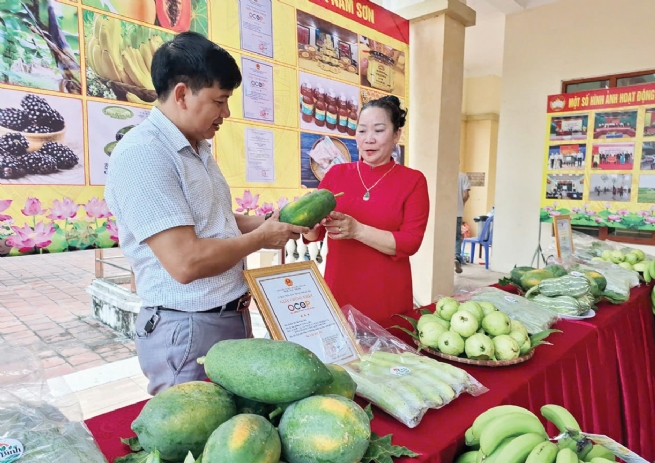
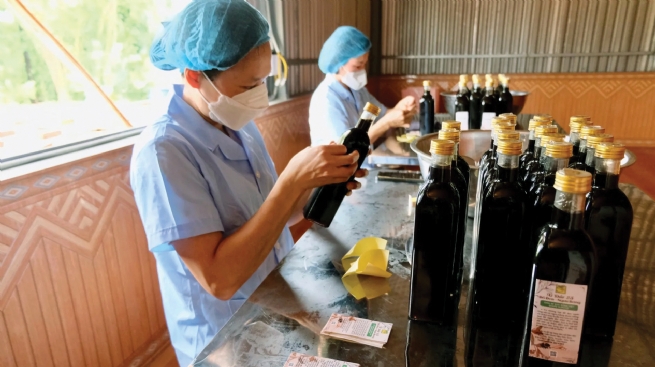
OCOP producers in the district have generated many jobs, offering a stable monthly income of VND 5-7 million per worker
Soc Son district currently has over 10,000 ha of agricultural land and more than 4,500 ha of forestland, 112 agricultural cooperatives operating in various sectors and forms, 3,447 industrial and handicraft production facilities, and two traditional craft villages. This represents significant potential for the district to diversify its agricultural and craft village products under the OCOP Program, hence bringing high economic value to local residents.
OCOP products in Soc Son are concentrated in two main strong sectors: food processing (accounting for 84.3%) and handicrafts and decorative items (15.7%). To leverage local potential and advantages to carry out the OCOP Program, since 2020, Soc Son district has worked with the Hanoi Coordination Office of the New Rural Development Program to train over 500 commune- and township-level officials, business owners, cooperatives and business households with OCOP development potential. Additionally, the district has supported consultation costs for compiling evidence documents, designing packaging, labeling products and implementing product marketing campaigns. OCOP producers have also been connected by the district to trade promotion programs and supported in product marketing on e-commerce platforms such as www.socsonshop and “SS.Shoping” fanpage. As a result, by the first quarter of 2024, the locality had developed 125 OCOP products and product groups rated 3- to 4-star quality. These products have affirmed their prestige, quality and brand recognition in the market. Some 4-star OCOP products reportedly have average annual revenue growth of 20%, with some soaring 50-70% in revenue, such as Van Quan rice paintings, Chin Trang Tan Dan pork rolls and Co Nu Phu Linh wildflower honey. Furthermore, OCOP producers in the district have created jobs for nearly 300 workers, with a stable monthly individual income of VND5-7 million.
Bac Son commune, with its hilly terrain, has a large tea-growing area. Dao Thi Quy, Director of Bac Son Agroforestry Cooperative, said the cooperative now manages over 100 ha of tea cultivated under safety standards. Supported by various agencies, the cooperative's tea quality has continuously improved. The product has been granted the collective trademark “Bac Son Safe Tea” and its “Bac Son Tea” has been rated as a 4-star OCOP product. This has laid the groundwork for Bac Son tea to gain market traction and compete with its rivals.
Nam Son commune is home to many other OCOP products. Nguyen Van Viet, Director of Nam Son Agricultural Services and General Trading Cooperative, said, lying at the foot of Tam Dao Mountain, the commune is endowed with favorable climate and soil for growing fruit trees. Cavendish bananas in Nam Son are not only sweet but also rich in flavor. Papayas are both sweet and visually appealing. With these advantages, since 2020, the cooperative chose two products - bananas and papayas - for OCOP assessment, which got 4-star and 3-star rankings, respectively. “We grow 65 banana plants on a sao (a land area measurement of 360 square meters). A bunch sold during Tet can fetch VND300,000-500,000. On regular days, the price is about VND6,000 per kg, with each bunch weighing 20-25kg, worth VND120,000-125,000. Since earning OCOP certification, the cooperative has received support from the city and the district for labeling and trade promotion, resulting in frequent undersupplies due to high demand,” he said.
According to Hoang Thi Ha, Head of Soc Son Economic Sub-department, seeing the effectiveness of OCOP Program, many local cooperatives and producers registered new products at the beginning of 2024. The sub-department provided guidance and training for 50 OCOP entities to shift their business mindset and adapt their development strategies to the new context. In particular, it supported Hoa Phat Medicinal Herbs Cooperative (Xuan Giang commune) and Soc Son Medicinal Herbs Conservation and Development Cooperative (Bac Son commune) in completing registration documents for high-quality OCOP products, including lotus-scented tea, herbal tea, floral-scented tea, Hakoda yellow flower tea, and 2S soy-burdock sauce. “Based on our evaluation, these products are proven to have natural origin, cultivated in Soc Son, and highly appreciated for quality by Japanese experts and Vietnamese research institutes. They show strong potential to become 5-star OCOP products under the Soc Son brand,” she added.
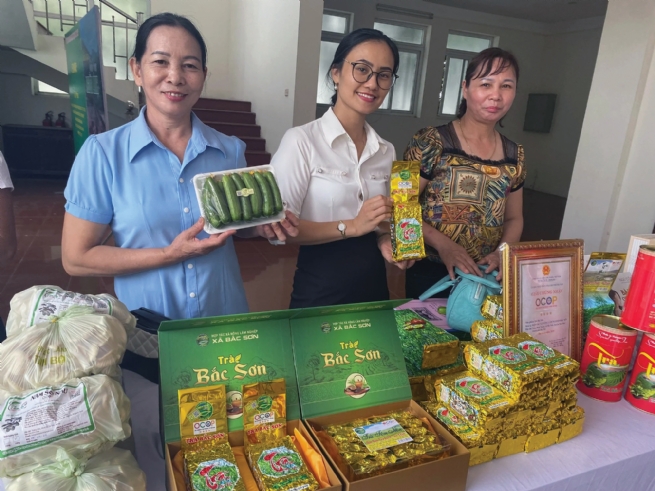
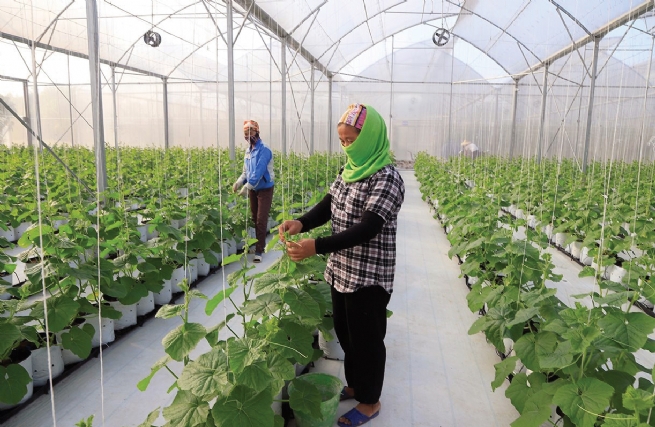
High-tech agriculture model in Soc Son district
Do Minh Tuan, Vice Chairman of the Soc Son People's Committee, stated that, to develop 200 OCOP products by 2025 and establish the Creative Design, Introduction, Promotion and Marketing Center for OCOP and Craft Village Products Tied to Tourism, Soc Son district is ramping up information and communications and engaging all levels of government, the community and OCOP producers in this effort. At the same time, the district is coordinating with the Hanoi Coordination Office of the New Rural Development Program and relevant municipal agencies to bring local OCOP products to trade fairs and promotional events to boost consumption. Soc Son is also working with the Hanoi Department of Industry and Trade to open more OCOP introduction and sales points, connect products with supermarket chains, convenience store systems and e-commerce platforms, and strengthen value chain linkages to enhance market competitiveness, thus creating momentum and engaging more participants in the district’s OCOP Program.
By Ngoc Dan, Vietnam Business Forum
| This special section is supported by Hanoi Coordination Office of the New Rural Development Program |
 April 24–25, 2026
 Kinh Bac Cultural Center, Bac Ninh Province


 Vietnamese





