

2:57:38 PM | 7/5/2025

In recent times, many entities participating in the One Commune One Product (OCOP) Program of Hanoi have exploited and promoted the potential and advantages of the locality to build many OCOP products. Thereby, many products from indigenous resources have contributed to enhancing the local brand, affirming their position in the domestic and foreign markets.
Existing potential and strengths
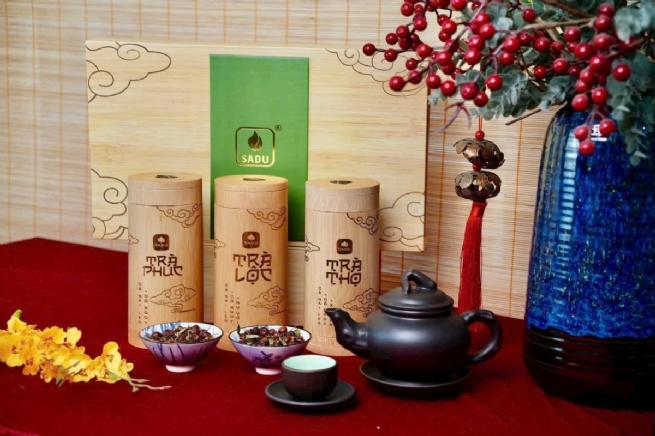
On June 26, the Ministry of Agriculture and Environment issued a Decision approving the results of the assessment and classification of products of the One Commune One Product (OCOP) Program at the national level, phase 1, 2025. According to the Ministry of Agriculture and Environment, in this phase, the whole country has 47 products recognized as achieving 5-star OCOP at the national level. Of which, Hanoi has 3 products: Phuc Tea, Loc Tea, Tho Tea of Thang Long High-Tech Agriculture Joint Stock Company (Dai Yen Commune, Chuong My District). Notably, this is one of the typical products in developing OCOP products from indigenous resources.
Sharing the story of the product's origin, Mr. Phan Trung Kien, member of the Board of Directors and General Director of Thang Long High-Tech Agriculture Joint Stock Company, said: The main ingredient of the teas is processed from the Solanum procumbens plant - a precious medicinal herb in traditional Vietnamese medicine. We have cleverly combined Solanum procumbens with Myrtle buds, Black xạ... which have high effects in health care. All medicinal herbs to produce teas are developed by the company according to a closed value chain from researching plant varieties, building standard raw material areas, to deep processing and developing brands in the direction of clean and sustainable agriculture.
With good product quality and a methodical and scientific approach, the company's Phuc Loc Tho Tea product line has passed the rounds of evaluation and classification of OCOP products at the district, city and central levels and has been officially recognized as a 5-star OCOP.
Not only with Phuc Loc Tho Tea from Chuong My district, many other localities in Hanoi are also making good use of typical resources to develop OCOP products with their own identity. In particular, Thanh Oai district stands out with Cu Da soy sauce, a product associated with the traditional craft of Cu Da ancient village; Thanh Tri district has Tam Hiep commune Ngau wine made from a long-standing folk secret; Ba Vi district develops products from cow's milk, goat's milk; hill chicken, honey, sweet potatoes... Each product is a cultural and historical story told through flavor and quality, creating a rich and sustainable OCOP ecosystem.
Approaching and affirming in the international market
In 2025, Hanoi strives to submit to the central government for evaluation and recognition of at least 30 more 5-star OCOP products. To overcome difficulties and create a breakthrough in developing 5-star OCOP products, the Hanoi Office of the New Rural Development Program Coordination organized a conference to advise, support and guide OCOP entities in building 5-star product profiles to meet the set criteria.
Deputy Head of the Office of the Hanoi Office of the New Rural Development Program Coordination Ngo Van Ngon said that, recognizing the great potential from indigenous values, the city has synchronously implemented many solutions to maximize benefits, including: Focusing on planning and developing endemic raw material areas such as fruit growing areas, medicinal herbs, glutinous rice, tea, etc. towards meeting VietGAP and organic standards. This is an important foundation for OCOP entities to produce high-quality, safe products for consumers. At the same time, the city pays special attention to supporting entities to build "product stories". This approach will help products carry the "breath" of regional culture and history, create a unique mark and easily touch consumers' emotions. At the same time, businesses and cooperatives are also guided to apply deep processing technology, improve packaging and professional labels to meet the strict requirements of domestic and foreign markets.
Developing OCOP products from indigenous resources is not only a process of producing and consuming goods but also a journey to preserve and spread folk knowledge and homeland identity. From familiar materials, through the skillful hands and dedication of farmers and artisans, OCOP products are constantly enhanced in value, contributing to increasing income, improving farmers' lives and enriching the homeland.
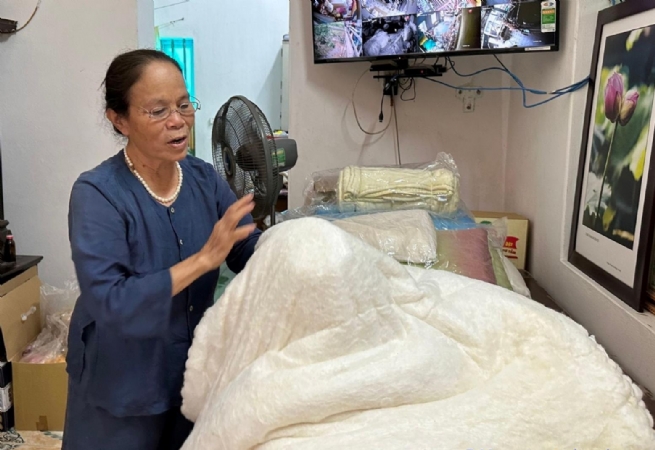
Silk products of Van Phuc craft village
Hanoi is currently the leading locality in the country in terms of the number of OCOP products, with more than 3,300 products evaluated and classified as 3 stars or higher. Many of these products are built from local resources such as typical agricultural products, precious medicinal herbs, long-standing traditional crafts, etc., contributing to positioning the capital's agricultural product brand on the national map.
In the coming time, the Hanoi New Rural Development Program Coordination Office recommends that localities continue to direct and support entities in evaluating and reclassifying expired OCOP products. Continue to support entities in upgrading products to compete for upgrading, thereby increasing the competitiveness of the capital's OCOP products. Mr. Ngo Van Ngon shared more.
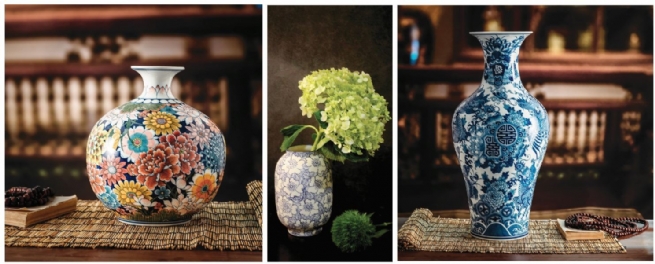
According to Ms. Ha Thi Vinh, Chairwoman of the Hanoi Handicraft and Craft Village Association, who is also the owner of many 4-star and 5-star OCOP ceramic products, said: After being evaluated and recognized, OCOP products not only affirm their quality value, but also contribute to bringing Vietnamese products closer to the international market, promoting rural economic development associated with sustainable development. Currently, Hanoi's 5-star OCOP certified products all have great development potential. In particular, our ceramic products have been exported to many countries in Europe, America, Asia, etc. This is clear evidence that if we know how to effectively exploit local resources combined with technology, standardization and branding strategy, OCOP products can completely be exported abroad, making a practical contribution to rural economic development associated with international integration.
By Dinh Bao, Vietnam Business Forum
| This special section is supported by Hanoi Coordination Office of the New Rural Development Program |
 April 24–25, 2026
 Kinh Bac Cultural Center, Bac Ninh Province


 Vietnamese





