

2:08:58 PM | 7/14/2025

Vietnam has officially pledged to achieve net-zero carbon emissions by 2050, embracing the spirit of “three readiness” (readiness to participate, accompany, and lead), an initiative spearheaded by the Prime Minister. This commitment is viewed as a strategic turning point, providing comprehensive guidance for the country’s energy transition and sustainable development.
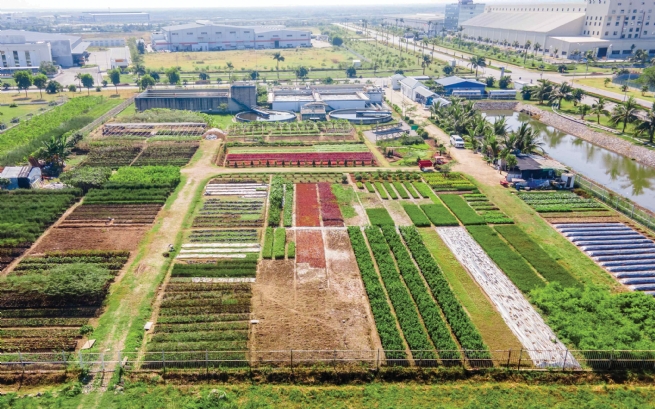
The nursery at DEEP C Hai Phong utilizes treated wastewater for irrigation purposes
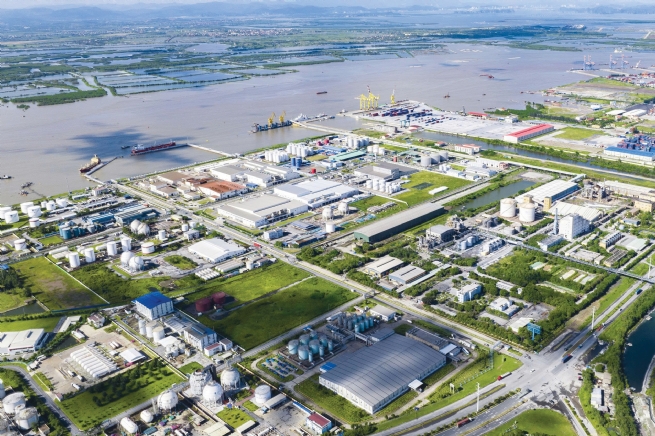
To further explore the vision and competitive advantages of developing green industrial park infrastructure, Vietnam Business Forum had an exchange with Mr. Bruno Jaspaert, CEO of DEEP C Industrial Zones and Chaiman of the European Chamber of Commerce in Vietnam.
Mr. Jaspaert, how do you perceive the “green economy” trend in Vietnam today?
In Vietnam, we can analyze this trend at three distinct levels. First, at the national level, the country has made a clear and strong commitment to achieving net-zero emissions by 2050. However, the regulatory framework supporting green energy development projects remains fragmented and lacks consistency.
Second, at the local level, specifically in Hai Phong, the city has clearly defined its goal of becoming one of Vietnam’s leading “green cities”. This ambition has led to concrete and proactive actions to realize this vision.
Third, at the corporate level, DEEP C aims to become one of the first eco-industrial parks in Vietnam. Achieving this goal will not rely solely on solar and wind energy, but will require the incorporation of other alternative energy sources, such as LNG- related initiatives.
As a pioneer of green transformation in Hai Phong, could you share some experience and initiatives your company is implementing to archive sustainability goals?
At DEEP C, we are committed to transforming into an eco-industrial park model, with sustainability as one of our core values. Developing renewable energy solutions is a fundamental pillar of our strategy.
While solar power receives substantial public attention, it is only one component of our broader strategy. We are also actively exploring the expansion of wind energy generation within DEEP C, especially as wind conditions in our industrial parks are favorable for the development of small- to medium-scale wind turbines.
Furthermore, we continuously seek new technologies and techniques to integrate advanced monitoring and energy management systems to enhance the quality and reliability of our internal power grid, as well as to swiftly address any arising electrical issues.
We are also investigating various waste-to-energy and biomass energy models, along with green hydrogen production feasibility studies. In addition, we strive to facilitate access to LNG for our secondary investors as an immediate solution to help reduce their Scope 1 carbon emissions.
What preparations has DEEP C made to meet the expectations of secondary investors regarding green development?
It is evident that globally, enterprises are increasingly required to adopt green, clean and sustainable energy sources. Rather than independently making investments in green infrastructure, our secondary investors can benefit from the pre- invested and installed infrastructure and green utilities provided by DEEP C. This approach offers them the convenience of utilizing available green, clean energy sources in DEEP C, and significantly enhances the attractiveness of our industrial zones.
At DEEP C, we differentiate ourselves by continuously introducing innovative and sustainable initiatives, ensuring our investors are well-positioned to operate as green enterprises within a circular economy framework.
In fact, we have been step-by-step establishing a sustainable development plan for the future. Our renewable energy program stands as one of our most notable achievements: Through this initiative, we aim to have 50% of total power consumption within the park sourced from renewables. To this end, we have already obtained licenses for electricity generation and established an internal power grid.
Simultaneously, water reuse projects are being implemented. We have applied for permits to reuse the treated wastewater from our facilities and are seeking approval to collect and repurpose rainwater. With this system, rainwater will not be discharged through drainage system but collected in temporary storage for purposes not requiring potable water standards, such as industrial production or sanitation.
Lastly, adaptation to nature. We are integrating nature-based solutions into our infrastructure. For example, we choose to build embankments at a lower elevation but grow and conserve mangrove forest in front to enhance flood protection. Our green zones are designed as natural buffer zones with lower elevation to temporarily retain stormwater during extreme weather events.
Thank you very much!
Source: Vietnam Business Forum


 Vietnamese





