

9:23:09 AM | 9/5/2025

With determination and innovative, flexible, and effective methods, Kieu Phu commune has built strong momentum in developing both new rural areas and model rural areas, spreading the movement widely and gaining broad support from local residents.
Established on July 1, 2025, Kieu Phu commune (Hanoi) was formed through the merger of five former communes namely Ngoc My, Liep Nghia, Tuyet Nghia, Can Huu, and Ngoc Liep of the former Quoc Oai district, along with part of Quang Trung commune from the former Thach That district. The commune now covers 34.49 square kilometers with a population of 60,885. Building a model new rural area is a key goal outlined in the Resolution of the Kieu Phu Party Congress for the 2025-2030 term.
In earlier years, the movement to build new rural areas in Kieu Phu achieved strong results: Ngoc My met the standards for a model rural area, while Ngoc Liep, Can Huu, and Nghia Huong reached advanced standards. These achievements brought modern, upgraded infrastructure to the area, creating favorable conditions for socio-economic growth. Cultural facilities were also strengthened, laying the groundwork for developing modern, well-educated citizens while preserving traditional values. Most recently, to mark War Invalids and Martyrs’ Day (July 27), Kieu Phu launched housing projects for people with meritorious service and their families in Lien Tri Dong Son, Dong But, and Ngoc Than villages.
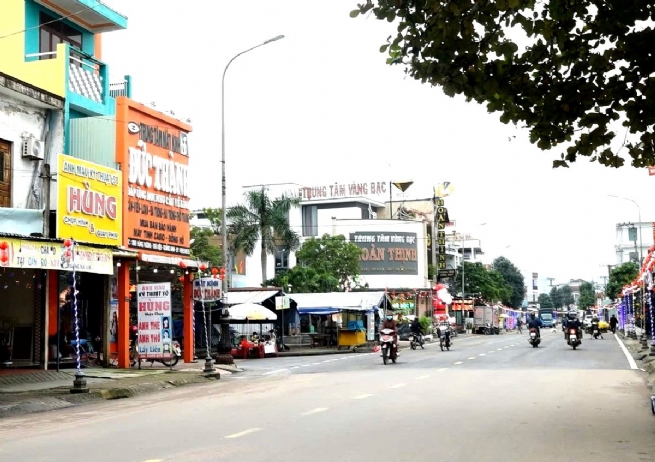
According to Mr. Pham Quang Tuan, Secretary of the Kieu Phu Party Committee, the movement has delivered outstanding outcomes: all of the former communes achieved new rural standards, with Ngoc My reaching the model level and Ngoc Liep, Can Huu, and Nghia Huong reaching advanced levels. Socio-economic infrastructure has improved significantly, giving the commune a distinctly renewed rural appearance. These achievements provide a strong foundation for the local Party, government, and community to move forward into a new stage of development with confidence and determination.
Mr. Do Danh Vong, Secretary of the Dong But Village Party Cell, highlighted that the village has received nearly VND40 billion in state investment to restore Thien Su Pagoda, reinforce three village ponds, and pave main roads and alleys. Recognizing their rights and responsibilities in building new rural areas, local leaders organized campaigns to explain the program’s purpose and benefits to residents. As a result, the community contributed about VND3 billion to repair cultural and spiritual sites, build village gates, and install lighting systems. Local associations and organizations have also promoted cultural initiatives, such as modernizing weddings and funerals, encouraging education and talent, and honoring the elderly.
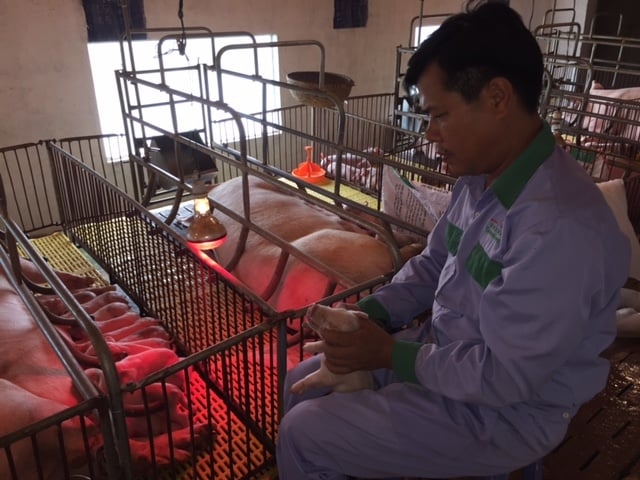
At present, Kieu Phu maintains an average annual economic growth rate of 11%. Its economic structure is shifting toward a larger share of services, trade, and handicrafts, while gradually reducing agriculture’s proportion. Average per-capita income has reached VND85 million per year.
Looking ahead to 2030, the commune has set ambitious goals: to build a clean and strong political system; improve government management capacity; accelerate the application of science, technology, innovation, and digital transformation; complete modern, synchronized infrastructure; and raise both material and cultural living standards for residents.
Kieu Phu also seeks to promote culture and nurture a civilized, modern community that embodies the cultural identity of the Doai region. The commune is mobilizing social resources to advance education, healthcare, science and technology, and high-quality human resources training, ensuring readiness to meet the development needs of both the commune and Hanoi in the new era.
By Dinh Bao, Vietnam Business Forum
| This special section is supported by Hanoi Coordination Office of the New Rural Development Program |


 Vietnamese





