

9:30:57 AM | 9/23/2025

Vietnam’s marine economy plays an important role in national prosperity, but it is increasingly threatened by climate change. The country’s extensive coastline and reliance on fishing, aquaculture, and coastal tourism make it especially susceptible to rising sea levels, intensified storms, and ocean acidification.
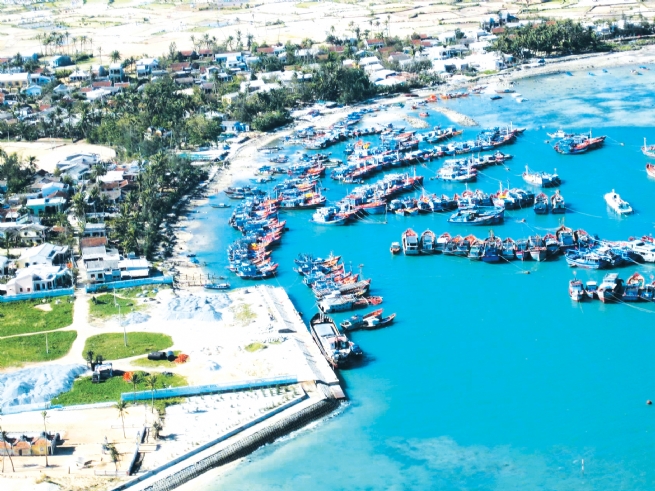
Vietnam’s marine economy plays an important role in national prosperity but is increasingly threatened by climate change
According to the World Bank’s report on green growth, Vietnam’s coastline is suffering erosion and saltwater intrusion, threatening habitats and critical infrastructure, and affecting the livelihoods of millions who depend on these sectors. Meanwhile, aquaculture and capture fisheries are increasingly exposed to rising sea temperatures and shifting ocean currents that disrupt marine ecosystems, leading to biodiversity loss and declining fish stocks. In addition, more frequent extreme weather events such as storms and heavy rains pose severe risks to coastal communities, seaports, and marine supply chains. These vulnerabilities are compounded by the economy’s dependence on fragile ecosystems and the limited adaptive capacity of many coastal regions.
World Bank analysis shows that the marine economy has great potential to help Vietnam reduce climate risks. By harnessing its rich ocean and coastal resources, the country can foster sustainable growth while cutting greenhouse gas emissions. In particular, developing renewable energy sources such as offshore wind and wave power presents a major opportunity to reduce dependence on fossil fuels. The World Bank’s 2021 report estimated Vietnam’s offshore wind potential at around 475 GW; other studies suggest it could exceed 900 GW by tapping strong winds in the central, south-central, and some northern coastal regions.
Equally important is restoring mangrove forests, protecting seagrass beds, and safeguarding coral reefs, which are natural carbon sinks that absorb and store large amounts of CO₂. If implemented effectively, these strategies will help Vietnam’s marine economy strengthen its resilience to climate change and make a significant contribution to global emission reduction efforts.
Marine economic activity currently contributes about 5.04%-5.83% of Vietnam’s GDP. By 2030, the value of the marine economy is projected to triple compared with 2020 (in constant prices).
However, the development of marine industries continues to face conflicts of interest and competing uses. Overfishing, pollution, ocean acidification, and the impacts of climate change all pose threats to marine environments. Vietnam is currently ranked among the world’s top five ocean polluters, with an estimated 0.28-0.73 million tons of plastic waste entering the sea each year.
Other challenges include resource degradation, climate risks, poor planning leading to uncontrolled infrastructure expansion, weak law enforcement, and lack of coordination across sectors and provinces. Nearly 12 million people in Vietnam’s coastal regions face severe flood risks, while 35% of coastal settlements are located along eroding shorelines.
The government’s vision for marine economic development is set out in Resolution 36-NQ/TW dated October 22, 2018. By 2030, Vietnam aims to make significant progress in six key marine sectors: marine tourism and services; maritime industries; offshore oil, gas and mineral exploitation; fisheries and aquaculture; coastal industries; and renewable energy, with these sectors together contributing about 10% of GDP.
To implement this plan effectively and ensure sustainable growth, the World Bank recommended that Vietnam foster greater cross-sectoral collaboration, engage non-state actors, and strengthen local governance capacity. Investment strategies must align with environmental priorities and include clear monitoring and evaluation mechanisms to drive sustainable, adaptive, and climate-resilient marine economic development.
Over the next five years, Vietnam needs to establish a strong management foundation to support the marine economy. This includes strengthening data systems, particularly on marine resources and economic indicators, to monitor economic and ecosystem accounts accurately. Training programs and capacity-building materials should be developed for coastal governance, along with regional cooperation to share experience and best practices. Most importantly, national and local marine strategies must be closely aligned to avoid conflicts between sectors and between economic development goals and ecosystem conservation. Greater transparency in resource allocation is also needed through robust investment monitoring mechanisms.
“The key is to mobilize participation from non-state partners such as NGOs, research institutions, and businesses to work together in addressing marine challenges and advancing cooperation for a sustainable future,” the World Bank stressed.
Vietnam must also ensure that investment planning reflects the realities of the climate crisis, including strengthening resilience of coastal infrastructure, particularly in the tourism sector, which is highly vulnerable to climate impacts.
The World Bank further emphasized the need for stronger inter-sectoral coordination and an enhanced role for the National Steering Committee in monitoring sectoral targets, ensuring coherence and consistency in development. This, it noted, is essential to maximize the value of marine resources, harness synergies, and minimize potential environmental risks.
By Quynh Chi, Vietnam Business Forum


 Vietnamese





