

9:21:37 AM | 10/21/2025

Vietnam’s economy is expected to remain resilient through 2025-2026, supported by expansionary fiscal and monetary policies. The U.S. reciprocal tariffs effective August 7, 2025, 20% on imports and 40% on transshipped goods, may slow short-term growth, but economic stimulus measures are expected to soften their impact. This assessment is from the Asian Development Bank’s (ADB) September 2025 report, Asian Development Outlook.
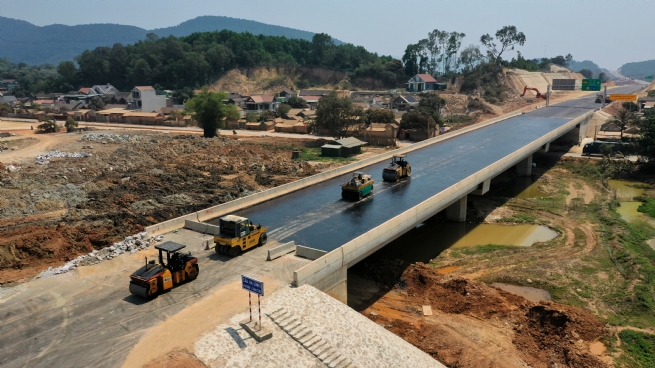
Effective public investment is crucial for sustaining growth and easing infrastructure bottlenecks
According to Shantanu Chakraborty, ADB Country Director for Vietnam, a surge in exports ahead of the U.S. tariff implementation, together with government support policies, fueled economic growth in the first half of 2025. However, growth is expected to moderate for the rest of the year due to tariffs effective August 7, 2025. Although the domestic economy remains stable, growth is projected to ease compared with the strong first-half performance.
Vietnam’s industrial output is projected to increase 7.7% in 2025, supported by higher manufacturing and processing exports, although elevated U.S. tariffs may pose challenges. Service sector growth is expected to remain strong at 7.4%, boosted by continued expansion in finance and banking, logistics and transport, communications, retail, and particularly tourism and related industries.
Agriculture is expected to grow 3.4% in 2025, supported by global demand for high-quality, sustainable food and the broader adoption of smart farming technologies, though the sector remains vulnerable to climate risks and limited technology access. Domestic consumption continues to benefit from accommodative fiscal and monetary policies, with retail network expansion, rising e-commerce penetration, and the recovery of tourism-related services further strengthening domestic demand.
Effective public investment is especially important for sustaining growth and easing infrastructure bottlenecks. With public debt at less than 34% of GDP, well below the 60% ceiling, Vietnam has substantial fiscal space to implement growth-supporting measures. Comprehensive institutional reforms will streamline the legal framework, improve disbursement efficiency, and strengthen the domestic economy.
Tariff uncertainty is disrupting FDI and trade. Exports to the U.S. are expected to slow sharply after the pre-tariff surge, as the new 20% tariff leads export-oriented producers to delay or scale back plans. Trade flows will also shift as businesses restructure supply chains and adjust pricing. Tariffs are likely to continue pressuring trade and investment for the rest of the year, underscoring the need to transition toward a more balanced growth model with stronger domestic demand and more diversified export markets to mitigate tariff shocks.
Credit growth is expected to meet or exceed the 16% target for 2025. With a more flexible approach from the State Bank of Vietnam, lending is likely to continue increasing toward year-end. ADB projects inflation at 3.9% in 2025, easing slightly to 3.8% in 2026.
The government is intensifying fiscal and monetary stimulus to achieve 8.3%-8.5% growth in 2025, targeting double-digit growth in the coming years. To maintain this momentum, ADB’s Chief Economist in Vietnam Nguyen Ba Hung stressed that emerging risks and structural constraints must be effectively addressed.
Shantanu Chakraborty highlighted that closer coordination between fiscal and monetary policies is crucial to support growth, avoid excessive pressure on monetary policy, and ensure macro-financial stability.
By Anh Mai, Vietnam Business Forum





 Vietnamese





