

3:42:33 PM | 12/2/2025

The Joint Stock Commercial Bank for Investment and Development of Vietnam (BIDV) continues to assert its pioneering role as one of Vietnam’s leading financial institutions. With a long-term vision, a clear strategy, and concrete commitments, BIDV is channeling green capital a green and circular economic transition while working alongside businesses and communities to create sustainable value for both the present and the future. Our reporter spoke with Mr. Le Ngoc Lam, Chief Executive Officer of BIDV, on this topic.
 |
How do you assess the role of the banking sector in promoting sustainable development and advancing Environmental, Social, and Governance (ESG) goals in Vietnam?
As environmental and social challenges grow increasingly urgent, sustainable development and ESG practices have become priority objectives for governments and businesses worldwide.
In Vietnam, the Government has set the goal of achieving Net Zero by 2050. As the “lifeblood” of the economy, the banking sector plays a particularly important role in driving sustainable development and contributing to the country’s ESG objectives.
First, the sector directs credit flows into green and sustainable areas by promoting green and sustainable finance, contributing to the country’s green transition:
According to the World Bank, Vietnam needs to mobilize US$368 billion for its Net Zero roadmap. According to the adjusted Power Development Plan VIII, from 2026 to 2030, Vietnam is estimated to need about US$110 billion in investment for clean and renewable electricity generation. Through green finance, banks can encourage customers to adopt greener and more sustainable production models, invest in energy-efficient technologies, and develop renewable energy or circular/low-carbon initiatives.
Second, the sector promotes national financial inclusion:
By providing products, services, and utilities, banks help all citizens and businesses, especially disadvantaged groups, access essential financial resources. Expanding financial access contributes to economic growth, reduces inequality, strengthens financial stability, and creates a foundation for sustainable development.
Third, the sector contributes to comprehensive and sustainable social development through social welfare and community-oriented initiatives:
BIDV embraces the philosophy of “giving to receive.” Proactively spreading positive values and making meaningful contributions to the community not only demonstrates the social responsibility of a major financial institution, but also helps strengthen trust, enhance connection, and build sustainable value for the bank itself.
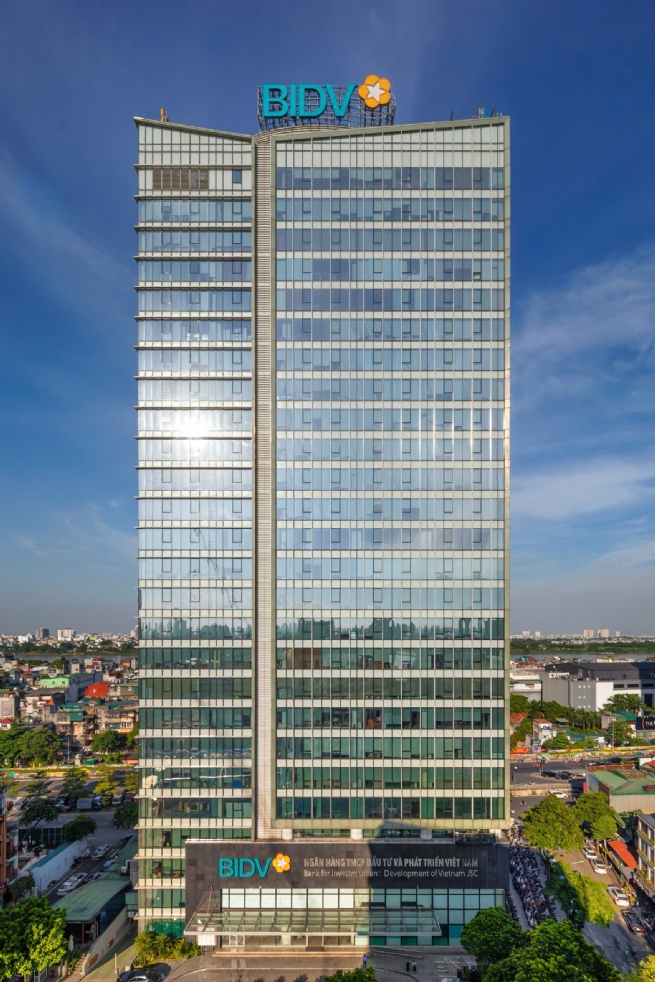
The bank targets to build a comprehensive sustainable financial ecosystem
BIDV is a pioneer in integrating ESG. Could you explain how this framework was developed, implemented, and its key highlights?”
Recognizing early the importance of green and sustainable growth for the overall economy, and identifying its pioneering responsibility as a leading state-owned commercial bank, BIDV established “towards sustainable development” as a guiding objective throughout its operations when formulating its 2021-2025 business strategy with a vision to 2030. Green credit and green financing were made priorities in the development strategy.
For 2026-2030, BIDV continues to identify “Green” as one of the central strategic pillars. ESG is regarded as a core competency and a new engine of growth for the upcoming strategic cycle. BIDV strives to become the market leader in green and sustainable development and ESG practices, leading in green credit and contributing positively to economic development, social progress, environmental protection, and service to the nation.
BIDV is proud to be a pioneer in defining sustainable development and ESG as an important component of its overall business strategy. Accordingly, we have established a system of concrete objectives built around the three pillars of Environment, Social, and Governance, together with a comprehensive set of solutions to integrate ESG goals into business operations.
What major challenges has BIDV faced in greening its credit portfolio, and how has it overcome them to maintain sustainable growth?
In Vietnam, green transition remains a relatively new field and is still in its early stages. This creates numerous challenges for the business community and financial institutions, including BIDV.
The challenges from the external environment include:
The legal framework is still being developed. Vietnam has issued a Green Taxonomy, but detailed technical criteria and verification procedures for green projects remain lacking. There are still no specific regulations or guidelines on social risk management or the issuance of green/sustainable bonds. BIDV has proactively recommended that authorities accelerate the completion of the legal framework to remove barriers and strongly promote green finance in Vietnam.
Policies supporting green banking and green finance exist but are not yet strong enough. Currently, the State Bank of Vietnam (SBV) has completed a draft decree to submit to the Government on 2% interest rate support for green, circular, and ESG-compliant projects. This is an important step demonstrating commitment to promoting green transition across the economy. However, for the policy to be effective, implementation must be simple, transparent, and accessible to encourage businesses to invest, innovate, and accelerate their green transition.
We hope the Government, SBV, and ministries will soon introduce more diverse and stronger incentive mechanisms to promote Vietnam’s overall green-growth objectives.
Market awareness of green and sustainable development remains limited. Time and resources are needed to train, support, and guide businesses and society in shifting perceptions. At BIDV, we prioritize communication and awareness-raising to help customers, businesses, and communities better understand these issues.
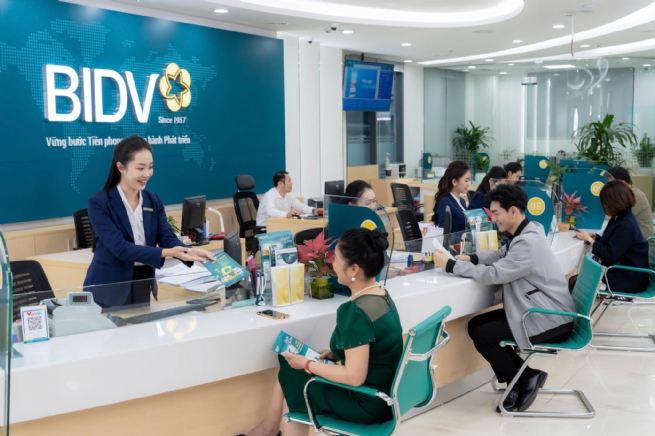
BIDV is committed to supporting clients through green credit products
Internal challenges include:
First, human resources. Personnel with expertise in ESG are still scarce. Recognizing this early, BIDV has implemented comprehensive ESG training programs, enhanced staff capability, and strengthened talent acquisition to recruit specialized experts for green transition needs.
Second, data. ESG-related data such as greenhouse gas emissions, environmental and social risks, and project-level information remains insufficient. BIDV has proactively evaluated, reviewed, collected, cleaned, and enriched ESG data to serve internal governance, monitoring, and reporting. This is a long-term effort requiring substantial investment.
Finally, sustainable development requires balancing benefits and costs. Investment in sustainability demands significant resources, while its benefits often materialize in the future. For BIDV, this is the right path and one we remain committed to. It is a long-term investment for future generations and supports the country’s green and sustainable development.
Green financial products are becoming increasingly strategic for BIDV. What is the bank’s medium- and long-term vision for developing these sustainable finance tools?
In the medium and long term, BIDV aims to build a comprehensive sustainable financial ecosystem, including:
(i) Continuing to pursue the goal of leading the Vietnamese market in green credit. In addition to deploying green loan packages, BIDV is expanding new green and sustainable financial products in Vietnam such as value chain financing, green trade finance, and sustainability-linked loans.
(ii) Strongly developing the green and sustainable bond market and advising clients on issuing green and sustainable bonds.
(iii) Researching and developing additional sustainable finance frameworks and policies in line with international best practices.
(iv) Improving and expanding the environmental and social risk management system to ensure capital is disbursed correctly to projects with positive impacts.
(v) Actively mobilizing green capital from both domestic and international sources to supplement long-term resources at reasonable costs for green credit.
(vi) Applying data and technology in internal management, reporting, and monitoring of green finance as well as ESG activities.
As an ESG pioneer, what lessons can you share to help SMEs access sustainable finance and strengthen their ESG capacity?
As one of the banks pioneering ESG promotion in Vietnam and with one of the largest corporate client bases, BIDV recognizes that businesses, especially SMEs, are entering a turning-point phase of transformation. From our experience working alongside them, we have identified four key directions to help SMEs better access sustainable finance and enhance their ESG capabilities:
First, ESG is an inevitable trend. With increasingly stringent requirements from major export markets applying mechanisms such as CBAM, green supply chains, and stricter disclosure standards, ESG compliance is no longer voluntary. Green transformation has become the only path for businesses to maintain competitiveness and participate more deeply in global value chains. Enterprises that proactively integrate ESG often gain access to preferential capital, improve competitiveness, and enhance investor appeal.
Second, gradually green business operations, starting with small projects such as energy-saving initiatives, digitalization, environmental-social risk management, and waste management. These are solid steps that help businesses become familiar with ESG criteria without creating sudden financial pressure. What matters is defining clear ESG goals and taking concrete steps toward them.
Third, closely follow policy developments. Government and commercial bank support policies are opening opportunities for businesses to access low-cost financing for green and sustainable projects, as well as technical support and digital-green transformation programs. SMEs should actively stay informed to access preferential capital and support programs as early as possible.
Fourth, strengthening internal capacity is the decisive factor. Businesses need to build transparent governance, improve ESG accounting and reporting capabilities, and develop ESG-focused human resources. This “soft infrastructure” is essential for meeting increasingly rigorous green standards and for improving access to sustainable finance.
BIDV remains committed to accompanying enterprises, especially SMEs, by offering appropriate green and sustainable credit products, providing ESG training and capacity-building workshops, advising on the issuance of green and sustainable bonds, supporting the development of sustainability reports, and connecting businesses with international support programs. We believe that with the right awareness, adequate preparation, and proactive transition, SMEs will not only access sustainable finance more effectively but also enhance their competitiveness and achieve long-term growth in an economy that is rapidly shifting toward green development.
Thank you very much!
Source: Vietnam Business Forum


 Vietnamese





