

11:26:21 AM | 12/9/2025

Vietnam is a country shaped like an “S,” with a coastline stretching 3,440 kilometers and a unique geographic position in the East Sea and Southeast Asia. Yet because it lies in the Southeast Asian monsoon belt and has a highly varied terrain, Vietnam is among the countries whose natural-resource capital is most exposed to natural disasters. It regularly faces storms, tropical depressions, wildfires, and, especially, floods, droughts, saltwater intrusion, and landslides.
 |
Climate-change projections indicate that if the sea level rises by one meter, about 39% of the Mekong Delta would be flooded, putting more than 18 million people at risk and potentially eliminating around 50% of its farmland. In practice, natural disasters are becoming more complex, with historic floods causing severe losses in land and property and producing increasingly extreme effects on economic growth. For instance, in 2024, losses from natural disasters were approximately 0.4% of GDP, while in 2025 they are estimated to reach at least 2%. These estimates do not include human casualties or the costs of recovery efforts, including disease control and environmental remediation.
Given this, one of the most critical aspects of sustainably managing Vietnam’s natural-resource capital lies in reinforcing the protection of the natural environment, especially in preventing and responding to natural disasters. According to sustainable-development experts, aside from external factors, several internal, more subjective causes are worsening the effects of such disasters:
First, public awareness and the capacity of government agencies to forecast and communicate about extreme weather are still limited.
Second, response resources are insufficient. Many irrigation works, dikes, reservoirs, and landslide-prevention systems were constructed long ago and have deteriorated. Their effectiveness has declined, and the risk of dam failure has increased. These structures are not being repaired or upgraded in a coordinated and efficient manner. Furthermore, when disasters occur, the response remains unprofessional, basic, and poorly coordinated.
Third, planning for land use, green spaces, irrigation, and water-management systems is fragmented, with limited regional coordination and weak oversight. Rapid urbanization driven by real estate, transportation, hydropower, renewable energy, and mineral-extraction projects is altering landscapes and disrupting ecosystem dynamics, including soils, waterways, forests, and open spaces. These changes severely compromise water-management infrastructure, leaving residents and their livelihoods more vulnerable to natural disasters and creating new risks. For example, filling in and encroaching on ponds, lakes, and rivers increases impervious surfaces, which can turn ordinary rainfall into catastrophic floods. At the same time, uncontrolled deforestation reduces natural forest areas, which once absorbed floodwater and stabilized soil through their deep, dense root systems.
Currently, Law on Natural Disaster Prevention and Control, 2013 is being actively revised and supplemented. In addition, Ministry of Agriculture and Environment has submitted a report to the government proposing a funding allocation of approximately VND85,000 billion for 2026–2030 to continue upgrading dikes, reservoirs, and irrigation systems for agricultural production.
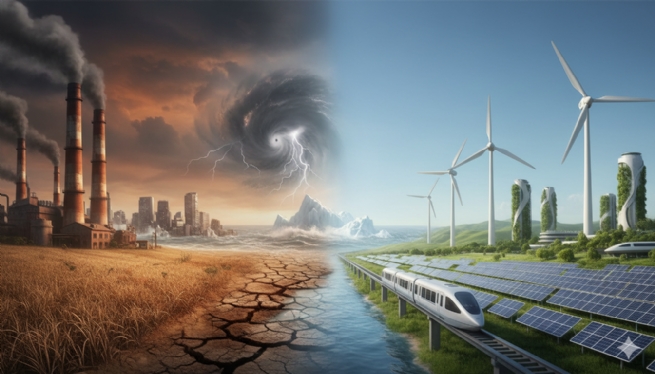
Severe climate change is causing serious socio-economic and environmental consequences
Ministry of Agriculture and Environment has also advised the government on amending Decree 02, which provides support for post-disaster losses. Under the new decree, assistance levels will increase from one to two times, and in some cases up to three times, compared with previous regulations. Many cumbersome administrative procedures have been removed, making it easier for people to access support.
Moreover, Ministry of Agriculture and Environment emphasized the importance of improving forecasting and early-warning systems, enabling both citizens and local authorities to respond proactively and minimize losses of life and property.
In reality, natural disasters are a global phenomenon that occur unpredictably, across different locations and times. Fully coordinated disaster prevention and response require substantial resources and a long-term commitment. Given the severity of natural disasters in Vietnam and the complexity of climate change, it is essential to proactively mobilize five key resource categories:
Human Capital: Public awareness of natural-resource protection needs to improve, and the widespread belief that natural resources are limitless and free must be corrected. Given the recurring nature of severe natural disasters and the growing impacts of climate change, disaster prevention should be treated as a peacetime national priority. It is also a major factor contributing to income gaps and disparities in average income. Additionally, disaster-preparedness skills for citizens, business leaders, and civil servants, especially in high-risk areas, must be strengthened.
Institutional Capacity: The Law on Natural Disaster Prevention and Control, 2013 (Article 6) designates the Vietnam People’s Army as the core force in disaster management. However, greater emphasis is needed on the proactive role of the military and armed forces in both response and recovery operations. Developing dual-use products and strategies should be fully leveraged in this context, as natural disasters provide optimal simulations for military operations in peacetime. The state must continue to lead in building institutions that provide resources, including developing markets for dual-use professional equipment for both military and disaster-response purposes, as well as mechanisms to operate related financial funds. Regular planning and drills, especially before the storm season, are essential to ensure close coordination between armed forces, local authorities, and domestic and international civil organizations.
Products and Infrastructure: Effective flood management requires a combination of “hard” and “soft” products to address different types of risk. “Hard” products include technical infrastructure such as dikes, dams, reservoirs, and flood channels, which physically block or control water. “Soft” or non-structural measures, such as land-use planning, manage risk by controlling how people and assets interact with flood-prone areas. Soft measures should include integrated irrigation systems, watershed planning, and alignment with land-use, urban, and disaster-management planning, with particular attention to high-risk areas. High-tech solutions and international scientific cooperation should be used to improve forecasting and weather-communication products. Currently, the country’s planning documents and strategies traditionally emphasize only two pillars, economy and society. Adding an environmental pillar would help align the country with the three core pillars of sustainable development.
Financial Resources: Beyond mobilizing funding for disaster prevention and response, the government can use financial levers to support sectoral transitions, such as for fishermen unable to meet safety conditions or relocating populations from chronically disaster-prone areas. Fiscal policies should prioritize investment in industrial market development, fostering dual-use production communities that can effectively serve both peacetime disaster management and military operations.
Natural Resources: Core resources, including land, minerals, vegetation, forests, rivers, lakes, marine areas, and spatial resources, including underground space, must be publicly assessed and re-evaluated regularly after storm and flood seasons. This ensures sustainable extraction, responsible use, and accumulation according to master plans, preventing depletion. Moreover, investment projects should include environmental impact assessments after each storm and flood season throughout the project lifecycle.
In summary, given Vietnam’s complex natural conditions and the severe impacts of climate change on the economy, society, and environment, deploying and effectively utilizing economic and social resources is the most comprehensive and practical approach for proactively preventing and responding to floods, storms, sea-level rise, and other natural disasters. Proper management, use, and development of these resources not only minimize disaster losses but also promote economic sustainability, strengthen social trust, and protect the environment. This foundation supports the transition to a circular, low-carbon economy and helps reduce pollution in major urban areas during rapid urbanization.
Dr. Doan Duy Khuong, Former VCCI Vice President and Former, VBCSD chairman
Source: Vietnam Business Forum





 Vietnamese





