

10:05:11 AM | 12/29/2025

In recent years, Vietnam’s tourism sector has experienced a remarkable increase in international arrivals. By the end of November 2025, the country received more than 19.1 million international visitors, up 20.9% compared to the same period in 2024, marking a full recovery and surpassing expectations. This impressive growth is driven not only by the rising appeal of destinations but also by a coordinated digital transformation across the industry.
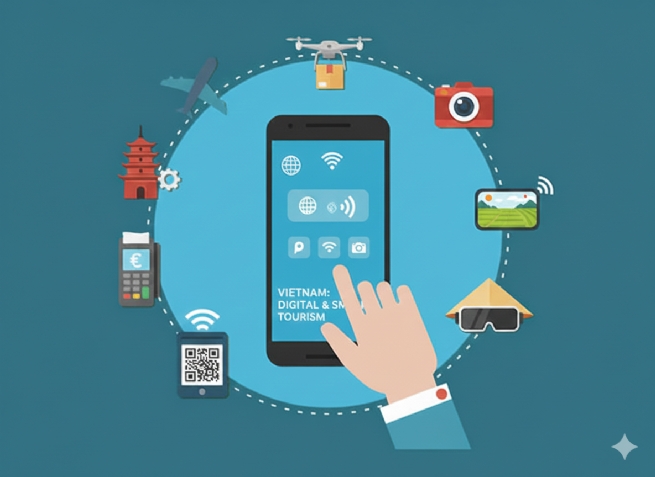
Ha Van Sieu, Deputy Director of the Vietnam National Authority of Tourism (VNAT), noted that digital transformation and smart tourism development are becoming key priorities for the sector. The agency is finalizing the national tourism database and expanding technology applications in destination management and visitor flow analysis. These measures enhance competitiveness and help enterprises access markets more effectively. Combined with business agility, they enable Vietnam to better leverage its tourism potential and improve service quality.
Digital platforms: from transactions to ecosystem connections
In a highly digitalized environment, booking apps, ticketing platforms, digital maps, e-payments, e-visa systems, and destination information platforms have transformed how travelers explore and experience Vietnam. The introduction of e-visa for citizens of hundreds of countries and territories has increased access, making entry faster, more transparent, and convenient. Data from these platforms supports policy planning, predicts trends, monitors visitor flows, and tracks real-time consumption behaviors, a capability that was previously unavailable in traditional tourism management.
For businesses, digital platforms have created an entirely new competitive landscape. Geoffrey Nguyen, CEO of Viet Orient Hospitality Co., Ltd., said that online travel agencies (OTAs), social media, and digital payment gateways have become “marketing highways” for the industry. Small and medium-sized enterprises, previously constrained by traditional distribution channels, can now reach global customers and receive direct feedback to adjust services flexibly. Data collected from digital platforms helps companies design streamlined packages tailored to each target market, particularly high-spending segments.

Vietnam’s tourism growth is fueled by both popular destinations and industry-wide digital transformation
Development focus: new products, personalization, and sustainability
Digital transformation has enabled the development of new products, from personalized experience packages based on behavior analysis to health tourism, pre-scheduled cultural experiences, and AI-integrated digital tour guides. These offerings not only improve experience quality but also encourage longer visitor stays. Pham Tien Dung, Vice President of the UNESCO Hanoi Travel Club, emphasized that the future of tourism depends not on increasing visitor numbers but on the value created for each trip. Digital platforms help destinations measure this value, guiding product strategies toward higher quality and sustainability.
From a public management perspective, digital transformation offers advantages in resource allocation and operational coordination at destinations. When data is shared between local and central authorities, managers can identify congestion, monitor visitor flows, and provide timely guidance to businesses. In Quang Ninh, the use of data analytics at Ha Long Bay has enabled authorities to manage visitor numbers by time slot and recommend suitable tour arrangements to protect the environment and enhance safety.
For tech companies, digital tourism platforms remain a promising market. Geoffrey Nguyen noted that online consumer behavior has become the norm, particularly among travelers from Northeast Asia and Europe, the two markets with the highest growth in 2025. Competition to develop new features, such as smart itinerary suggestions, real-time interaction, and AI-based personalization, is creating opportunities for Vietnamese enterprises to gain regional prominence.
More broadly, digital tourism enhances national competitiveness. With international arrivals exceeding 19.1 million in the first 11 months of 2025 and the government targeting 25 million, the challenge is not only attracting visitors but also retaining them. Destinations that combine cultural and natural value with digital platforms can increase average spending, improve visitor satisfaction, and contribute sustainably to the local economy.
By Giang Tu, Vietnam Business Forum


 Vietnamese





