

9:59:54 AM | 1/5/2026

For the first time, Vietnam’s total export-import turnover reached a record US$920 billion, placing the country among the world’s 15 largest trading economies. Combined with a decade of consecutive trade surpluses, this milestone provides a strong foundation for Vietnam to deepen its foreign trade and pursue more ambitious goals in 2026.
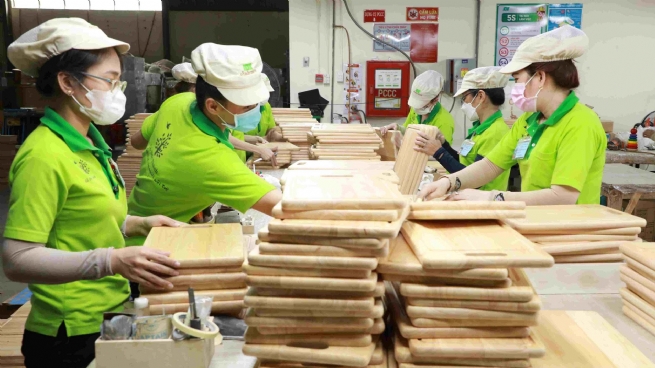
Vietnam’s wood export value is projected to reach about US$18 billion in 2025
Export highlights
According to the Agency of Foreign Trade under the Ministry of Industry and Trade (MoIT), Vietnam’s trade performance in 2025 showed many positive highlights. By mid-December, total export-import turnover reached US$883.7 billion and was projected to hit US$920 billion by year-end, up about 17% from 2024. Full-year export turnover was expected to exceed US$470 billion, an increase of around 16%.
Looking back over more than a decade, Vietnam’s rapid expansion in trade scale is clear. From a modest US$100 billion in 2009, the economy has surpassed the US$900 billion mark. Nguyen Anh Son, Director General of the Agency of Foreign Trade, said this achievement reflects the combined efforts of the Government and the business community, along with close guidance from leaders at all levels.
Notably, the trade balance remained sustainable. In 2025, Vietnam recorded its 10th consecutive year of trade surplus, with an estimated surplus of more than US$21 billion, supporting macroeconomic stability, increasing foreign exchange reserves, and strengthening the competitiveness of Vietnamese goods.
The export structure also shifted toward higher quality and greater value added. The number of export items with turnover exceeding US$1 billion rose from 10 in 2007 to 36 in 2025, gradually reducing reliance on a small number of key products.
Growth was driven by major product groups. Industrial goods such as electronics, computers, components, machinery, and equipment continued to lead, while agricultural, forestry, and fishery exports showed a clear recovery, particularly fruits and vegetables, durian, and lobster. Textiles and garments, wood, and wood products also posted positive growth, reflecting improving global demand and Vietnamese companies’ ability to capture market opportunities.
At the same time, export markets continued to expand. The number of markets with turnover exceeding US$1 billion increased from 27 in 2013 to 35 in the 2024-2025 period, demonstrating effective use of 17 free trade agreements and the success of market diversification efforts by Vietnamese businesses.
Navigating headwinds and dual pressures
These record achievements are even more notable given the volatile trade environment in 2025. MoIT had to manage exports amid a “pincer movement” of rising international barriers and the risk of domestic supply disruptions.
At the sector’s year-end conference, Deputy Minister of Industry and Trade Phan Thi Thang said that global economic growth was slow in 2025, while trade protectionism intensified and many major markets tightened environmental and labor standards. In particular, the United States, Vietnam’s largest export market, applied reciprocal tariff policies, creating strong competitive pressure on Vietnamese goods. Domestically, extreme weather caused severe damage to raw material areas and logistics infrastructure, making supply chain continuity and on-time delivery major challenges.
In this context, macroeconomic management and production support played a critical role, particularly in ensuring a stable power supply and removing bottlenecks for businesses. Pham Nguyen Hung, Director General of the Electricity Authority, MoIT, said that in many cases, direction and coordination continued overnight to keep the system operating smoothly, providing a solid foundation for production and exports.
At the same time, trade remedy measures were implemented effectively to protect the legitimate interests of Vietnamese goods against anti-dumping and anti-subsidy investigations, helping to maintain market share in key markets.
2026 target: 8% export growth
Entering 2026, a pivotal year that opens a new development phase, exports and imports face the need for strong renewal to sustain growth momentum. Prime Minister Pham Minh Chinh has outlined the “six pioneering directions” for the industry and trade sector, highlighting foreign trade priorities, including pioneering diversification of markets, products, and supply chains.
According to the Prime Minister, market access thinking must shift fundamentally. Instead of “selling what we have,” businesses and Vietnam’s overseas trade offices need to conduct in-depth research and deliver “what the market needs,” proactively tapping niche markets and emerging demand.
In line with this approach, MoIT has begun to lead the way into potential regions such as the Middle East, Africa, and Southern Europe. Expanding into Halal markets and strengthening cooperation with the UAE are seen as strategic directions, unlocking significant growth potential for Vietnam’s agricultural and processed food products.
With the goal of export turnover growth exceeding 8% in 2026, MoIT is focusing on renewing traditional growth drivers while accelerating the development of modern trade channels. Cross-border e-commerce is emerging as an “extended arm” of exports. After surpassing US$30 billion in 2025, the domestic e-commerce market is projected to reach US$37 billion in 2026, allowing Vietnamese products to reach global consumers directly and reducing intermediary layers.
At the same time, the export strategy for the coming period is closely linked to greening and digitalization requirements. These are no longer optional but mandatory conditions for Vietnamese goods to access high-end markets such as the EU and the United States, requiring coordinated transformation across raw material production, processing, and logistics.
By Huong Ly, Vietnam Business Forum


 Vietnamese





