

10:00:08 AM | 1/23/2026

High-tech industries and innovation have become key factors shaping a nation’s competitiveness and global standing. For Vietnam, transitioning to a growth model driven by science, technology, and innovation is not only necessary but has also been explicitly outlined in the Party and government’s major strategies and directives. While supportive policies provide a strong foundation, achieving this goal still faces several challenges that must be tackled in a coordinated way.
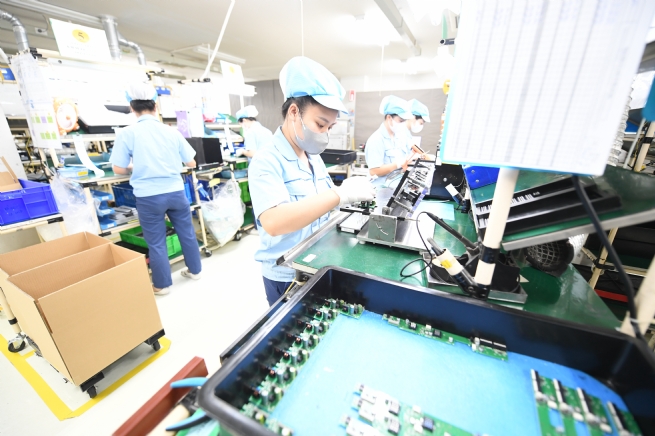
Developing high-quality human resources is a key factor
For many years, the development of science, technology, and innovation has been recognized as a national priority. This principle was further reinforced in strategic documents, notably Resolution No. 57-NQ/TW of the Politburo on national science, technology, innovation, and digital transformation, issued at the end of 2024 and vigorously implemented throughout 2025. Within this framework, science, technology, and innovation are no longer merely supportive sectors; they have become the foundation for rapid and sustainable growth, closely tied to building an independent and self-reliant economy amid deep international integration.
Policies driving high-tech and innovation
In practice, the policy framework has been increasingly refined to support research, application, and commercialization of high-tech solutions. At the opening ceremony of Techfest Vietnam 2025 in Hanoi in December 2025, Prime Minister Pham Minh Chinh affirmed that innovation is no longer a slogan but must become a culture that spreads throughout society, including government agencies, enterprises, research institutes, and universities. He emphasized that Vietnam is developing a dynamic innovation ecosystem, with nearly 4,000 innovative startups and technology enterprises that meet regional and international standards, reflecting a qualitative transformation of the economy.
He said that developing domestic technological capacity is essential for Vietnam to build a self-reliant economy while pursuing deep integration. Policies must serve as enablers by removing institutional barriers, encouraging enterprises to invest in research and development, and fostering effective collaboration between the government, scientists, and the private sector.
According to economic experts, Vietnam’s recent policy direction on science, technology, and innovation is increasingly aligned with international best practices. At the 2025 year-end review and 2026 action plan conference held by the Ministry of Science and Technology in December 2025, Minister Nguyen Manh Hung emphasized that science, technology, innovation, and digital transformation have become central drivers of socio-economic growth. Prioritizing investment, improving financial mechanisms, and designing national programs in high technology, artificial intelligence, and digital transformation that address the practical needs of enterprises are essential for policies to be effective.
From policy to practice
Experience from implementation shows that the greatest bottleneck lies in execution. Most enterprises, particularly small and medium-sized ones, have limited capacity to absorb and master new technologies, while risk-sharing mechanisms between the government and the private sector are insufficient to encourage long-term investment in research and innovation. Moreover, connections between research institutes, universities, and enterprises remain weak, preventing many research outcomes from reaching production and business. A slowly developing science and technology market, combined with underdeveloped technology transfer and commercialization channels, further reduces incentives for innovation, especially in high-tech fields that require substantial capital and long-term investment.
From the business perspective, the demand for innovation is more urgent than ever. At a digital technology event in Hanoi at the end of 2025, Truong Gia Binh, Chairman of FPT Corporation, emphasized that innovation and mastery of core technologies are essential for Vietnamese enterprises to integrate deeply into global value chains. He said that if enterprises remain focused on processing and assembly, they cannot significantly increase value-added, whereas investing in R&D and foundational technologies is the path to sustainable competitive advantage.
To make high-tech and innovation genuine growth drivers, experts argued that institutional frameworks should be further refined to encourage risk-taking in research and innovation. The government also needs to boldly adopt mechanisms for commissioning or contracting final outcomes of science and technology tasks, rather than relying on heavily administrative procedures.
Developing high-quality human resources is also a key factor. Investing in STEM education, attracting leading domestic and international experts, and creating opportunities for intellectuals to engage more deeply in high-tech enterprise projects are fundamental solutions.
For enterprises, proactively connecting with research institutes, universities, and innovation centers should form part of a long-term development strategy. Once supportive policies are in place, the initiative and determination of the private sector will determine the success of the transition to a technology- and innovation-driven economy.
In Vietnam’s new development phase, high-tech and innovation are not merely strategic options but essential requirements. As policies continue to improve and be effectively implemented, institutional support can generate sufficient momentum for the economy to advance, enhancing productivity, growth quality, and Vietnam’s position in the global economic landscape.
By Giang Tu, Vietnam Business Forum


 Vietnamese





