

10:05:42 AM | 1/10/2026

As pressures from resource depletion and climate change intensify, the green transition combined with the circular economy is no longer optional but essential for Vietnam’s economic restructuring. It provides a critical foundation for achieving double-digit growth in the 2026-2030 period.
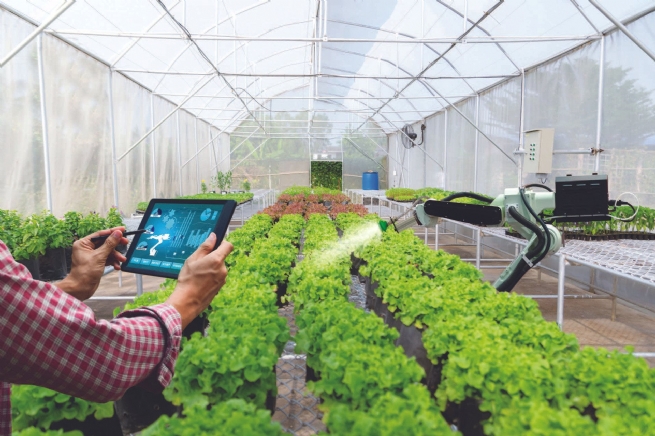
Digital transformation boosts value and promotes sustainable development in the agriculture sector
Breakthrough from the “dual transition” mindset
Vietnam is at a historic turning point, aiming to become a developing country with modern industry and upper-middle income by 2030, and a developed, high-income economy by 2050. To achieve these goals set by the Party, the economy can no longer depend on a resource-intensive growth model. Instead, the 2026-2030 period requires a breakthrough to achieve double-digit growth.
Addressing this urgency, Pham Dai Duong, Vice Chairman of the Central Commission for Policy and Strategy, said that the new growth model must go beyond speed and ensure sustainability, inclusiveness, and long-term competitiveness, with a focus on quality and efficiency.
According to him, the new model is built on the coordinated implementation of four key transitions: digital, green, energy, and human resources. He highlighted the close link between digital and green transitions, known as the “dual transition.” Digital transformation boosts labor productivity and creates high value-added digital economic models, while green transition underpins sustainable development and environmental protection, ensuring that short-term growth does not come at the expense of long-term environmental and social outcomes.
On the role of the circular economy, UNDP Deputy Resident Representative in Vietnam Francesca Nardini said that applying circular economy models could help Vietnam cut urban waste by 30-34% and reduce greenhouse gas emissions by 40-70% during the 2030-2060 period. Beyond supporting international climate commitments, these gains would also create jobs, drive innovation, and reduce reliance on imported raw materials. She recommended that Vietnam roll out pilot projects to assess risks before expanding them nationwide.
At the local level, Director of the Hue Institute for Development Studies Cung Trong Cuong said that Hue has proactively developed a circular economy plan through 2035 with clear targets. By 2030, renewable energy is expected to account for at least 20% of total primary energy consumption, and all municipal solid waste will be collected and treated.
Khuat Quang Hung, Deputy General Director in charge of Corporate Affairs at Nestlé Vietnam, said the company views regenerative agriculture as a core global strategic priority. In Vietnam, the green transition is being implemented across the entire coffee value chain, from cultivation and processing to sustainable consumption.
He also highlighted the connecting role of businesses, noting that Nestle serves as co-chair of the Partnership for Sustainable Agriculture in Vietnam (PSAV). Through this role, the company supports farmers in improving livelihoods while contributing to higher quality and greater value for Vietnamese coffee in global markets.
From another dimension of the circular economy, plastic waste management, Le Thi Hong Nhi, Director of Communications, Corporate Affairs, and Sustainability at Unilever Vietnam, said that businesses are rolling out initiatives in packaging and plastic waste management to address challenges in post-consumer collection and recycling. These models are measured using specific environmental and economic performance indicators.
Institutional reform and merger turning point
Within the broader green transition, agriculture plays a dual role. It is a key economic pillar, contributing more than 15% of GDP, while also being a major source of emissions, accounting for nearly 30% of national greenhouse gas output. From a governance perspective, the merger of the Ministry of Agriculture and Rural Development with the Ministry of Natural Resources and Environment into the Ministry of Agriculture and Environment reflects a new approach that adopts a holistic, ecosystem-based framework linking natural resources closely with agricultural production.
Commenting on this strategic shift, Deputy Minister of Agriculture and Environment Le Cong Thanh said the merger marks an important milestone, signaling a move toward integrated, ecosystem-based management in which natural resources are aligned with environmental and climate considerations.
He also mentioned positive developments, notably the approval of the Low-Emission Cultivation Scheme for the 2025-2035 period in September 2025. The scheme aims to guide the cultivation sector toward a low-emission pathway while maintaining food security.
However, he also pointed out persistent bottlenecks, adding that most enterprises, cooperatives, and production facilities continue to operate using traditional methods, while access to capital, technology, and management capabilities remains limited. In addition, emerging markets such as carbon trading and biodiversity credits are still at an early stage of development and lack coordinated mechanisms for effective operation.
Experts agreed that the green transition combined with the circular economy is becoming a key driver of sustainable economic growth. With coordinated implementation of environmental initiatives at both national and local levels, Vietnam can improve production efficiency, cut emissions, and move closer to its double-digit growth target for the 2026-2030 period.
By Huong Ly, Vietnam Business Forum
 April 24–25, 2026
 Kinh Bac Cultural Center, Bac Ninh Province


 Vietnamese





