

9:52:54 AM | 2/4/2026

Hanoi’s craft villages play an important role in the city’s and the nation’s economic, cultural, and social development. Following the recognition of Bat Trang ceramics and Van Phuc silk, the Hanoi Department of Agriculture and Environment is actively supporting the craft villages of Son Dong and Chuyen My in meeting the criteria for nomination to the Global Network of Creative Craft Cities. This effort is viewed as a valuable opportunity for local craft villages to integrate more deeply into the international arena. To help readers better understand this process, we interviewed Nguyen Dinh Hoa, Deputy Director of the Hanoi Department of Agriculture and Environment.
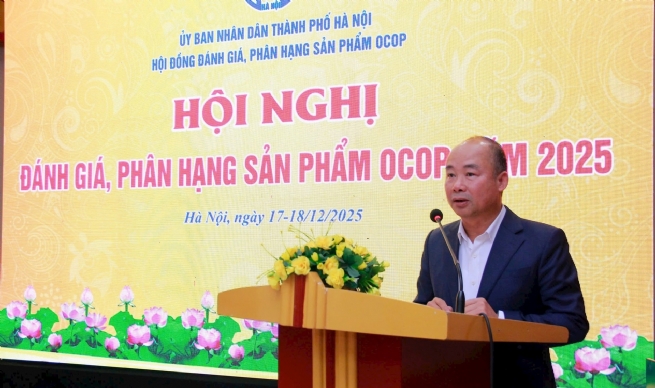
In the strategy for agricultural, rural, and creative economy development, how does Hanoi define the role of traditional craft villages, especially amid urbanization and deeper international integration?
Craft villages not only create high economic value and improve household incomes, but also preserve unique historical and cultural values. Hanoi, with its thousand-year history, has 1,350 craft villages and villages with crafts, including 337 traditional craft villages recognized by the city. Each village has its own identity, producing distinctive and refined products rich in national culture, bringing better income for rural people. The production value of Hanoi craft villages reaches more than VND24,000 billion (US$960 million) per year. Craft villages have supported the restructuring of the rural economy and helped implement the One Commune One Product (OCOP) Program and the New Rural Development Program.
In tourism, Hanoi has recognized 55 city-level destinations, including 26 linked to craft villages, of which seven are officially designated craft village tourism sites. Hanoi’s handicrafts are exported to 89 countries and territories, supported by a strong community of 351 artisans along with numerous active associations, unions, and clubs. The inclusion of Bat Trang ceramics and Van Phuc silk in the Global Network of Creative Craft Cities of the World Crafts Council marks a major milestone, creating new opportunities for brand promotion, trade expansion, and high-quality tourism. Hanoi has also actively promoted its craft villages through international fairs and the 2025 International Festival for Conservation and Development of Craft Villages, which attracted participants from 30 countries.
How will Hanoi promote craft villages in the coming period? Is there a plan to bring more craft villages into this network?
The inclusion of Bat Trang and Van Phuc in the global network creates opportunities for Hanoi to develop cultural industries and link craft production with tourism. This supports economic growth while introducing the city’s culture to the international community. Craft village products are not only consumer goods but also carry stories of history, culture, and national tradition. We encourage innovation and better product quality to meet the needs of domestic and foreign customers. At the same time, vocational training is emphasized to pass skills to younger generations and secure human resources for craft villages.
To join the Global Network of Creative Craft Cities, craft villages must meet strict criteria covering historical depth, cultural value, the number of artisans, community engagement, and the capacity for sustainable economic, social, and environmental development. This process gives Hanoi’s craft villages an opportunity to affirm their heritage values, expand export markets, and strengthen the global position of Vietnamese handicrafts.
During the 2026-2030 period, Hanoi will continue working with the World Crafts Council to survey and nominate additional representative craft villages.
Hanoi’s participation in the Global Network of Creative Craft Cities creates significant opportunities for both craft villages and the city’s tourism sector. Recognizing the strategic role of craft villages, the city has issued policies to encourage innovation in production models. These include support for developing collective trademarks, product origin traceability systems, and brand storytelling, as well as investment in infrastructure for craft village industrial clusters, the organization of concentrated production areas, and the enforcement of environmental and labor safety standards.
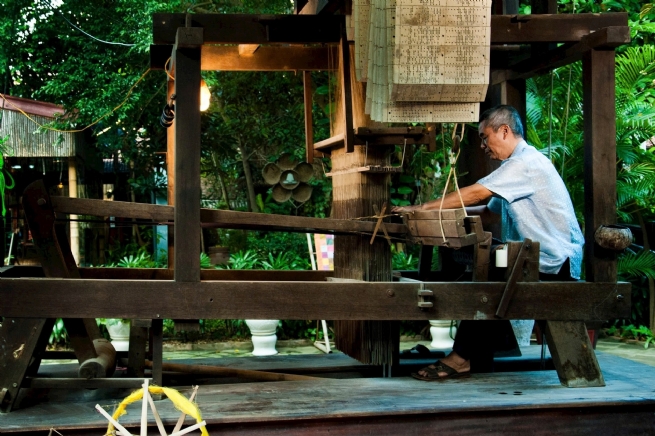
Van Phuc Silk Weaving Village is recognized as a member of the Global Network of Creative Craft Cities
A key direction is linking craft village development with the OCOP Program. Many handicraft products have reached standards of three stars or higher, meeting requirements to enter supermarkets, commercial centers, and export channels.
In the coming period, Hanoi will continue cooperation with the World Crafts Council to promote craft village products, expand training networks, and improve production capacity. Craft village products will have more opportunities to join major international exhibitions, helping them access global markets and strengthen brand value.
To raise competitiveness and added value, Hanoi People’s Committee is approving the Project for Overall Development of Craft Villages in Hanoi for 2024-2030 with a vision to 2050. The project prioritizes international cooperation to widen markets and promote cultural value so that products can reach international standards. The city will apply support mechanisms in planning, investment, trade promotion, preservation, and linkage between domestic and foreign enterprises, while encouraging exchanges with craft villages worldwide.
Hanoi also promotes connections between craft villages, enterprises, research institutes, and training institutions to form creative clusters. This helps products adapt to new consumer trends such as green design, recycled materials, and refined production based on orders instead of mass output.
Another model is linking craft villages with experiential tourism. Tourism is seen as the gateway for handicrafts to enter the global market, as each visitor becomes a messenger bringing home products and stories of Vietnamese culture.
In the strategy to 2030, Hanoi aims to develop craft villages under a green and circular economy model, requiring clean technology, sustainable environmental treatment, and closed value chains. The cooperation among craft villages, enterprises, research bodies, and schools will be the main driving force, helping Hanoi craft villages maintain tradition while standing firm in global competition.
Thank you very much!
By Minh Ngoc, Vietnam Business Forum


 Vietnamese





