

3:58:02 PM | 4/3/2026

The domestic phosphate industry faces a structural paradox: high production capacity contrasts sharply with shortages in raw materials. Amid these challenges, Lao Cai Fused Phosphate Joint Stock Company (LAFCO) shows the strength of a closed economic model, often selling out while ramping up investments to seize export opportunities.
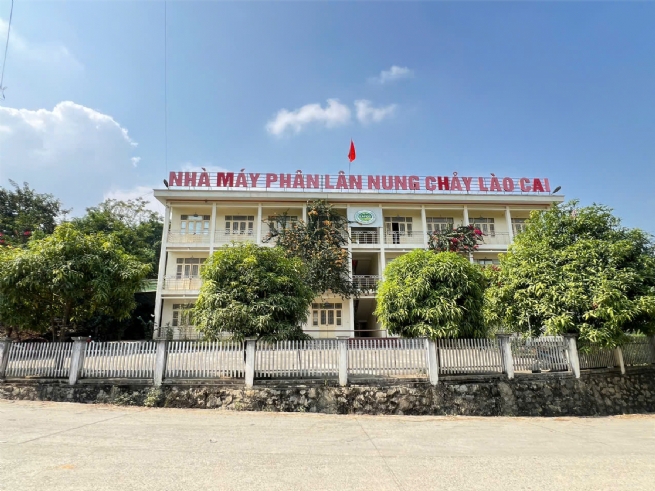
Phase 2 expansion increases production capacity to 200,000 tons per year to meet market demand
Self-sufficient raw materials - An absolute competitive edge
Unpredictable fluctuations in coal and electricity prices, logistics costs, and mineral processing technology barriers are placing heavy pressure on fertilizer companies.
In this context, LAFCO’s main competitive edge lies in its vertically integrated model. The company has built a fully self-sufficient supply chain by owning and operating two key mineral mines: the Serpentine mine and the Apatite mine in the Mo Coc belt. Experts regard the apatite ore at Mo Coc as having superior physico-chemical properties, making it among the highest-quality raw materials in Vietnam. Placing the plant next to these raw material sources also gives LAFCO a clear logistics cost advantage.
LAFCO’s fused phosphate, known for its high alkalinity, is considered a “chemical agriculture key” for restoring saline, acidic, and nutrient-poor soils. The product is in strong demand across the Central region, Central Highlands, South, and Southeast.
After building consumer habits, LAFCO has seen sales rise sharply. Bui Quyet Thang, Director of LAFCO’s plant, said: “For the past two years, everything we produce sells immediately. Sometimes we even owe distributors because production can’t keep up.” Annual sales have grown from 50,000-60,000 tons to nearly 90,000 tons over the past year.
Success in the domestic market is only the beginning; LAFCO is also expanding internationally. The company is gradually exporting to Southeast Asian markets, including Laos, Myanmar, Malaysia, the Philippines, and Cambodia, while promoting trade to meet the standards of markets such as Japan and South Korea.
Looking ahead, with mastery of Apatite flotation technology, LAFCO aims to enter advanced agricultural markets facing soil degradation, including Japan, South Korea, and Australia. To support this growth, Phase 2 of expansion is underway, with a total investment of about VND160 billion. By July 2026, when the new production line starts, total output is expected to reach around 200,000 tons. The company also plans an NPK fertilizer line with a 50,000-ton annual capacity, requiring VND120 billion.
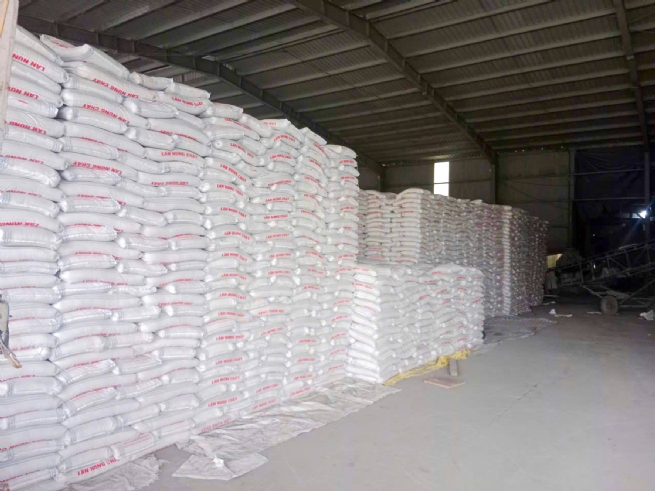
The warehouse is fully prepared to handle export shipments to global markets
Sustainable growth
A strategic highlight of LAFCO’s production expansion lies not only in capacity but also in a strong commitment to environmental protection.
In Phase 2, this commitment is most evident in the circular economy approach, which recovers excess CO gas from coal combustion to generate electricity. A 100,000-ton production line can produce about 2-2.5 MW of power. This process eliminates CO emissions while boosting efficiency, supplying 50-70% of the plant’s electricity needs and reducing dependence on the grid. Beyond heat recovery, the new Phase 2 line features a full upgrade in environmental management technology. Automation has been introduced at core operational stages to reduce risks and improve accuracy, ensuring strict control over technical parameters.
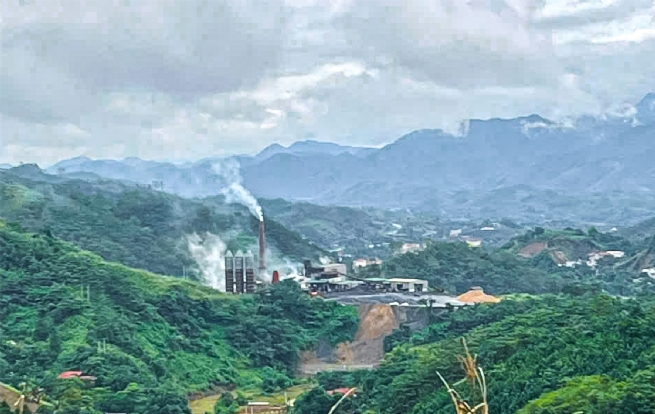
An overview of the LAFCO factory, located near raw material sources to optimize logistics costs and strengthen its competitive edge
LAFCO’s growth is reflected not only in financial results but also in community impact. The plant provides stable livelihoods for 140 employees, 90-95% of whom are local residents from nearby communes. The company actively supports the community, offering gifts to low-income households and collaborating with local authorities to respond to natural disasters.
With self-sufficient raw materials and a careful investment strategy, LAFCO is steadily positioning itself as a competitive agricultural supplier in the fertilizer market while expanding its role in the global supply chain.
By Long Thanh, Vietnam Business Forum


 Vietnamese





