

8:19:20 PM | 4/13/2026

Recently, AstraZeneca Vietnam, in collaboration with the Vietnam Cancer Association, organized the Oncology Summit, gathering domestic and international experts to update scientific progress and promoting impactful implementation models, such as digitalized Multidisciplinary Teams (MDT), liquid biopsy, the application Artificial Intelligence (AI) in pathological diagnostics, thereby supporting the development of precision medicine and optimizing patient care.
According to GLOBOCAN 2022, Vietnam records approximately 180,000 new cancer cases and over 120,000 deaths annually. The age-standardized incidence and mortality rates are 150.8 and 99.0 per 100,000 population respectively, reflecting an increasing disease burden on the healthcare system and society. Common cancers include breast, liver, lung, colorectal, and stomach. Notably, a trend toward younger patients is seen in breast and colorectal cancers, posing new challenges for early screening, diagnosis, and treatment. Factors such as an aging population, rapid urbanization, and lifestyle changes - including smoking, obesity, and physical inactivity contribute to the rising case numbers. Projections suggest that new cancer cases in Vietnam could increase by 60–70% by 2050, emphasizing the urgent need for national strategies for prevention, early detection, and treatment optimization.
Assessing this situation, Assoc. Prof. Bui Dieu, MD, PhD, President of the Vietnam Cancer Association and event chair, emphasized: "Given the rising cancer burden and the trend of younger patients in Vietnam, applying medical advancements is no longer an option but an urgent requirement to enhance cancer care efficiency. Promoting precision medicine based on molecular testing, liquid biopsy, and digital data - alongside the application of technology and AI in diagnosis and monitoring - will help personalize treatment protocols for each patient, improve efficacy, and optimize healthcare system resources."
The key to this transformation lies in the implementation of advanced diagnostic technologies, including liquid biopsy in molecular testing. In addition, the integration of digital health data infrastructure and the application of artificial intelligence (AI) in diagnosis and disease monitoring serve as powerful drivers. These innovations enhance clinical outcomes at the individual level while optimizing the utilization of healthcare system resources.”
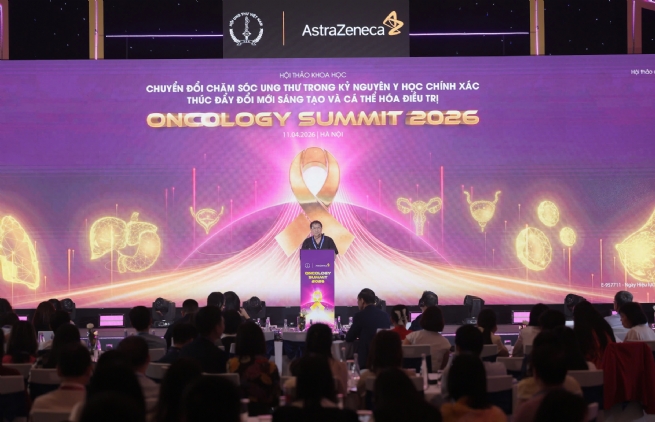
Assoc. Prof. Dr. Bui Dieu, President of the Vietnam Cancer Association, delivered the opening remarks at the event
Regarding scientific content, the conference updated solutions shaping the future of oncology. Presentations focused deeply on the role of Multidisciplinary Teams (MDT), biotechnological advancements, and AI applications.
Experts cited international studies showing that cancer patients can improve survival by more than 15 months when MDT is applied in diagnosis and treatment, compared with settings where MDT is not implemented. However, several barriers continue to hinder the adoption of MDT, including a lack of digital infrastructure, causing data fragmentation. The solution shared by international experts lies in implementing digitalized MDT platforms directly connected to electronic medical records for real-time monitoring of treatment results.
Dr. Jomtana Siripaibun, Director of the Oncology Center at Chulabhorn Hospital, Thailand, stated: "MDT is a vital strategy in cancer treatment, and digital transformation is a mandatory condition for this model to operate sustainably. By implementing a digital MDT platform connected to clinical data, we have recorded more efficient case preparation and more consistent treatment records. The key is to start with a priority disease group and a fully recorded, monitored, standardized consultation process, to step-by-step build systemic capacity for modern cancer care."
Concurrently, the convergence of liquid biopsy and Artificial Intelligence (AI) is expected to reshape the fields of molecular diagnostics and anatomic pathology. Instead of relying solely on invasive tissue biopsies, liquid biopsy allows for the analysis of circulating tumor DNA (ctDNA) to detect early signs of recurrence or drug resistance. In addition, when combined with AI, the diagnostic process gains consistency, reduces turnaround time, and assists in biomarker quantification.
Dr. Chien-Feng Li, Head of Clinical Pathology and Laboratory Medicine at Chi Mei Medical Center and Adjunct Professor at the National Sun Yat-sen University School of Medicine, Taiwan, noted: "Advancements in liquid biopsy and AI are creating a landmark shift in cancer diagnosis and treatment, especially when implemented as a multimodal diagnostic model, combining histological, molecular, liquid biopsy, and AI data, to support precision medicine. This approach helps select more appropriate treatments for each patient and optimizes care. To leverage this potential, investment in infrastructure and human resource training will be key factors for the healthcare system."
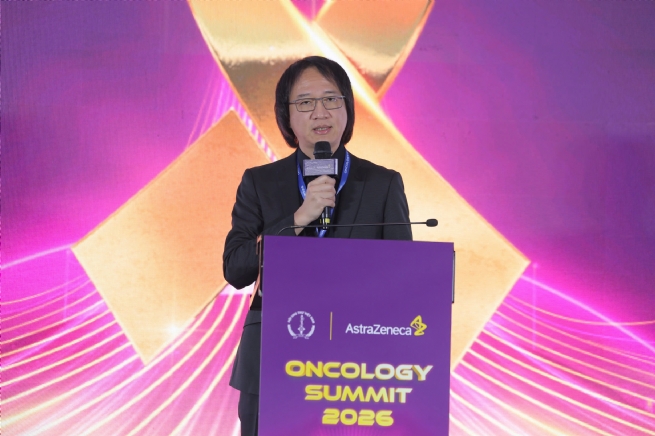
Dr. Chien-Feng Li, Head of the Department of Clinical Pathology and Laboratory Medicine at Chi Mei Medical Center, and Adjunct Professor at the College of Medicine, National Sun Yat-sen University, Taiwan, delivered a presentation at the event
Present in Vietnam’s oncology field since 1994, AstraZeneca is one of the multinational biopharmaceutical groups that identify oncology as a long-term strategic pillar. With a patient-centric philosophy, AstraZeneca has brought numerous advanced cancer treatments to Vietnam while supporting a healthcare ecosystem that integrates treatment, clinical research, policy, and the community.
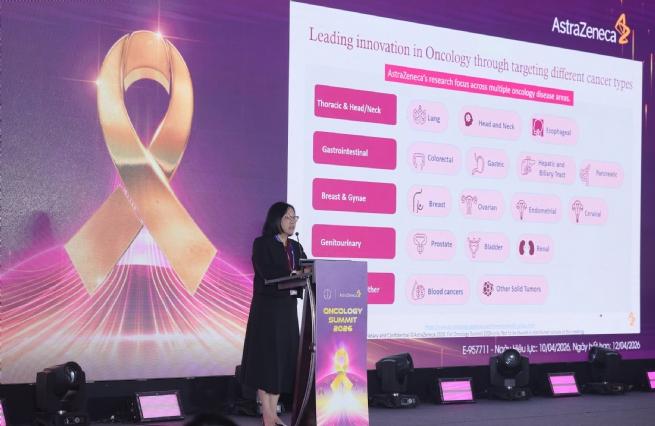
Dr. Van Thi Thu Suong, Medical Director, AstraZeneca Vietnam, shared AstraZeneca’s journey in oncology in Vietnam
This journey is clearly reflected through strategic collaborations with professional associations and hospitals nationwide. In September 2025, AstraZeneca signed long-term comprehensive Memorandum of Understanding with the Vietnam Cancer Association (VCA). Simultaneously, collaborations with frontline hospitals like K Hospital and HCMC Oncology Hospital, along with many other hospitals, have enabled a range of meaningful initiatives to enhance diagnostic and treatment capabilities across multiple cancer types.
AstraZeneca's scientific capacity is underscored by the implementation of 78 clinical research projects in Vietnam, including 69 oncology trials at 31 medical facilities nationwide, involving 1,200 patients. This contributes to the research and clinical practice capacity of medical staff while increasing early access to advanced cancer treatments for patients.
Regarding future directions, Mr. Atul Tandon, Chairman and General Director, AstraZeneca Vietnam, affirmed: "AstraZeneca is committed to improving the quality of life for patients through treatment innovation, scientific research, and extensive collaboration with the healthcare system. We believe that transforming cancer care needs to be driven simultaneously across multiple pillars, from standardizing guidelines and enhancing multidisciplinary capacity to advancing real-world data and accelerating the adoption of digital technologies in diagnosis and treatment monitoring. With more than 10 new molecules in development through 2030, we will continue to provide advanced, effective, and sustainable treatment solutions. Continuing this journey, we will expand and promote collaboration, accompanying the national cancer prevention and control strategy toward the goal of universal health coverage."
Looking ahead, AstraZeneca continues to pursue its long-term strategy in oncology, with a focus on developing breakthrough therapies such as Antibody-Drug Conjugates (ADC), Dual Specific Antibodies, and Cell Therapy, while shifting toward the development of a comprehensive cancer ecosystem. The company is expanding its investment in clinical research and Real-World Evidence (RWE) to support policy dialogues for sustainable access. Furthermore, AstraZeneca is committed to supporting Vietnam’s healthcare system in its sustainable development and the modernization of cancer care processes in the era of precision medicine, in alignment with the National Cancer Prevention and Control Strategy.
Source: Vietnam Business Forum
 April 24–25, 2026
 Kinh Bac Cultural Center, Bac Ninh Province


 Vietnamese





