

8:50:36 AM | 5/3/2026

As integration deepens, participation in the supply chains of the foreign direct investment (FDI) sector offers both an opportunity and a test of the competitiveness of domestic enterprises. In Bac Ninh, this direction is being put into practice through a clear approach: moving beyond simple connections to focus on raising the standards of domestic firms.
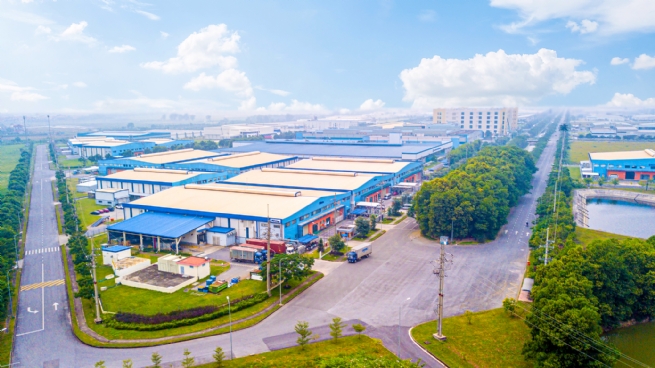
Bac Ninh Province is investing in logistics and infrastructure to strengthen its overall competitiveness
In practice, although the FDI sector plays a key role in driving growth, the participation of domestic enterprises in value chains remains limited and is mainly concentrated in low value-added segments. The issue is not a lack of opportunities, but gaps in technology, management, and quality standards.
From this perspective, Bac Ninh has determined that deeper participation in FDI supply chains depends on strengthening core capabilities and meeting international standards. This approach aligns with the strategy of developing supporting industries and improving the economy’s self-reliance.
“For domestic enterprises to participate more deeply in FDI supply chains, the core issue is not only creating connection opportunities, but also strengthening internal capabilities, from technology and management to product quality, to meet the increasingly high standards of international partners,” said Vu Thi Phuong Thao, Deputy Director of the Bac Ninh Department of Finance.
The province aims in the 2026-2030 period to raise localization rates in key sectors such as electronics, precision engineering, and supporting industries to around 30-40%, while building a community of enterprises capable of joining tier-1 and tier-2 supply chains of FDI corporations.
To achieve this goal, Bac Ninh is implementing coordinated solutions.
First, the province continues to advance administrative reforms, creating conditions for enterprises to shorten market entry time and participate in supply chains. The expansion of online public services, digitalization of records, and fast-track processing mechanisms has helped reduce costs and time for businesses.
However, administrative reform is only a necessary condition. According to the province, the sufficient condition lies in “raising standards” for enterprises. On that basis, Bac Ninh is implementing supporting industry development programs closely linked to the needs of FDI corporations. Domestic enterprises are supported in improving production processes, upgrading technology, and gradually meeting international partner standards.
At the same time, the province is investing in logistics and energy infrastructure to improve overall competitiveness. Regional transport projects, logistics centers, inland ports, and aviation infrastructure will help shorten delivery times and reduce transportation costs, key factors for enterprises to participate in higher-value orders.
Human resources are also identified as an important pillar. Bac Ninh is promoting high-skill training through cooperation among the government, enterprises, and training institutions, while supporting retraining costs for supporting industry enterprises. This helps workers quickly meet the requirements of modern production, improving productivity and quality.
In addition, the province is developing selective incentive mechanisms, focusing on supporting enterprises with the potential to join FDI supply chains, particularly those investing in technology upgrades and research and development.
“The goal of Bac Ninh is not only to increase the number of enterprises participating in supply chains, but more importantly to gradually raise the position of domestic enterprises, enabling them to move into higher value-added segments of global value chains,” Thao said.
With this coordinated approach, Bac Ninh is not only aiming to increase the number of enterprises participating in supply chains, but also placing greater focus on the quality and depth of participation.
The shift from “connection” to “raising standards” is not only a policy change but also a shift in development thinking. This provides the foundation for Bac Ninh to build a sustainable industrial ecosystem, where domestic enterprises and the FDI sector grow together, support each other, and enhance mutual value.
By Ngo Khuyen, Vietnam Business Forum


 Vietnamese





