9:23:00 AM | 5/11/2026

Industrial parks in Vietnam are under growing pressure to shift toward a green and sustainable development model. With Vietnam’s commitment to achieving net zero emissions by 2050, eco-industrial park development is seen as a strategic direction. It helps reduce emissions, improve resource efficiency, and build a foundation for Vietnamese enterprises to take part more deeply in global supply chains.
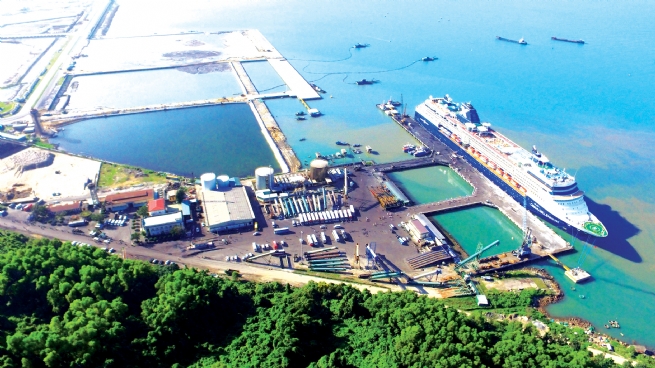
Chan May–Lang Co Economic Zone in Hue City is being developed into a key economic zone with stronger links between industry, services, tourism and urban development
Context and the inevitable need for green transition in industrial parks
Entering the third decade of the 21st century, the global growth model is changing strongly under the combined impact of climate change, resource shortages, sustainable development requirements, and increasingly strict green trade standards. The green transition is no longer an optional direction but has become a condition for maintaining national and corporate competitiveness.
In Vietnam, industrial parks continue to be a key driver of growth. Economically, they account for about 35-40% of total newly registered foreign direct investment each year, create jobs for millions of workers, and contribute significantly to national growth. However, this development also brings major environmental pressure. According to statistics, industrial parks generate an average of 23-25 million tons of ordinary industrial waste per year and around 800,000 tons of hazardous waste. In terms of energy use, the industrial sector accounts for nearly 50% of the country’s total consumption, making it one of Vietnam’s largest sources of greenhouse gas emissions.
Under the urgent pressure of climate change and international commitments, particularly Vietnam’s ambitious goal of achieving net zero emissions by 2050 under COP26, greening industrial parks is no longer a formal or encouraged option but has become a requirement for the business community in Vietnam. In addition, without early green transformation, Vietnamese goods risk losing competitiveness and may even be excluded from supply chains in demanding markets such as Europe and the United States due to green technical barriers.
Advantages in implementing eco-industrial park models in Vietnam
To date, the legal framework for eco-industrial parks in Vietnam has been gradually developed and improved, creating an important foundation for implementation in practice. Eco-industrial parks are specifically regulated in Decree 35/2022/ND-CP dated May 28, 2022 of the Government on the management of industrial parks and economic zones (replacing Decree 82/2018/ND-CP), together with Circular 05/2025/TT-BKHDT. At the same time, related provisions are also included in Decree 08/2022/ND-CP detailing certain articles of the Law on Environmental Protection, as well as in major national strategies and programs such as Decision 882/QD-TTg on the Action Plan for the Green Growth Strategy for the 2021 to 2030 period, with a vision to 2050; Decision 687/QD-TTg approving the Circular Economy Development Scheme; and Decision 222/QD-TTg in 2025 on the National Action Plan for implementing the circular economy to 2035. In particular, Resolution 59-NQ/TW of the Politburo on international integration in the new context continues to prioritize the development of smart eco-industrial park models, thereby strengthening Vietnam’s long-term strategic orientation in this field.
Alongside the legal framework, technical guidance documents for eco-industrial parks have also been improved and standardized. These include guidelines for establishing new eco-industrial parks, a set of indicators for assessing eco-industrial park performance in Vietnam, guidance on solid waste reuse in industrial parks, manuals for using information systems to monitor eco-industrial parks and eco-enterprises, greenhouse gas inventory guidance for enterprises in industrial parks, as well as materials on financial mobilization, green finance handbooks, and environmental incident response guidelines. Together, these form a relatively complete toolkit. In addition, implementation support tools provided by the United Nations Industrial Development Organization (UNIDO) have also helped improve feasibility and implementation efficiency.
Eco-industrial park development to support Vietnam’s green transition
To address these challenges, since 2014, the Ministry of Planning and Investment (now the Ministry of Finance) has worked with UNIDO to implement a pilot project on eco-industrial parks in Vietnam towards a sustainable industrial zone model, funded by the Global Environment Facility (GEF), the Swiss State Secretariat for Economic Affairs (SECO), and the United Nations Development Program (UNDP).
The 2014 to 2019 pilot phase delivered important results, including support for drafting and issuing regulations on eco-industrial parks under Decree 82/2018/ND-CP, the first legal foundation for this model. The project also supported four industrial parks, including Khanh Phu and Gian Khau (Ninh Binh), Hoa Khanh (Da Nang), and Tra Noc 1 & 2 (Can Tho), in shifting toward eco-industrial parks. As a result, 57 enterprises received direct support to apply resource efficiency and cleaner production (RECP) solutions, with a total of 640 solutions identified, of which 546 were implemented. Through this, these enterprises saved each year 19,247 MWh of electricity, 142,000 GJ of fossil fuel, and 606,816 m³ of water, reduced the use of 4,225 tons of materials and chemicals, and reduced emissions by 30,600 tons of CO₂ equivalent, generating US$3.3 million in annual operating profit.
Building on the results of the pilot phase, the project “Implementing the Eco-Industrial Park Initiative in Vietnam under the Global Eco-Industrial Parks Program approach” (GEIPP Vietnam) was launched to improve economic, environmental, and social efficiency in industrial sectors through the implementation and scaling up of eco-industrial park models. The project is implemented in Hanoi and five key localities: Hai Phong, Da Nang, Can Tho, Dong Nai, and Ho Chi Minh City. The establishment of GEIPP Vietnam reflects a strong commitment by the Government of Vietnam, UNIDO, and SECO to advancing a transition toward a green, responsible, and climate-resilient industrial system.
Subsequently, in the 2020 to 2024 period, GEIPP Vietnam, led by the Ministry of Finance and implemented by UNIDO, with funding from the Government of Switzerland through SECO, continued to be carried out. Through the project, UNIDO provided technical assistance to the Ministry of Finance in completing the legal framework for eco-industrial parks through reviewing, updating, and developing Decree 35/2022/ND-CP, replacing Decree 82/2018/ND-CP. Decree 35/2022/ND-CP introduced quantitative criteria for recognizing an industrial park as an eco-industrial park, replacing earlier qualitative or voluntary concepts. This system of standards is designed with a multi-stakeholder approach, covering the responsibilities of both infrastructure investors and secondary enterprises operating within industrial parks, thereby creating a transparent and easily monitored operating framework.
In practice, the GEIPP Vietnam project has carried out in-depth technical interventions in five pilot industrial parks: Deep C (Hai Phong), Amata (Dong Nai), Hiep Phuoc (Ho Chi Minh City), Hoa Khanh (Da Nang), and Tra Noc 1 & 2 (Can Tho). More than 90 enterprises were supported in applying resource efficiency and cleaner production (RECP), with a total of 889 solutions identified, of which 429 were implemented. As a result, these enterprises save each year 14,378 MWh of electricity, 264,127 GJ of fossil fuel, 278,690 m³ of water, reduce 22,180 tons of chemicals and raw materials, and reduce emissions by 138,994 tons of CO₂ equivalent, generating US$2.6 million in operating profit, along with US$3.3 million in private investment mobilized.
In addition, the project has identified 62 potential industrial symbiosis opportunities, of which 31 were assessed at pre-feasibility level and 18 solutions are being implemented or are ready for implementation, offering potential cost savings, resource savings, and emission reductions for participating enterprises.
Eco-industrial park development is receiving attention and support from international organizations such as UNIDO and SECO, along with opportunities to learn from eco-industrial park transformation experiences in other countries under the global eco-industrial park program. At the same time, awareness and capacity among stakeholders, from state management agencies to the business community, are improving, creating favorable conditions for implementing and scaling up the eco-industrial park model in the coming period.
Nguyen Tram Anh - National Project Manager, United Nations Industrial Development Organization (UNIDO)
Source: Vietnam Business Forum




 Vietnamese