3:54:57 PM | 5/11/2026

After 17 years in Vietnam, De Heus has solidified its leading position in the animal nutrition sector while pioneering toward a comprehensive, closed-loop agricultural value chain: from breeding, nutrition, and farming to processing and food distribution.
In Gia Lai, De Heus is deploying a large-scale livestock complex integrated with production, logistics, and value chain linkages, contributing to form the concentrated farming zones, increase value, and support the shift to modern, sustainable agriculture. Our reporter interviewed Johan van den Ban, CEO of De Heus Vietnam and Asia, about this strategic vision.
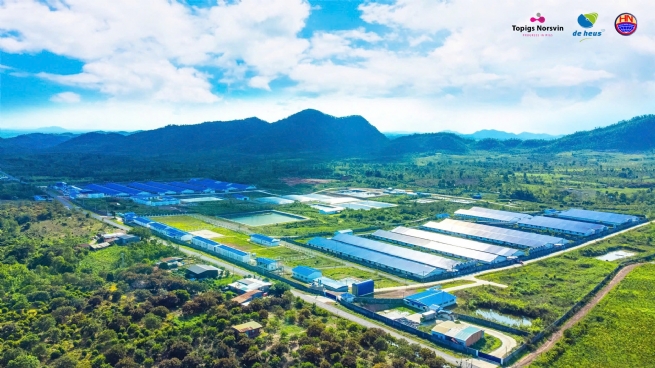
De Heus, in cooperation with Hung Nhon Group and Topigs Norsvin, is building a high technology grandparent and parent pig breeding complex in Gia Lai
Over 17 years in Vietnam, what key milestones has De Heus achieved, particularly in developing the agricultural value chain?
De Heus officially entered Vietnam in 2008 with its first factory in Dong Nai. After 17 years of development, we have built a network of more than 20 animal feed plants nationwide, with total annual capacity reaching millions of tons. Thus, becoming one of the leading companies in animal nutrition.
However, the most important milestone lies not in production scale, but in the transformation of our development model. De Heus has progressively moved from a traditional feed producer to developing a comprehensive agricultural value chain. This chain integrates all key links: from nutritional research and feed supply to breeding development, high technology farming, processing, and distribution to domestic and export markets.
Strategic partnerships and investments in recent years have expanded our production capacity, distribution network, and technology foundation. As a result, De Heus does not merely provide products, we deliver integrated solutions for the livestock sector, from nutrition consulting and farm management to disease control and traceability.
De Heus also remains committed to sustainable development. We have implemented programs to support farmers, encompassing technical training, management capacity building and promoting biosecure production. This helps improve economic efficiency while improving product quality to meet increasingly stringent market standards.
In essence, De Heus has been instrumental in driving the Vietnam’s livestock sector from small scale production to large scale, professional operations, gradually integrating into the global value chain.
De Heus is a pioneer in sustainable development and ESG practices. Could you share specific solutions being implemented to help achieve Vietnam’s Net Zero goal by 2050?
Sustainable development is a core pillar of De Heus’s global strategy. In Vietnam, ESG principles are applied across the entire value chain.
On the environmental side, we focus on reducing emissions and optimizing resource utilization. Rooftop solar power systems have been installed at many plants and farms, with the total capacity of about 20 MWp, meeting 25 - 30% of electricity demand at some facilities. Meanwhile, factories operate under international standards to control input materials and reduce environmental impact.
In livestock farming, De Heus promotes biosecure production models, animal welfare, and responsible for antibiotic use. These are key factors that not only improve production efficiency but also mitigate disease risks and negative impacts on public health.
Another notable direction is increasing the use of agricultural by-products as inputs, supporting the circular economy and reducing pressure on natural resources.
On social and governance aspects, De Heus focuses on workforce development, building a transparent and fair working environment, and implementing community support programs, especially farmers.
Through this comprehensive approach, De Heus aims not only to achieve Net Zero but also to contribute to the green transition of Vietnam’s agriculture sector.
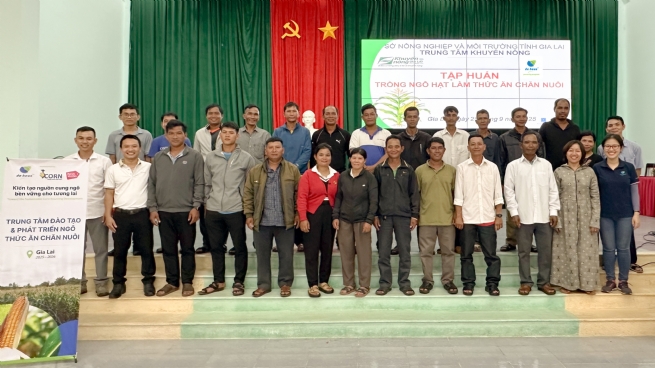
In Gia Lai, De Heus is implementing a training and development project for corn used in animal feed to improve farmers’ skills in the region
At the Gia Lai Investment Promotion Conference on March 28, 2026, you said Gia Lai is a key area in De Heus’s development strategy. Could you share more about projects and investment plans for 2026 to 2036 in the province?
Within our development strategy for Vietnam, De Heus identifies the Central Highlands as a high potential region, with Gia Lai playing a particularly important role. The province offers favorable conditions for high technology agriculture, including land availability, natural conditions, raw materials, and clear development direction from local authorities.
From 2026 to 2036, De Heus and its strategic partner Hung Nhon Group will implement projects in Gia Lai with a total investment of about VND 2,800 billion. This is key component of a broader investment strategy of more than VND 18,300 billion to develop a sustainable agricultural value chain in Vietnam.
Currently, we have operationalized phase 2 of the high-technology Great-grandparent and Grandparent pig breeding complex in Gia Lai, contributing to the supply of high-quality genetic stock for the region. At the same time, three animal feed plants in Gia Lai are now in operation, ensuring supply for the Central Highlands and the Central Coastal region.
Moving forward, De Heus will continue to expand commercial farming systems, invest in logistics infrastructure, raw material storage, and technical support centers. We will strengthen partnerships with cooperatives and farming households to form large-scale concentrated production areas.
All projects are designed to meet international standards on biosecurity, animal welfare, and environmental protection. Products are also oriented toward export markets with strict requirements such as Europe, Japan, South Korea, and the Middle East.
With this approach, Gia Lai is not only a project site but also is positioned as a core hub in De Heus’s agricultural value chain in Vietnam.
How will De Heus’s projects in Gia Lai contribute to forming concentrated farming zones and improving local livelihoods?
Projects in Gia Lai are designed around a closed-loop value chain logic, with a focus not only on expanding production scale but also on creating a broader impact across the local agricultural ecosystem.
First, investment in high-technology livestock complexes initiate the formation of well-planned concentrated farming zones, following the international standards. This provides a critical foundation to improve productivity, control disease, and ensure product quality, key factors for sustainable livestock development.
The difference lies in the value chain linkage model. De Heus does not follow a “standalone investment” approach but builds a cooperative ecosystem with farmers. The company provides breeding stock, feed, and technical processes, while supporting management and market connections. This allows farmers to move from small-scale production to participation in large-scale value chains, reducing risks, and improving economic efficiency.
Beyond that, the projects also create a diverse employment ecosystem, from technical farming jobs to roles in supply chains and support services. This contributes to shifting the rural labor structure toward a more professional and modern model.
In the long term, De Heus envisions this model to help Gia Lai build a competitive livestock sector while improving income and quality of life for local people.
How do you assess the investment environment and the support from provincial authorities?
During project implementation, De Heus has received strong support from provincial authorities, from the initial investment preparation stages to project execution.
We value efforts to reform administrative procedures and improve transparency and governance efficiency. This helps businesses reduce costs, shorten lead times, and strengthen confidence in long-term investment decisions.
The willingness to listen and respond promptly to business concerns, along with close coordination among departments, has also helped create a stable and business-friendly investment environment.
With strong potential for high-technology agriculture, especially in livestock, along with clear and consistent investment policies, Gia Lai is becoming an attractive destination for investors. From De Heus’s perspective, the province is on the right direction in building a transparent and efficient investment environment. This will provide a solid foundation to attract more high-quality projects, contributing to local socio-economic development.
Thank you very much!
By Ngoc Tung, Vietnam Business Forum





 Vietnamese