4:08:34 PM | 7/24/2026

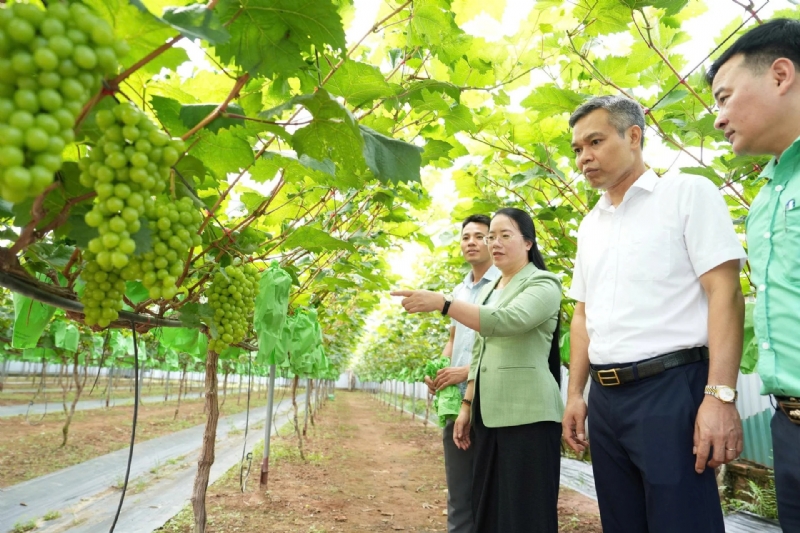
In Thanh Tri Commune, many rural roads and on-farm irrigation works have been completed thanks to the consensus and direct contributions of local residents. According to local data, residents have donated more than 3,874 sq.m of land, contributed more than VND 200 billion in mobilized social resources, and provided tens of thousands of working days. In particular, Tu Khoat Village donated 300 sq.m of land, while Village 1 in Van Phuc donated 176 sq.m. Many households voluntarily gave up land worth hundreds of millions of dong for common infrastructure projects.
Contributions to infrastructure development are only one aspect of how local residents participate in the program. Pham Trung Hieu, Chairman of the Thanh Tri Commune Farmers’ Association, said the movement encouraging farmers to excel in production and business had attracted more than 56,000 household registrations. Production value per hectare of cultivated land increased from VND 190 million in 2020 to VND 280 million in 2025. Association members have also maintained 17 pilot models for environmental protection and sanitation along the To Lich and Nhue rivers, while mobilizing 310 households to voluntarily dismantle structures to make way for a riverside access road along the To Lich River.
Across the city, preliminary statistics from the Hanoi Farmers’ Association show that members have participated in repairing 2,065 km of rural roads; donated 14,722 sq.m of land; dredged and reinforced 173 km of on-farm irrigation canals; and built or repaired 437 bridges and culverts. Farmers in Hanoi have also contributed 89,998 working days and more than VND 116.141 billion to the development of advanced and model new rural areas.
The role of farmers as the key stakeholders is also clearly reflected in the transformation of production methods. In Dan Phuong, the commune Farmers’ Association currently has more than 5,800 members across 25 branches. The Association has provided consultancy and support for the establishment of 48 economic models and vocational farmer groups, as well as six agricultural cooperatives, creating jobs and stable incomes for hundreds of local workers.
According to Nguyen Dang Thuc, Chairman of the Dan Phuong Commune Farmers’ Association, one of the most notable changes is that farmers are gradually shifting their mindset, introducing greenhouses, net houses and automated control systems into production, while building brands around OCOP products. Cuoi Quy High-Tech Organic Vegetable Cooperative has 21 three-star OCOP products; Dan Hoai Cooperative has eight four-star OCOP products; and Nghia Minh Mushroom Cooperative has three products rated three and four stars.
Le Thanh Agricultural Cooperative in Hong Son Commune serves as a “supporting pillar” for more than 4,800 members, managing 453.7 hectares of cultivated land and achieving 100% mechanization, from land preparation to harvesting. Its eight services are organized along the value chain, covering inputs, technical support and linkages with enterprises for product offtake. Over five years, three key services alone generated an estimated direct economic benefit of more than VND 9 billion for member households.
These models demonstrate that farmers need an organization capable of coordinating production schedules, controlling production processes, reducing costs and negotiating market outlets. Participation in value-chain linkages enables each household to retain its role as the producer while gaining collective strength to meet market requirements.
Hanoi currently has 3,463 OCOP products, including nine five-star products, 19 potential five-star products, 1,576 four-star products and 1,859 three-star products. In 2026, the city aims to evaluate around 300 products for three-star ratings and above, propose at least 20 potential five-star products, develop an additional 8-10 sales outlets, and establish five promotion and distribution centers linked to craft villages and tourism.
The number of certified products is an advantage, but it is not the final destination. Many OCOP producers still face limitations in packaging, product information, traceability, management capacity and marketing. Therefore, upgrading product ratings must go hand in hand with standardizing raw materials, stabilizing supply, ensuring food safety and expanding markets. Selling through e-commerce platforms or livestreaming can only be sustainable when product quality and reputation are maintained with every order.
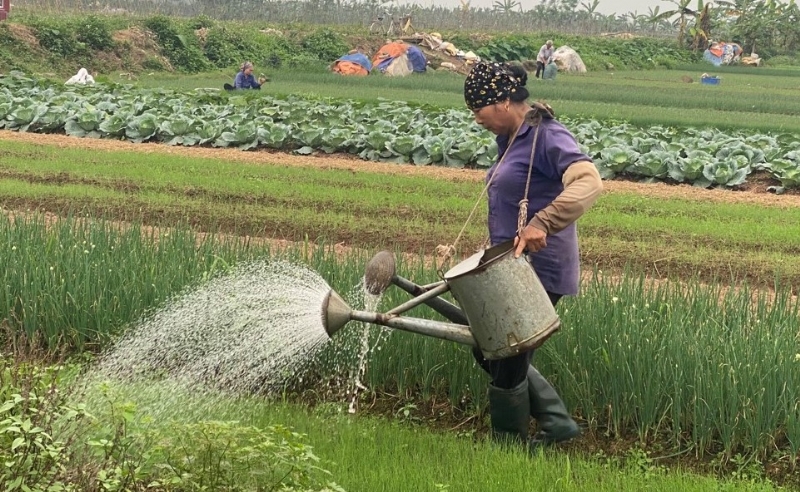
The Hanoi Farmers’ Association currently has nearly 370,000 members organized into 2,432 branches across 79 communes and wards. According to Pham Hai Hoa, Chairwoman of the Hanoi Farmers’ Association, the orientation of “Digital Farmers – Clean Agriculture – Green Environment” calls for a shift from agricultural production thinking to an agricultural economy approach, from focusing on output to increasing value, and from traditional farming to green, digital and circular agriculture. The “Digital Officers – Digital Branches – Digital Farmers” model has been identified as one of the approaches to renewing the Association’s activities.
Digital transformation is not simply about putting agricultural products online. Farmers need to know how to record data, use traceability codes, manage costs and keep up with market demand. The Association should focus on training, connecting cooperatives with distribution enterprises, and helping members gain access to capital.
As of December 31, 2025, outstanding loans through borrowing groups jointly managed by the Farmers’ Association and Agribank exceeded VND 672 billion, covering 448 groups and serving 2,486 households. Credit resources need to be linked to production plans, sales contracts and risk-management capacity. Land consolidation must be carried out transparently and voluntarily, while ensuring farmers’ long-term rights and interests.
Hanoi has completed its task of building new rural areas, but the quality of rural life must continue to be strengthened. In the next phase, progress should be measured by stable incomes, a clean environment, convenient access to essential services and people’s ability to participate in decision-making, rather than simply by counting infrastructure projects, certified products or local titles.
From common community initiatives to individual production seasons, farmers need access to information, opportunities to participate in discussions and the capacity to organize implementation. When people are empowered to take ownership and receive benefits commensurate with their contributions, new rural development can truly become a self-driven endeavor of the community.
|
This page is produced in coordination with the Hanoi Coordination Office for New-Style Rural Development |
Source: Vietnam Business Forum