9:45:40 AM | 8/13/2026

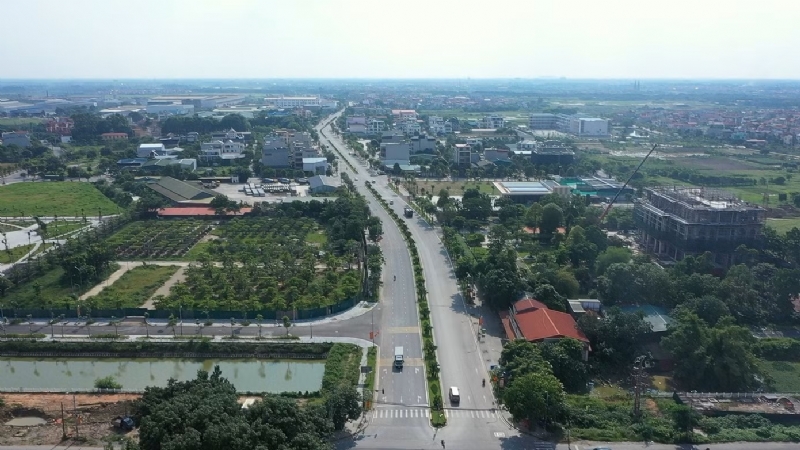
Phuc Thinh Commune is one of two communes selected by Hanoi for a pilot implementation of the “socialist commune and ward” model in the agriculture and environment sectors for 2026-2030, focusing directly on addressing land-related issues, protecting the environment at source, and stabilizing people’s livelihoods during the urbanization process.
Phuc Thinh builds green new-style rural areas, modern urban development
Implementing the “Bright - Green - Clean - Beautiful” Pilot Model
Dai Bang residential area in Son Du Village has about 220 households. This is the location selected by the Vietnam Fatherland Front Committee of Phuc Thinh Commune to develop the “Bright - Green - Clean - Beautiful” pilot model, focusing on addressing shortcomings in environmental sanitation and improving the living environment.
The plan sets out requirements that can be checked on a daily basis. All households are expected to have garbage bins, commit not to litter, and maintain hygienic drainage systems. The residential area will develop flower-lined roads and model flower gardens, plant more trees, and gradually eliminate accumulated garbage spots.
One task that has attracted residents’ attention is the improvement of the approximately 400m-long road from the Vo Nguyen Giap service road to Dai Bang Hamlet. The upgraded road will make travel more convenient while also addressing the lack of uniformity in the landscape at the entrance to the residential area.
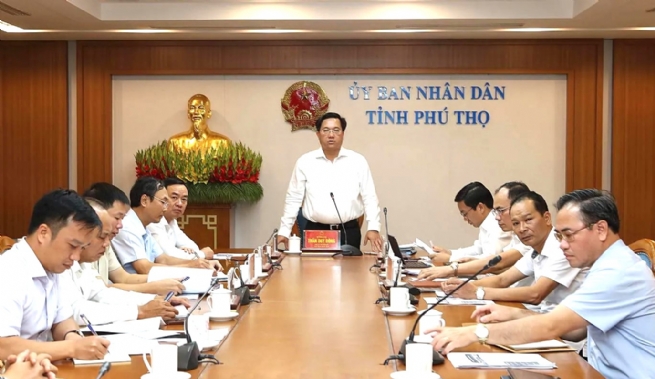
Chairman of the Vietnam Fatherland Front Committee of Phuc Thinh Commune Nguyen Manh Hong requested that the model “ensure substantive results, avoid formalism, and promote the people’s role as the central actors.” Each household will participate directly, while the authorities and the Fatherland Front will support tasks beyond the community’s capacity.
Dai Bang residents agreed to participate in environmental sanitation and landscape improvement, while also requesting additional support from the commune in the form of brooms, garbage bins and collection equipment. A clean and attractive residential area requires not only voluntary awareness but also appropriate equipment, collection schedules and collection points.
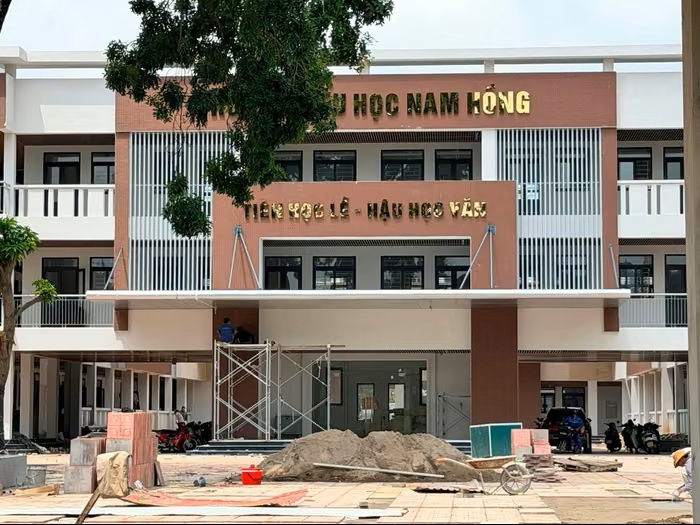
Phuc Thinh invests in infrastructure development
Going Beyond Landscape Improvement
Phuc Thinh covers an area of 42.68km² and has a population of 90,926. It was formed from several areas of former Dong Anh. The commune is located near the Nhat Tan - Noi Bai corridor, the Thiep River, Ca Lo River and Van Tri Lagoon, while also being affected by urban, transport and resettlement projects. Rural environmental issues therefore need to be addressed alongside land-use planning, drainage and employment.
Under Resolution No. 16-NQ/TU of the Hanoi Party Committee and Decision No. 3489/QD-UBND of the Hanoi People’s Committee, Phuc Thinh and Thu Lam were selected to pilot the “socialist commune and ward” model. Plan No. 135/KH-SNNMT for the 2026-2030 period focuses on data, waste, water resources, flood prevention, green spaces, urban agriculture, livelihoods and public participation.
Results should not be measured only by the number of mobilization campaigns or trees planted. The indicators must reflect air quality, domestic water quality, drainage capacity, the rate of waste sorted at source, green space and water surface areas, and residents’ satisfaction. This will help the locality avoid beautifying a road while failing to address sources of garbage and wastewater.
For Phuc Thinh, the plan prioritizes controlling dust, noise and waste from construction sites; protecting the ecological corridors of the Thiep River, Ca Lo River and Van Tri Lagoon; and reviewing canals, pumping stations, low-lying areas and drainage bottlenecks. Ponds, lakes, native trees and community gardens will be preserved in association with the “Villages within the City - City within the Villages” orientation.
Waste will be handled at the point of generation. Households will sort and collect waste separately; organic by-products will be reused, while pesticide packaging must be collected and transferred in accordance with regulations. This work requires the participation of collection service providers, recycling enterprises, cooperatives and residential communities.
Ensuring Benefits for Both Residents and Production Activities
Land is a task that must come first as the commune develops agriculture while implementing multiple urban projects. Phuc Thinh currently has 30,682 residential and agricultural land parcels. By mid-August 2026, data had been completed for 19,698 parcels, reaching 65.08%; another 10,984 parcels require further updates, including 6,718 agricultural land parcels and 4,266 residential land parcels.
The commune also reviewed 1,486 public land parcels and handed over the records to the Hanoi Land Registration Office. A major difficulty is overlapping map data in the area of the former Dong Anh township due to surveys conducted at different times. Working teams are going to each village to cross-check information, serving the processing of procedures, compensation and resettlement.
Digital transformation in Phuc Thinh has achieved initial results. In 2025, the commune received 13,941 administrative procedure dossiers and processed 13,863; the rate of online dossiers increased from 51% in July to 100% in October. Forty community digital transformation teams and 40 “Digital Literacy for All” points, with 280 members, support residents in using public services and reporting issues in the field via iHanoi.
In production areas, technology needs to be applied to electronic logs, growing-area codes, traceability, disease alerts and online sales. The “Proud of Vietnamese Agricultural Products” program held in Phuc Thinh in April 2026 featured 120 booths and about 100 organizations, individuals and OCOP entities from 19 provinces and cities, demonstrating the locality’s capacity to connect and promote agricultural products.
Urbanization will change production areas and employment structures. Green development plans need to take into account households whose land is recovered, as well as demand for vocational training and new employment. Agriculture needs to be organized toward safe production, efficient land use and reduced waste; OCOP products should be linked to traceability, e-commerce and quality control.
The model in Dai Bang is a small-scale starting point, but the way it is implemented will determine its potential for replication. When alleys are kept clean, waste is sorted, water surfaces are protected, land records are clear and residents have stable jobs, the goal of green new-style rural development can truly become part of daily life. This also provides a foundation for Phuc Thinh to develop amid urbanization while preserving its village spaces, production areas and community cohesion.
| This page is produced in coordination with the Hanoi Coordination Office for New-Style Rural Development |
By Minh Ngoc, Vietnam Business Forum