10:21:33 AM | 10/9/2026

After 32 years, Military Commercial Joint Stock Bank (MB) is transforming its accumulated resources in capital, technology, data and customer relationships into new value-creation capabilities. Multi-tier supply chain finance (SCF) is its latest product, extending capital flows from anchor companies to suppliers across multiple tiers.
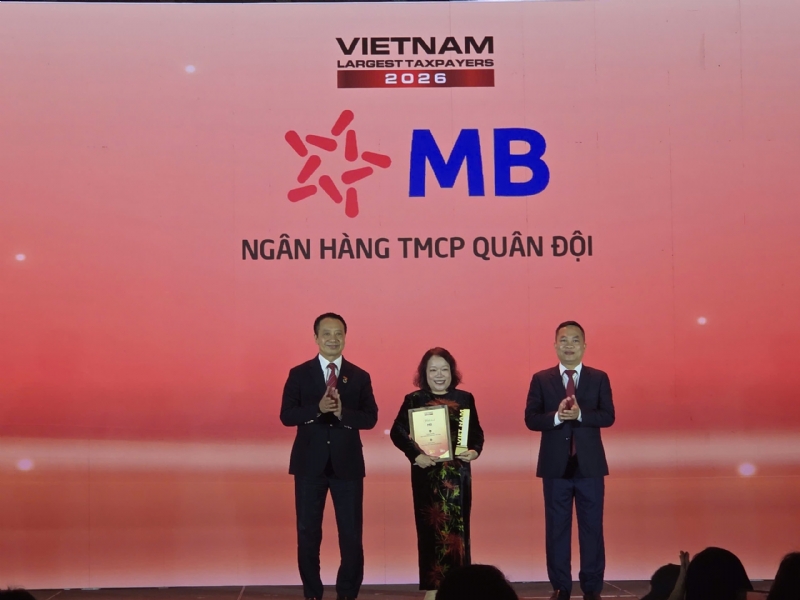
MB is honored among Vietnam’s Top 5 banks by state budget contribution
More than three decades of operations have given the bank time to accumulate not only scale, but also operational capabilities, technology, data and customer knowledge. For MB, these resources are being transformed into a new approach: going deeper into companies’ operations, connecting stakeholders within the same ecosystem and bringing capital flows closer to where value is created.
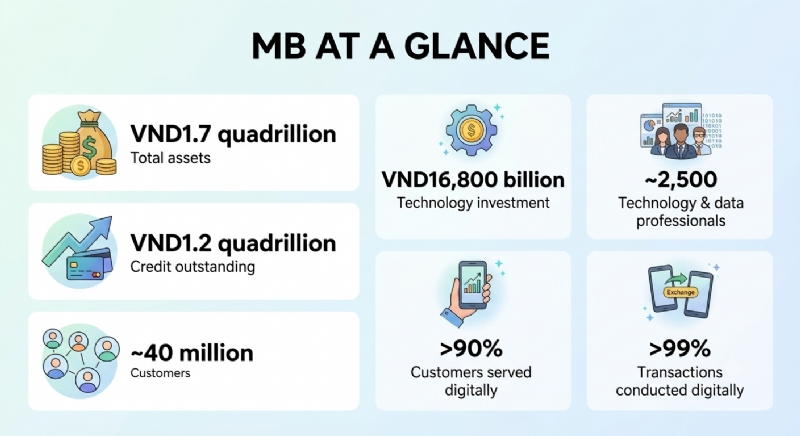
As of June 30, 2026, MB’s total assets exceeded VND1.7 quadrillion (US$65.38 billion), while credit outstanding surpassed VND1.2 quadrillion (US$46.15 billion), with around 40 million customers. Behind this scale, however, is a major transformation in the bank’s operating model, with technology and data increasingly serving as core capabilities for product development.
From Banking Scale to Ecosystem Capabilities
MB began as a bank focused on serving companies in the military sector. Over more than three decades, the bank has expanded across various segments, developing into a financial technology group with an increasingly diverse product ecosystem.
This expansion has gone hand in hand with a long-term technology investment strategy. MB has invested around VND16,800 billion (US$646.15 million) in technology and built a team of around 2,500 technology and data professionals. More than 90% of customers are now served through digital channels, more than 99% of transactions are conducted digitally, and around 60% of revenue is generated through these channels.
 |
These figures show that MB’s digital transformation has moved beyond transaction digitalization and become part of its business model.
Vu Thi Hai Phuong, Vice Chairwoman of the MB Board of Directors, has said that digital transformation is not simply about moving transactions online, but more importantly, how the bank can create greater value for customers and contribute more meaningfully to the country’s development beyond banking services.
From this perspective, technology does not stand apart from banking operations. The MBBank App, BIZ MBBank and BaaS/Open Banking platforms have been developed to create different points of connection between the bank and its customers, partners and companies.
For the corporate sector, the change is evident in the increasingly close link between banking services and actual cash flows. BIZ MBBank helps companies manage cash flows, payments, payroll, foreign currencies and access to digital credit. When transaction data is integrated with business operations, the bank gains a stronger basis for understanding companies not only through their credit profiles, but also through their cash flows.
This has laid the foundation for MB to move deeper into SCF. In 2025, MB deployed 39 SCF chains with a total transaction value of around VND11,000 billion (US$423.08 million), 11 times higher than the previous year. From its initial financing chains, the bank has continued to expand into a multi-tier model, reaching companies deeper within supply chains.
If scale creates strength in resources, digitalization and accumulated data create connectivity. When these two factors come together in corporate operations, the way banks provide capital begins to change as well.
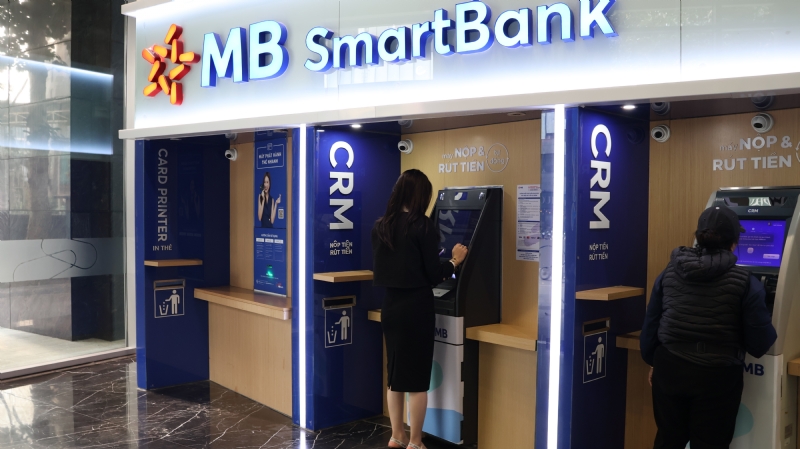
MB SmartBank is popular among young customers for its time-saving, 24/7 self-service banking without cards or paperwork
Multi-Tier SCF: Extending Capital Deeper into Supply Chains
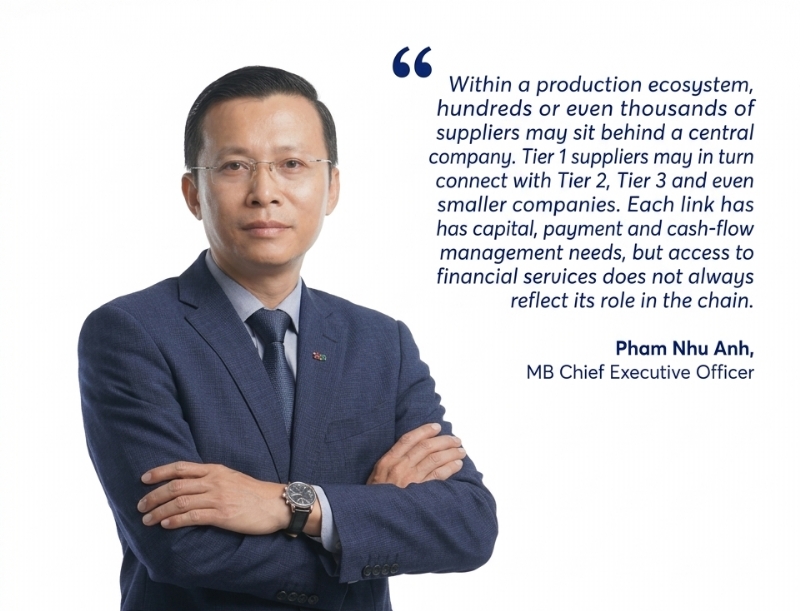
Pham Nhu Anh, MB Chief Executive Officer, said: Within a production ecosystem, hundreds or even thousands of suppliers may sit behind a central company. Tier 1 suppliers may in turn connect with Tier 2, Tier 3 and even smaller companies. Each link has capital, payment and cash-flow management needs, but access to financial services does not always reflect its role in the chain.
MB developed multi-tier SCF to address this gap directly.
Instead of stopping at the relationship between a central company and its direct suppliers, the platform extends connections to suppliers at deeper tiers. Capital flows are therefore designed to move in line with the transaction flows of the entire chain rather than being concentrated at a single point.
For anchor companies, the platform enables digital payment and payable management, as well as management of multi-tier supplier lists, thereby supporting working capital optimization. For small and medium-sized companies, particularly those at deeper tiers, access to financial services can rely more heavily on transaction flows and their position within the chain.
Under MB’s design, the receivables collection solution is built around a “three no” principle: no credit-limit approval, no collateral and no borrowing required to implement the collection solution. This approach aims to reduce intermediary steps, helping companies access services aligned with their actual cash flows.
The entire experience is designed around automation, combining blockchain and big data to enhance safety, transparency and security. After six months of testing, transaction volume is expected to reach around VND5,000 billion (US$192.31 million); the platform has been deployed at leading companies in steel, construction, agriculture, electronics and fast-moving consumer goods (FMCG).
The significance of multi-tier SCF therefore lies not only in adding another financing product, but in expanding its scope: from one company to an entire chain of companies, from a single transaction to transaction flows, and from the capital needs of individual links to the financial operations of the entire ecosystem. This is where the capabilities MB has accumulated over many years are beginning to converge.
 |
A SCF platform operating at scale requires strong financial capacity, robust technology infrastructure, extensive data and well-established relationships with the corporate community. These capabilities cannot be built in a short time, nor can they be replaced by a new product alone.
From Accumulated Capabilities to New Advantages
Looking back at MB’s journey, what stands out is not only how the bank has grown, but also how it is now putting the capabilities accumulated along the way to use.
Financial scale gives MB a foundation for providing capital. Technology enables digitalization and automation. Data helps the bank gain deeper insight into behavior and cash flows. The customer ecosystem creates connections that allow financial solutions to expand from individual companies to entire chains.
When these capabilities are brought together within the same model, the bank can move closer to supporting business operations rather than simply providing individual financial products.
Multi-tier SCF is a clear example of this process. MB’s latest product has not emerged as a separate direction, but has been built on the foundation of the SCF chains already deployed, the digital infrastructure already developed and the corporate ecosystem already established.
MB’s journey, however, extends far beyond technology and financing. Over 32 years of operations, MB Group has contributed around VND60,952 billion (US$2.34 billion) to the government budget, of which the bank alone contributed around VND49,276 billion (US$1.90 billion). In 2025, the bank contributed more than VND10,004 billion (US$384.77 million), about 30% higher than in 2023.
As of June 2026, MB’s social welfare resources had reached around VND2,948 billion (US$113.38 million). From 2023 through June 2026 alone, the figure exceeded VND1,400 billion (US$53.85 million).
On its digital platform, the Charity Platform has raised around VND3,535 billion (US$135.96 million) over six years, attracting more than 2.5 million members and generating 7.26 million successful contributions. The HiGreen - Binh Minh Xanh campaign attracted more than 30,000 participants, covering more than 2.9 million kilometers and raising VND8.1 billion (US$311,538) for environmental activities.

MB’s digital transformation extends beyond transactions to become an integral part of its business model
In green finance, MB has allocated around VND71,000 billion (US$2.73 billion) to green credit and ESG-related investments, equivalent to around 7% of total outstanding loans; around 70% of this funding goes to renewable and clean energy.
These figures show the increasingly broad scope of resources MB is managing. More importantly, they show that the bank is seeking to turn resources into concrete value at different levels: from individual customers, household businesses and companies to supply chains and communities.
This is also what defines MB’s story after 32 years. A bank can grow through assets and credit, but competitiveness in the new period also depends on its ability to turn those resources into solutions that serve the economy. For MB, this process is reflected in the way technology is connected with business, data with cash flows, and capital with companies’ deeper operations.
By Le Hien. Vietnam Business Forum