

9:16:34 AM | 10/6/2020

The entry into free trade agreements (FTAs) offers Vietnamese goods more opportunities to expand export markets. But, this process is also coupled with the risk of goods faked with Vietnamese origin and it may lead to the risk of being penalized with safeguard measures.
Existing risks
According to current regulations, the Certificate of Origin (C/O), entitled to export tariff preferences, is granted by the Ministry of Industry and Trade of Vietnam. The number of preferential C/O has increased by 20-25% annually in the past five years, from 323,000 C/Os in 2013 to 900,000 C/Os in 2019.
In 2020, the Government planned to increase the export value by about 8%, a reasonable goal because, in addition to traditional export markets, with 16 FTAs signed and negotiated, Vietnam has a broad way for its exports to be present more in the world because of tax exemptions. But the downside comes from this good aspect. Many companies will seek ways to take advantage of the Vietnamese origin of goods, even fake Vietnam's C/O to get incentives or illegally evade trade remedies, while many partners in the world are increasingly using trade remedy measures, such as anti-dumping tax, anti-subsidy tax and safeguard tax. This will cause a lot of unexpected, undesired consequences while weakening exportability of affected countries.
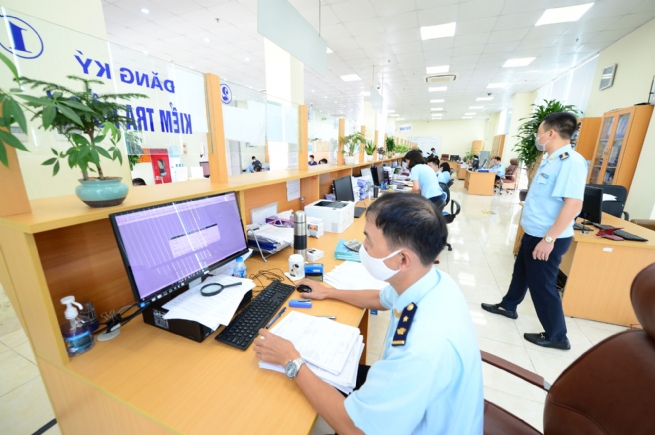
Through the surveys, the Ministry of Industry and Trade made a list of 25 commodities highly likely to be faked in origin, including many key exports of Vietnam. The Ministry also tells common fraudulent methods and tricks of origin: Goods are manufactured in foreign countries and imported into Vietnam and then labelled “Made in Vietnam” with the package and warranty displayed in Vietnamese language, headquarters, website and warranty centers in Vietnam. Or, when goods imported from abroad, labeled with the origin of goods on the package. But, when being brought into circulation or domestic consumption, the original label is peeled off and replaced with a new label with “Made in Vietnam” or “Vietnam’s origin”.
In some cases, a company established many subsidies and each subsidiary imported some components and then put them together and labelled “Made in Vietnam” or “Originated from Vietnam” to deceive domestic consumers.
In particular, many foreign traders take advantage of Vietnamese enterprises to provide transit transport services or temporary import for re-export to forge Vietnam’s C/O to fraud the origin of goods.
Heavy measures against origin fraud
According to the Ministry of Industry and Trade, although the rate of C/O subject to mandatory verification of origin to total preferential C/O is very low, companies still falsify C/O to gain preference. Meanwhile, the supported provision of import and export data by customs authorities, especially C/O comparison and consideration, for enterprises is still slow. Moreover, some markets do not require import C/O, it is harder to prevent origin fraud.
At a recent meeting on this issue, Minister, Chairman of the Government Office Mai Tien Dung pointed out that limitations in origin fraud prevention, especially in C/O management, are partly due to the legal corridor that lags behind ongoing occurrences. For example, the administrative fine currently only ranges from VND3 million to VND20 million and violated goods are confiscated, re-exported, or destroyed. In particular, ineffective enforcement is still due to a lack of responsibility by a number of agencies and individuals working in this field.
According to experts, first of all, it is necessary to grant C/O linked to actual production inspection, labeling, and original documentation. However, this needs the coordination of many different agencies, not only the Ministry of Industry and Trade, the Vietnam Chamber of Commerce and Industry (VCCI), but also other authorities such as the Ministry of Finance, the Ministry of Public Security and local authorities. Therefore, reviewing legal regulations and finding unreasonable points to promptly adjust and improve effective coordination is urgent.
Particularly, the Ministry of Industry and Trade, in addition to enhancing administration outcome, is strengthening information and data exchanges with VCCI and the General Department of Customs (GDC), enhancing supervision, protecting honest enterprises and promptly handling fraudulent acts of origin.
|
The Ministry of Industry and Trade launched an action program with five main groups of tasks, focusing on completing the legal system of goods origin and origin checking and verification. |
By Le Hien, Vietnam Business Forum


 Vietnamese





