

3:45:01 PM | 7/2/2025

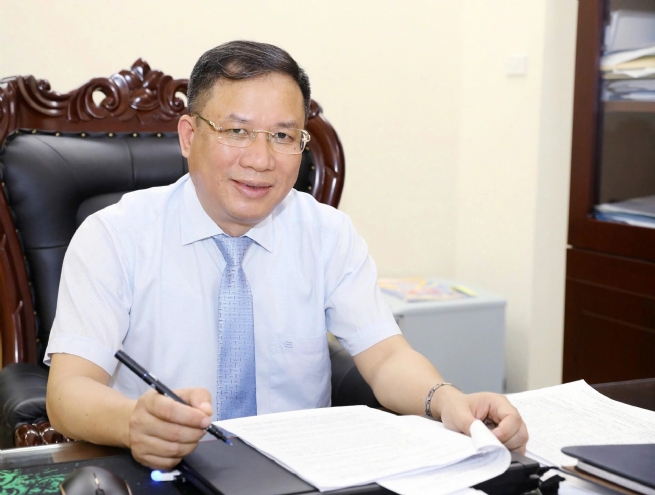
The 30th anniversary of Vietnam-U.S. diplomatic relations also marks a cooperation and development journey of the Vietnam Social Security (VSS) in its efforts to advance the social security system. With technical support from reputable organizations such as the United States Agency for International Development (USAID) and the U.S.-ASEAN Business Council (USABC), VSS is steadily advancing digital transformation, effectively controlling healthcare costs and building a transparent, inclusive and people-friendly health insurance system. Vietnam Business Forum has an interview with Mr. Le Hung Son, Director General of the Vietnam Social Security.
2025 marks 30 years of Vietnam-U.S. diplomatic relations and also 30 years of VSS’s formation and development. In the course of cooperation with U.S. partners and organizations, what notable models and lessons has VSS approached?
In the past years, the relationship between the Vietnam Social Security (VSS) under the Ministry of Finance and its U.S. partners has outstandingly developed through various technical cooperation initiatives and experience-sharing activities in the field of social security. This cooperation has been formalized through memoranda of understanding with U.S. partners such as the United States Agency for International Development (USAID) and the U.S.-ASEAN Business Council (USABC).
To ensure the sustainable development of the Health Insurance Fund and achieve universal health insurance coverage, VSS has determined and endeavored to fulfill the targets set out in Prime Minister’s Decision 546/QD-TTg. Specifically, as of December 31, 2024, the number of health insurance policyholders reached 95.52 million, accounting for 94.2% of the population. To realize the target, VSS places great emphasis on learning from international experience, especially advanced management models from the U.S. One notable example is the adoption of capitation and diagnosis-related group (DRG) payment methods which are being applied in the U.S., Australia, the United Kingdom and other countries. With technical assistance from USAID, VSS has researched and piloted DRG to control costs and enhance the efficiency of the Health Insurance Fund. VSS and USAID have also supported and worked closely to restructure VSS’s five public services to carry out the Government’s Project 06, aiming to reduce the time needed to resolve administrative procedures and improve public service delivery to people and businesses. In addition, VSS has approached AI-based verification models for health insurance claims and shared international best practices in drug bidding and price negotiation - areas in which U.S. experts have provided deep consultation through the USABC cooperation framework.
Technological application is considered one of the breakthrough factors. How has VSS cooperated with the U.S. to promote digital transformation?
The application of modern technology plays a key role in accelerating digital transformation in social security, particularly in data management and payments. This is one of central tasks and a core content of cooperation between VSS and its U.S. partners. VSS has actively partnered with U.S. organizations, particularly USAID, to take on and carry out the Electronic Logistics Management Information System (eLMIS) - a vital tool for managing medicine procurement and payments under the Health Insurance Fund.
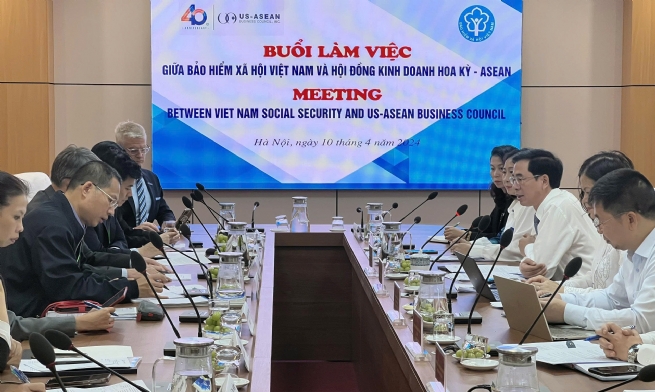
Additionally, within the framework of Project 06, USAID has supported efforts to restructure administrative procedures and digitize public services such as health insurance enrollment and pension collection, contributing to the development of e-government to realize the ultimate goal of simplifying procedures, reducing processing times and costs, and improving the satisfaction of people and businesses. Moreover, through its collaboration with USABC, VSS has worked with U.S. experts to organize workshops on AI applications in health insurance verification, laying the groundwork for cashless payment systems and automated management.
In terms of international cooperation, especially with the U.S., does VSS have any training, expert exchange and technical transfer programs to enhance the quality of its human resources?
Human resources play a core role in the efficient management and operation of the health insurance system, a decisive factor to service quality, policy implementation capacity and adaptability to reform and digital transformation requirements. Particularly, in line with the Vietnamese government’s direction to streamline administrative systems and reduce public workforce size, capacity-building for VSS personnel has been a top priority in international cooperation, especially with U.S. partners.
To enhance cooperation, share experience and reinforce the capacity of personnel in implementing social security policies, particularly in health insurance field, USAID has supported a range of intensive training programs on DRG, covering theoretical foundations to key performance indicator development skills and international-standard contracts for healthcare services. VSS officials have also been trained in using eLMIS software to improve effective medicine monitoring. Meanwhile, USABC has co-hosted specialized workshops on health insurance verification, drug price negotiation, technology application, and in-depth healthcare research. These activities help VSS staff access modern management practices and gain valuable knowledge from leading U.S. experts.
What initiatives has VSS undertaken to engage with the FDI business sector, particularly U.S. companies?
In the past years, the foreign direct investment (FDI) business sector has grown rapidly and become one of Vietnam’s most dynamic economic drivers. Therefore, ensuring social security in general and implementing social insurance and health insurance policies in this sector in particular is crucial for strengthening the consensus between VSS agencies and FDI companies, thus helping improve access to social protection and ensure workers’ welfare.
VSS has organized dialogue conferences with FDI businesses to listen to their concerns and resolve difficulties in implementing social insurance and health insurance policies, helping enhance transparency, encourage legal compliance and create a favorable environment for businesses to invest and grow with confidence. Furthermore, through their cooperation and experience-sharing activities, VSS and its U.S. partners have promoted universal health insurance policies, improved transparency in reimbursement procedures, and created conditions that benefit both employers and employees.
From its operating practices, what recommendations does VSS have for Vietnam to become more competitive, responsive to real-world needs and internationally integrated?
To meet practical demands, adopt advanced models, enhance management capacity and expand cooperation that better protects the rights and interests of people and workers in the context of globalization, Vietnam should continue to develop a modern, transparent and people-centered health insurance system.
To achieve this goal, VSS will continue improving the legal framework, promoting the application of advanced models such as DRG and AI in health insurance verification and payments. It will also strengthen international cooperation, accelerate comprehensive digital transformation and reform administrative procedures to improve transparency, efficiency and service quality, ultimately aiming to boost public and business satisfaction. Additionally, VSS should expand cooperation in technology development, train high-quality human resources, and establish flexible dialogue mechanisms with the business community, especially the FDI sector, to build social consensus and contribute to the creation of a sustainable, modern and globally integrated social security system.
Thank you very much!
Tran Trang (Vietnam Business Forum)


 Vietnamese





