

10:00:10 AM | 9/24/2025

“A major breakthrough in modernization and digital transformation, widely recognized by the business community and taxpayers.” This was the statement made by Mai Xuan Thanh, Director General of the Department of Taxation, at a digital transformation exhibition held to commemorate the 80th anniversary of the Vietnam Tax Sector (September 10, 1945 - September 10, 2025), recently organized by the Department of Taxation.
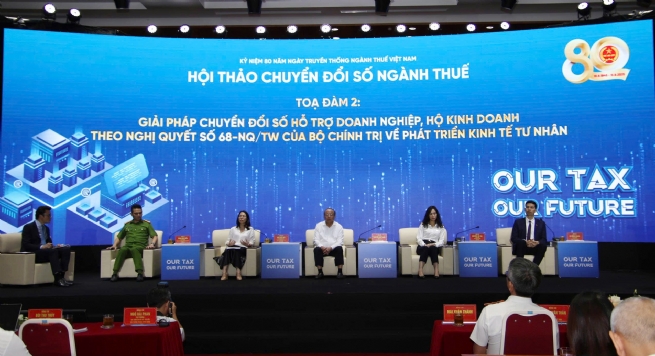
Seminar on digital transformation in the taxation sector at the digital transformation exhibition
Modernizing tax administration
The digital transformation of the tax sector has progressively implemented new technologies such as artificial intelligence (AI), built large-scale databases (Big Data) through data sharing and integration with ministries and agencies, and introduced new tools to assist taxpayers, including virtual assistants and chatbots. Thanks to decisive efforts in modernization and digital transformation, tax administration has become fully digitized, improving efficiency and effectiveness, providing maximum convenience for taxpayers, and reinforcing the image of a professional, transparent, integrity-driven, and innovative tax authority.
However, the tax sector also acknowledges that at this stage it faces significant demands and challenges, including rising requirements for state budget revenue collection to support socio-economic development and maintain national fiscal balance, the annual increase in the number of taxpayers, and the expansion in the scale and scope of their activities.
At present, the tax authorities are managing over 1 million enterprises, more than 300,000 organizations, over 2 million individuals and household businesses, and more than 80 million personal tax identification numbers. The demand for reforming tax administration methods must keep pace with economic and social developments, such as the explosive growth of the digital economy and cross-border e-commerce, which create new business models requiring appropriate tax management mechanisms and policies for each group of taxpayers. These factors require the tax sector to change comprehensively, rapidly, and more effectively.

The digital transformation exhibition of the tax sector
Resolution 57 and objectives of tax system reform
With the goal of achieving breakthroughs in science, technology, innovation, and national digital transformation, on December 22, 2024, General Secretary To Lam signed and promulgated Resolution No. 57-NQ/TW of the Politburo on breakthroughs in science, technology, innovation, and national digital transformation.
Implementing the spirit of Resolution 57 alongside the Tax System Reform Strategy 2021–2030, the tax sector is working to achieve a coherent, fair, and effective tax policy system; build a streamlined, professional apparatus; and especially advance comprehensive digital transformation. Accordingly, the sector is determined to continuously improve and strengthen digital transformation in management, clearly defining its objectives under the Politburo’s guidance in Resolution 57, treating it as a key framework for achieving the strategic goals of tax system reform in the 2025–2030 period. The vision is to establish a modern, efficient, and effective tax sector based on three core pillars: a comprehensive, synchronized, modern, and integrated tax management institution; a professional, integrity-driven, and innovative workforce; and modern, integrated IT systems that satisfy tax administration requirements in the digital economy.
Based on this direction, the tax sector will focus on several key tasks. Specifically: first, continuing to complete the legal framework and tax policies. Next, developing modern IT applications and databases; ensuring full-process data sharing and connectivity with national databases and relevant ministries and agencies.
From now until the end of 2025, the tax sector will carry out 100% of administrative procedures fully online. Integration with the National Public Service Portal will provide taxpayers with the most efficient electronic tax services. This initiative also aims to maximize taxpayer convenience, lower compliance costs, and enhance transparency and efficiency in tax administration.
By Le Hien, Vietnam Business Forum


 Vietnamese





