

10:06:38 AM | 9/27/2025

To succeed in moving to a higher position in the value chain, economies must develop a large-scale, highly skilled workforce capable of attracting investment and stimulate innovation. Vietnam has acknowledged this, as shown in recent policy directions that emphasize science, technology, and especially human resources for high-tech supporting industries, identifying them as crucial drivers of growth.

VinMotion robot on display at Vingroup’s booth, Hanoi National Exhibition Center
Multiple policies prioritizing innovation talent
The Government’s new policies for 2023-2025 clearly reflect a strong political commitment to advancing into high-value industries and building a knowledge-based economy, with emphasis on talent development and innovation. In particular, Resolution No. 57-NQ-TW (2025) of the Politburo highlights science, technology, and innovation as engines of growth, calling for breakthroughs in labor quality and digital transformation. Resolution No. 193/QH15 (2025) of the National Assembly introduces pilot reforms in science, technology, and innovation policy, including new mechanisms for R&D investment and greater autonomy for research institutes. In addition, the Prime Minister has issued decisions on priority areas for 2024-2025, such as Decision No. 1018 on semiconductor development, Decision No. 1131 on 11 strategic technologies, Decision No. 374 on establishing a network of national training excellence centers, and Decision No. 1002 on high-tech workforce development.
Vietnam has set ambitious targets for high-tech development - from raising its position in the semiconductor value chain to becoming one of the top three ASEAN countries in artificial intelligence (AI) capacity, and developing the bioeconomy to account for 7% of GDP by 2045. To achieve these goals, Vietnam must make a leap in innovation capacity and strengthen its domestic high-tech talent base.
A recent World Bank report noted that talent is a decisive input in technology sectors, generating an innovation loop when combined with R&D investment. Vietnam has made significant progress in education and innovation, with a large STEM workforce (around 560,000 young professionals aged 22-35 holding university degrees as of 2023). This workforce is a critical starting point given that all high-tech industries require a large pool of talent.
In Vietnam’s software and computer programming industry, a technology-intensive sector that encompasses almost all domestic semiconductor design firms, more than 80% of employees hold university degrees, and nearly 90% are hired for high-skilled roles such as engineers, scientists, or senior technicians. In high-tech manufacturing supporting industries, the pharmaceutical sector has a share of university-educated, highly skilled workers that is over four times higher than the average across all manufacturing industries.
Statistics show that Vietnam is among the world’s top 50 in the Global Innovation Index, ranking 44th out of 133 economies in 2024 (up from 46th in 2023), placing it among the fastest climbers in innovation performance relative to income.
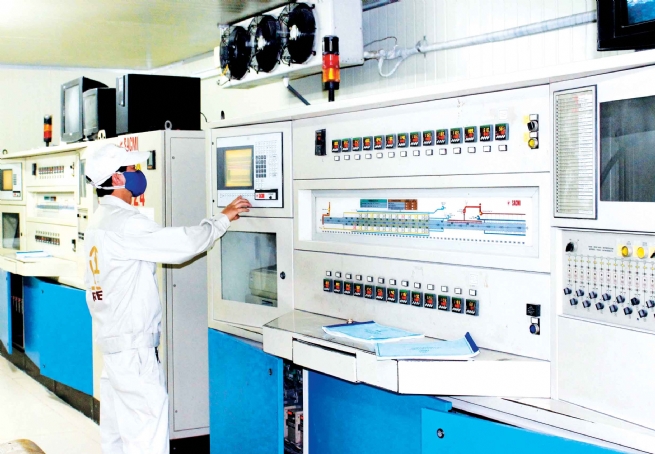
Vietnam prioritizes skilled workforce and high-tech supporting industries as key drivers of growth
Shortage of core talent
For high-tech goals to be translated into concrete actions, the World Bank believed Vietnam needs to significantly expand its talent pool in many aspects. First, the scale of talent must be broadened, as Vietnam needs a large number of engineers and researchers across high-tech fields. Beyond the number of skilled workers, quality, depth, integration in training and research, and industrial work discipline also require improvement.
At the forefront of research, two key challenges remain: Vietnam does not yet have a university ranked among the world’s top 200 in engineering or science, and it has not yet developed a strong, internationally recognized group of scientists and innovation experts in leading fields.
“At the core of this vicious cycle is the shortage of PhD-qualified faculty, which creates a barrier to training postgraduate students and high-level researchers. Chronic underinvestment in higher education, postgraduate training, and R&D has led to underfunded universities and underdeveloped private-sector R&D,” the World Bank assessed. Moreover, weak university-enterprise linkages perpetuate outdated curricula, skill mismatches, and limited collaboration in R&D. A lack of infrastructure - such as advanced laboratories and prototype manufacturing facilities - further hinders the transition from laboratory to market, slowing commercialization of research products.
To address this, the World Bank proposed a strategy based on three mutually reinforcing pillars. The first is to expand and diversify the high-tech talent pool through a national postgraduate scholarship program for master’s and PhD students, a global talent recruitment initiative, and an elite faculty program. The second is to build shared R&D and pilot infrastructure by creating a network of national centers of excellence, open-access technology platforms, and pilot innovation facilities to bridge the “lab-to-factory” gap. The third is to enhance university-enterprise-government linkages and amplify spillover effects through co-located technology clusters, talent mobility schemes, and co-funded collaborative R&D projects.
The World Bank affirmed that these measures could create a positive cycle of talent and innovation, build a skilled workforce and R&D output, and thereby contribute to Vietnam’s transition into a high-income, high-tech economy.
By Lan Anh, Vietnam Business Forum






 Vietnamese





