

8:49:03 AM | 10/5/2025

After more than five years of implementation, Hanoi’s One Commune One Product (OCOP) Program has not only delivered tangible results in rural economic development but also become a key instrument for sustainable poverty reduction in suburban areas.
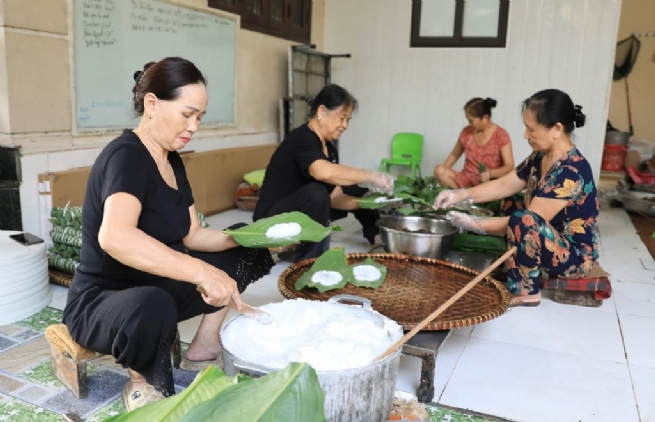
Banh Te (steamed rice cake) from Phu Nhi village in Hanoi suburb is not only a local specialty but also a renowned Vietnamese brand admired by foreign tourists
From traditional agricultural products, handicraft villages, and local cuisine, the program has created stable livelihoods for thousands of workers, improving the quality of life for residents in Hanoi’s suburban areas.
Hanoi, known as the cradle of more than 1,350 craft villages, encompassing 47 of the country’s 52 traditional occupations, offers a vast space for OCOP product development. To date, many craft village products have been evaluated and classified under the OCOP Program, helping them achieve more complete design and quality, enhancing market competitiveness, and increasing their value.
Prosperity thanks to OCOP products
In fact, preserving and developing craft villages plays a crucial role in the economic restructuring of rural areas, particularly in localities with established craft traditions. The total annual revenue of 334 craft and traditional craft villages exceeds VND24,000 billion. Over the years, these villages have seen growth in revenue, production value, and export value. Notably, some villages achieve particularly high annual revenue, including Son Dong fine art sculpture village, La Phu confectionery and knitting village, Minh Khai agricultural and food processing village, Phung Xa mechanical craft village, Huu Bang carpentry and sewing village, and Thiet Ung traditional craft village.
Craft villages provide a vast opportunity for Hanoi to develop the OCOP Program. According to the Hanoi Coordination Office of the New Rural Development Program, from 2019 to the present, Hanoi has evaluated and classified 3,317 OCOP products. Among them, there are 6 five-star products, 22 potential five-star products, 1,571 four-star products, and 1,718 three-star products. This achievement makes Hanoi the locality with the highest number of evaluated and classified OCOP products in the country, completing the target of Program 04-CTr/TU of the 17th City Party Committee for 2021-2025 one year ahead of schedule, which aimed to recognize at least 2,000 OCOP products.
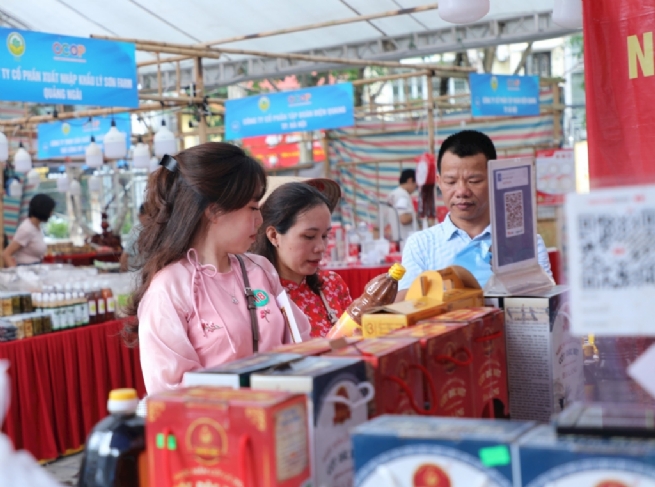
Although Hanoi has developed over 3,300 OCOP products, only 6 have been certified as five-star. Therefore, in 2025, the city aims to submit at least 30 additional products for government evaluation and recognition as five-star OCOP products.
Since 2018, with the implementation of the OCOP program in Hanoi, a new direction has been set. OCOP goes beyond developing typical local products; it is a community economic initiative that motivates people to become self-reliant and overcome poverty using their local strengths. Importantly, OCOP aims to "give fishing rods" by providing technical support, trade promotion, human resource training, and links between production and consumption.
Creating sustainable livelihoods from craft village products
Phu Vinh rattan and bamboo weaving craft village, once at risk of disappearing due to low output, has now become a bright spot thanks to OCOP. Products are standardized in design and quality, meeting both domestic and international market demands. Nearly 1,000 local workers have regular employment, including people with disabilities who are trained and work directly within the craft village.
Phu Nhi Banh Te (steamed rice cake) Craft Village is located in Phu Thinh Ward. Phu Nhi Banh Te is not only a specialty of the Doai region but also a well-known brand in Vietnam, recognized by tourists from around the world. In 2010, Phu Nhi Craft Village was granted the "Phu Nhi Banh Te" Brand Certificate by the Department of Intellectual Property under the Ministry of Science and Technology. This recognition has provided villagers with a promising opportunity to confidently earn a living from the traditional Banh Te craft. Currently, around 100 households in the village specialize in producing Banh Te for commercial purposes, with some families making an average of 1,000-2,000 pieces per day. Phu Nhi Banh Te is produced daily, and village households have actively expanded their market, distributing the cakes throughout Hanoi and participating in Hanoi’s culinary festivals. In addition, the steamed rice cake is sold online nationwide and is also offered as a hometown gift at tourist sites in Duong Lam ancient village, such as Mia Pagoda, Mong Phu Communal House, and Va Temple.
Thanks to the coordinated efforts of the entire political system, by the end of 2024, Hanoi will officially have no poor households, with the rate of near-poor households reduced to just 0.77%. The average income in rural areas is projected to reach VND73.8 million per person per year, an increase of nearly VND19 million compared to 2020. Additionally, 100% of rural residents have access to clean water, 95% participate in health insurance, and every village and hamlet is connected to the internet - factors that collectively contribute to improving the overall quality of life.
Alongside product development, Hanoi is actively promoting distribution channels to bring OCOP products closer to consumers. The city has established and operates 110 points for introducing and selling OCOP products, many of which are integrated with experiential tourism models.
Hanoi has also connected more than 1,000 OCOP products to e-commerce platforms, including Postmart.vn, Voso.vn, Shopee, Tiki, and Lazada. Fairs and OCOP weeks are regularly organized at AEON Mall, Big C, Vincom, and Co.opmart supermarkets to enhance accessibility for domestic consumers.
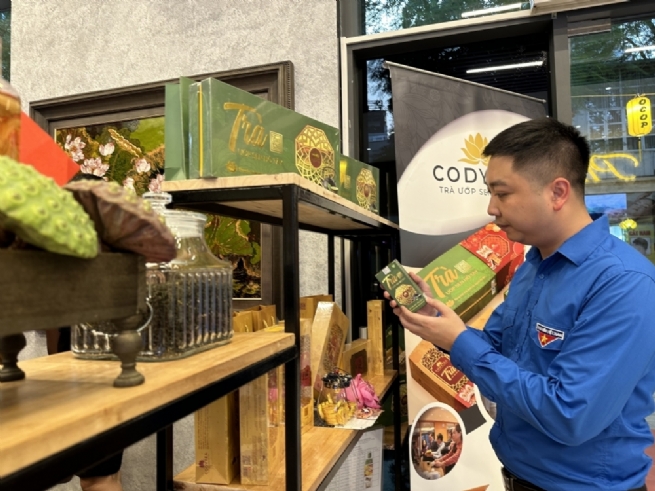
Another key initiative is Hanoi’s investment in developing a Creative Design Center to promote OCOP products and craft villages. By 2025, five additional creative design centers are expected to be recognized, introducing, promoting, and selling OCOP products and craft villages linked to tourism. This will bring the total number of developed creative design centers to 21, surpassing the target set by the Program for 2025. These centers will serve as hubs connecting young designers with traditional artisans, linking OCOP producers to the international market, and helping to professionalize the OCOP brand image in Hanoi.n
By Dinh Bao, Vietnam Business Forum
|
This special section is supported by Hanoi Department of Agriculture and Environment |






 Vietnamese





