

11:37:45 AM | 9/27/2025

“Suoi Hai Girl” used to symbolize perseverance and hard work and now continues to inspire the community on its journey toward the future. Suoi Hai, the new name for the old land, is gradually shaping the image of a model new rural area at the western gateway of Hanoi.
Suoi Hai commune was established by merging the entire areas and populations of Tan Linh and Ba Trai communes, along with parts of Cam Linh and Thuy An communes (former Ba Vi district). Nearly 20% of the population are ethnic minorities, mainly Muong people, living in 11 of 24 villages with a total of 6,808 residents. They are an integral part of the community and play a key role in preserving and promoting their traditional cultural values.
While aiming to become a civilized and modern model new rural area, Suoi Hai commune is also committed to safeguarding its unique cultural heritage and building a green, clean, and sustainable community. Its vast tea hills, clean agricultural products, traditional craft villages, and beautiful natural landscapes provide a strong foundation for developing eco-tourism and sustainable agriculture.
Building a new homeland
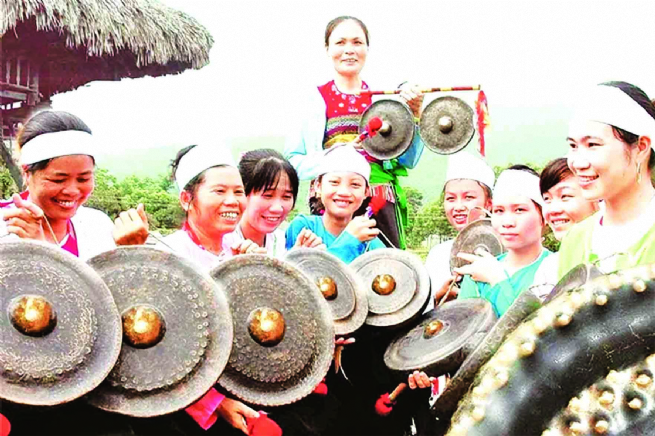
Gongs have long been a source of pride for the Muong people in Suoi Hai. For them, gongs are not only musical instruments but also the echoes of mountains and forests, the heartbeat of the community, and intergenerational memories deeply tied to the village. The commune currently has 14 gong teams operating regularly; some receive funding support for instruments, while others are maintained through voluntary community contributions. This clearly demonstrates the love and sense of responsibility in preserving and promoting traditional cultural identity.
Whenever a festival or major community event takes place, the sound of gongs resonates, serving as a bridge between past and present and nurturing pride and love for the homeland. A notable example is the gong team of Bat Dam Village, which has maintained regular activities for many years, actively participating in exchanges and performances both locally and beyond, helping to promote the image and cultural values of the Muong people to a wider audience. According to Ms. Bui Thi Minh Thu, leader of the Bat Dam gong team, there was a time when gongs were at risk of being lost. However, driven by responsibility and love for their ancestral culture, the members preserved them unanimously. "The sound of gongs is the soul and pride of the village," Ms. Thu affirmed. It is this passion that has made the Bat Dam team a shining example in Suoi Hai commune’s cultural preservation movement.
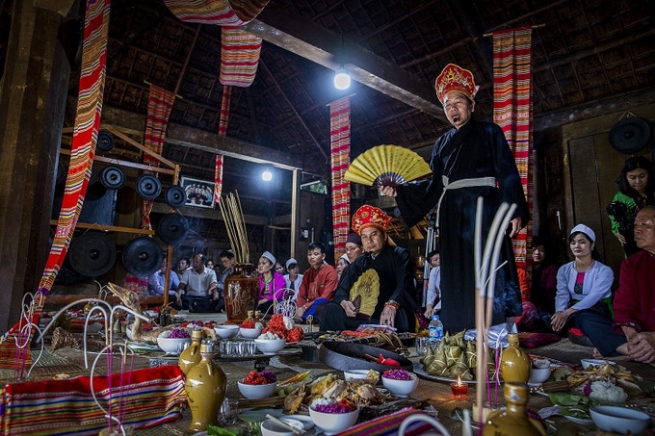
The Bat Dam gong team has become a model of cultural preservation in Suoi Hai, with members of all ages practicing regularly and performing at festivals and exchanges across provinces. Supported by local authorities, initiatives such as gong classes, festival restoration, and folk arts linked with tourism are helping Muong culture thrive, creating a bridge between generations and keeping the heritage alive.
Not only the youth, but many elders also actively participate in preserving culture. For instance, Mrs. Hoang Thi Hue from Duc Thinh Village, over 70 years old, still regularly joins the gong team. Her greatest joy is practicing and performing with her children and grandchildren, ensuring the gong sounds never fade from community life.
The shared aspiration of the Muong people in Suoi Hai is to keep the gongs’ echoes alive, so their ancestors’ heritage continues to shine today and is fully passed on to future generations.
Developing tourism linked with promoting cultural identity
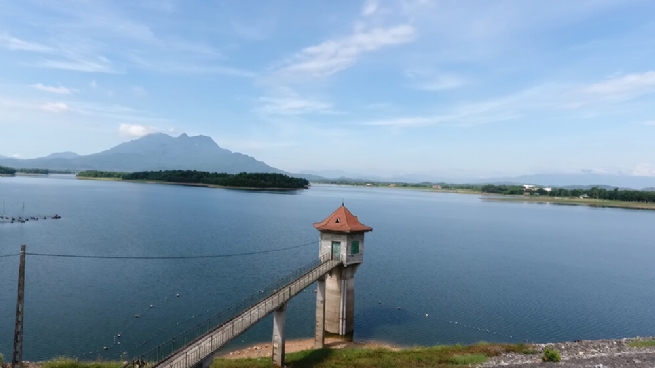
Suoi Hai is a land blessed by nature, featuring many renowned scenic spots and historical-cultural sites such as Ao Vua, Suoi Hai Lake, Thuong Temple, and Ba Vi National Park. These provide strong potential for developing eco-tourism, spiritual tourism, and community-based tourism while preserving and promoting the Muong ethnic group’s cultural identity.
When visiting Suoi Hai, visitors not only admire the beautiful landscapes and explore the value of historical relics, but also have the chance to immerse themselves in the unique Muong cultural space - from the sound of gongs echoing through the mountains and forests, the simple stilt houses, and the rich meals of rice wine and fragrant sticky rice, to the rustic warmth and hospitality of the local people. Ms. Nguyen Thi Hong Le, Vice Chairman of the Fatherland Front Committee of Suoi Hai commune, emphasized: “Cultural preservation is only sustainable when linked with improving the material and spiritual life of the people.” She added that the commune has implemented practical measures such as training courses on land management, administrative reform, and digital transformation; supporting livelihoods; and regularly visiting and giving gifts to disadvantaged households, especially during holidays and Tet. “We hope every resident feels supported, cared for, and given favorable conditions for development. This motivates the Muong people and other ethnic groups in Suoi Hai to preserve their cultural identity while integrating and developing with the pace of modern life,” Ms. Nguyen Thi Hong Le stressed.
Le Hao Quang, Vice Chairman of the People’s Committee of Suoi Hai Commune, stated that the commune has successfully organized numerous performances and art festivals on major holidays, maintained 24 cultural and artistic clubs with hundreds of members, and supported 16 traditional art troupes of ethnic minorities that operate actively and regularly. Today, Suoi Hai not only takes pride in preserving the unique Muong cultural values but also has strong confidence in its comprehensive development across economic, cultural, and social spheres.
Do Manh Hung, Party Secretary and Chairman of the People’s Council of Suoi Hai Commune, added that in the coming period, the commune will continue to leverage its potential and advantages to promote tourism development linked with preserving and spreading the culture of ethnic minorities. This approach is not only an effective way to improve people’s livelihoods but also a means for cultural identity to shine in modern life, making Suoi Hai a prosperous, livable, and civilized land.
By Ngoc Dan, Vietnam Business Forum
| This special section is supported by Hanoi Coordination Office of the New Rural Development Program |





 Vietnamese





