

11:36:33 AM | 12/9/2025

In recent years, with rapid urbanization and growing industrial activity, the generation and management of urban household solid waste in Vietnam have become major challenges for local authorities. Population growth and higher consumption have steadily increased household waste, putting pressure on collection systems, treatment facilities, and the urban environment.
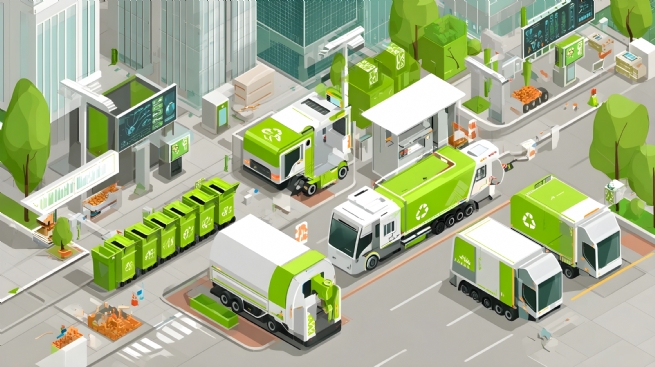
Smart urban solid waste management using green technology and IoT for circular economy
Plastic waste accounts for about 12% of household solid waste, with total plastic waste generated in Vietnam estimated at 8,021 tons per day, or 2.93 million tons per year (WWF, 2023). Household sources contribute the majority of this waste, between 55 and 80%, reflecting the impact of modern consumption patterns and daily living habits.
In 2024, the collection and treatment rate for urban household solid waste reached 97.26%. In major cities such as Ho Chi Minh City, daily household solid waste generation is around 14,000 tons. Landfilling remains the most common disposal method, accounting for up to 70% of collected waste, although most landfills fail to meet hygiene standards. While some waste-to-energy plants have been built in large cities, about 300 incinerators nationwide are small-scale, use outdated technology, and do not ensure emission control. Waste collection and treatment remain focused on the “end-of-pipe” stage rather than on upstream measures such as waste reduction, sorting, and recycling. This approach not only increases operating costs but also results in resource loss and significant environmental emissions. In this context, the circular economy model, which follows the principle of turning waste into resources, is becoming an inevitable approach to reduce environmental impacts and promote sustainable development.
Research conducted in 2023 by Phenikaa University in Tuy Hoa, Phu Yen province (now Tuy Hoa ward, Dak Lak province) illustrates a typical case of waste management in medium-sized cities. Household solid waste generation averaged 0.34 kilograms per person per day, excluding public areas. Organic waste accounted for 74%, plastic 12%, and the remainder consisted of paper, metal, glass, and textile scraps. The locality had not yet implemented source segregation; all waste was collected and sent to the Tho Vuc landfill. Organic waste made up more than half of the total volume and was the main source of greenhouse gas emissions, contributing approximately 83% of total emissions. Plastic leakage into water in Tuy Hoa was estimated at 0.8 to 2.7 kilograms per person per year, and for the whole former Phu Yen province, about 9.4 kilograms per person per year, with nearly 90% of this leakage coming from uncollected waste. These figures reflect a common situation in many Vietnamese cities: valuable secondary resources are wasted, while plastic pollution continues to become an increasingly serious problem.
Vietnam’s urban household solid waste management system involves multiple stakeholders with varying roles and levels of coordination. Urban authorities play a central role in policy development, infrastructure investment, and organizing collection and treatment. Public utility companies are responsible for operating collection systems but have limited resources. Informal sectors, such as scrap collectors and recycling intermediaries, play an important role in recovering recyclable materials but are not formally recognized under state management mechanisms. Producers and distributors of plastic-packaged products are required to fulfill extended producer responsibility (EPR) by participating in collection and recycling systems. Local communities are the starting point and key link in the circular chain, determining the rate of waste sorting and reduction. Social organizations, media, and schools also play an important role in raising awareness, promoting green consumption behavior, and encouraging sustainable community models. Coordination among these groups remains fragmented, lacking cross-sector and multi-level mechanisms, which reduces collection and recycling efficiency.
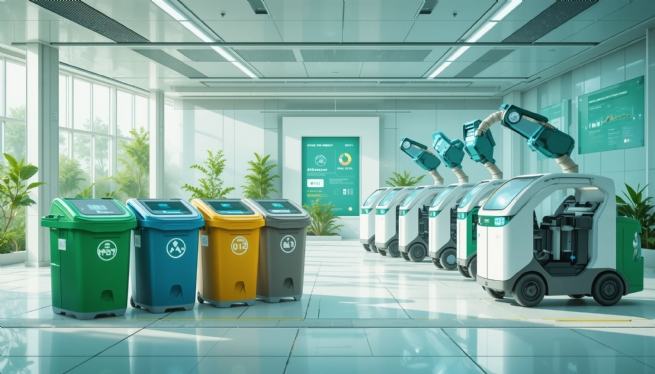
Circular economy in urban solid waste management is a technical and strategic approach
Source segregation is considered the foundation of a circular economy, yet this practice is still uncommon in Vietnam. Research identifies three main factors affecting household waste sorting behavior: environmental awareness, convenience of collection infrastructure, and trust in the treatment system. People with environmental knowledge and consciousness are more likely to sort waste, but if sorting is inconvenient or proper collection systems are lacking, the behavior is difficult to sustain. Another notable factor is the perception that “sorted waste will be mixed again,” which undermines trust and discourages continued participation. Social influences, such as community encouragement, peer pressure, and “green neighborhood” initiatives, also positively impact behavior and drive adoption within urban communities.
Based on research and practical experience, four main groups of solutions can promote a circular economy in urban household waste management.
The first group is policy and legal solutions. Strict enforcement of mandatory source segregation under the 2020 Law on Environmental Protection is required, along with detailed guidance for each waste type and appropriate monitoring and enforcement mechanisms. Local authorities should play a facilitative role, providing technical and financial support for household, business, and community-level sorting models.
The second group is infrastructure and technology solutions. Cities need to invest in integrated collection systems that separate organic, recyclable, and residual waste streams; develop household or neighborhood-level composting models to utilize organic waste on-site, reducing the volume sent to landfills; encourage recycling facilities to adopt clean technologies, recover energy from waste, and establish local circular material supply chains.
The third group is financial and incentive solutions. Implementing environmental fees on plastic packaging and single-use products, combined with tax incentives and green credit policies for recycling enterprises, can create economic motivation for circular value chains. Public-private partnerships should be promoted to mobilize social resources for waste collection, recycling, and treatment.
The fourth group is communication and education solutions. Environmental education programs should be implemented in schools, workplaces, and neighborhoods; evidence-based behavior-focused campaigns should raise community awareness; and initiatives such as competitions or “waste-free neighborhood” models should be promoted to cultivate a culture of responsible consumption and waste management.
Circular economy in urban solid waste management is both a technical approach and a development strategy. This model reduces greenhouse gas emissions, conserves resources, improves economic efficiency, and enhances the quality of life and health for urban residents.
Effective implementation requires close coordination among the state, businesses, and communities, with residents at the center, local authorities facilitating, and businesses driving innovation. Treating waste as a resource turns the waste management chain into a circular loop where all value is regenerated. This approach is essential for building sustainable cities and communities in Vietnam.
Source: Vietnam Business Forum




 Vietnamese





