

11:32:01 AM | 1/22/2026

As Vietnam’s aluminum industry continues its shift toward modernization, automation, and sustainable development, East Asia Aluminum Company Limited has emerged as a pioneering enterprise, helping shape quality standards in the domestic market. With more than 16 years of development, the company has steadily expanded its scale, strengthened production capacity, and advanced its position within the aluminum industry value chain.
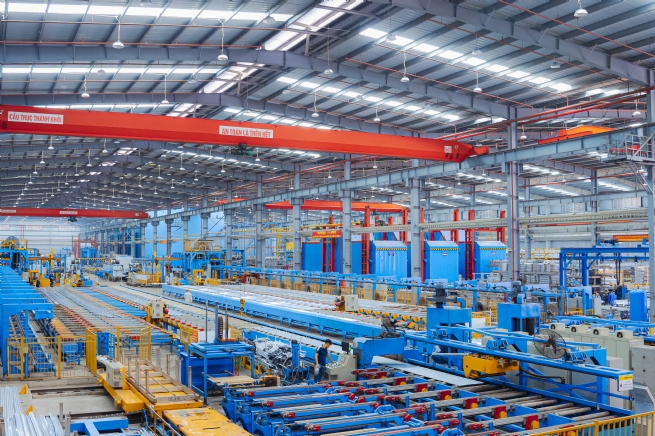
East Asia Aluminum operates nearly 120,000 square meters of factory space with highly automated production lines
As one of the earliest foreign-invested enterprises in aluminum alloy processing and manufacturing in Vietnam, East Asia Aluminum has consistently pursued a development orientation grounded in the business philosophy of “Placing innovation at the core, quality as the foundation, and service as our commitment.” This philosophy has guided the company throughout its growth, forming the basis for its steady rise into one of Vietnam’s leading large-scale manufacturers of aluminum profiles.
At present, East Asia Aluminum operates a factory system with a total area of nearly 120,000 square meters and total investment capital exceeding US$200 million, running modern production lines with a high level of automation. Stable production capacity has enabled the company to build an extensive distribution network of more than 800 domestic agents, while expanding exports to key markets including the United States, Canada, Europe, Australia, and Japan.
In 2025, output was projected to exceed 70,000 tons, with revenue surpassing VND3,200 billion, sustaining steady growth momentum amid intensifying competition.
Technological innovation has been identified by East Asia Aluminum as a decisive factor in strengthening long-term competitiveness. In 2025, Phase 3 of the main plant officially commenced operations, adding six extrusion lines and bringing the total to 30 production lines. Synchronized investment in infrastructure and equipment has enabled the company to expand capacity, maintain consistent quality control, and improve operational efficiency.
East Asia Aluminum has gradually deployed and applied ERP-based production management solutions, contributing to more effective governance and optimized resource utilization. This direction aligns with modern industrial development trends, moving toward energy-efficient manufacturing models and compliance with sustainable development criteria.
In response to fluctuations in market demand, East Asia Aluminum has focused on refining and diversifying its product portfolio, serving a wide range of sectors such as construction materials, automotive aluminum, solar energy aluminum, household aluminum, and industrial components. Building on existing production capabilities, the company has progressively expanded product applications toward sectors requiring high technical standards, including aviation, automotive manufacturing, and solar energy. This long-term orientation has expanded growth potential and reinforced the company’s role within the global value chain.
Looking ahead to the next development phase, East Asia Aluminum has set a target of increasing output to 100,000 tons per year, further expanding export markets, broadening domestic market coverage, and deepening investment in production technology. With a solid operational foundation and a long-term vision, the company has not only maintained its position within Vietnam’s aluminum industry but has also gradually contributed to strengthening Vietnam’s industrial manufacturing standing at the regional and international levels.
|
Mr. Truong gia Huy, General Director, East Asia Aluminum Co., Ltd Hai Phong: A Transparent and Efficient Investment Environment We hold a positive assessment of the investment and business environment in Hai Phong City. In recent years, the city has continuously improved public governance quality, advanced administrative reforms, streamlined procedures, and created favorable conditions for enterprises, particularly the FDI community, in accessing infrastructure, land resources, and legal matters. In addition, cooperation with Regional Customs Branch III in import-export activities has been regarded as an important factor, through two-way feedback channels, regular conferences, and the advancement of digital transformation. These efforts have helped shorten customs clearance times, reduce costs, and improve transparency. Based on operational experience, we propose continued upgrades to information technology infrastructure, further refinement of the electronic customs system, stronger policy training, and faster implementation of centralized clearance models, moving toward a more transparent and efficient compliance framework. With such cooperation, import-export activities of FDI enterprises in Hai Phong are expected to become more efficient and develop on a more sustainable basis. |
Source: Vietnam Business Forum


 Vietnamese





