

1:59:45 PM | 2/2/2026

The paper and pulp industry plays an indispensable role in the global economy, meeting demand from packaging and printing to everyday consumer products. As demand for environmentally friendly products and green export standards continues to rise, Vietnam’s paper and pulp industry is emerging as a sector of significant potential alongside substantial challenges. Our reporter held an exchange with Hoang Trung Son, Chairman of the Vietnam Pulp and Paper Association (VPPA), on these issues.
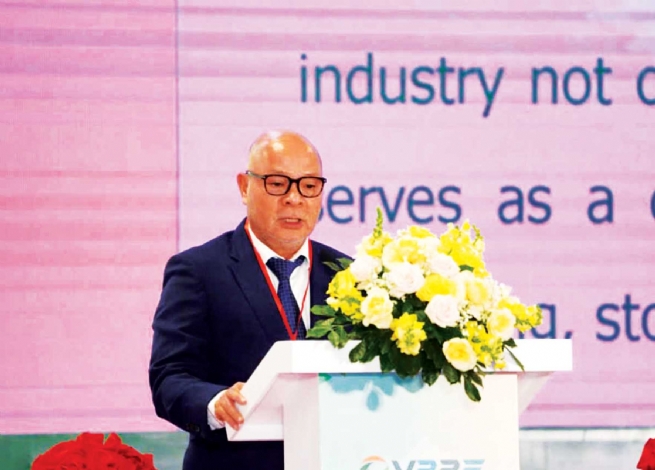
Hoang Trung Son, Chairman of Vietnam Pulp and Paper Association (VPPA) and General Director of Dong Tien Binh Duong Paper Company
How do you assess the growth outlook, opportunities, and challenges for Vietnam’s paper and pulp industry amid strong global market volatility and rising green transition pressures?
Over the past ten years, Vietnam’s paper and pulp industry has experienced significant opportunities for rapid development, recording average double-digit growth annually. Allow me to cite several figures compiled by the VPPA:
Total production output in 2025 reached 6.34 million tons. Total paper consumption in 2025 was estimated at 7.77 million tons, up 10.8% compared with 2024. Packaging and wrapping paper accounted for the largest share, with consumption reaching 6.19 million tons, up 12.6% year on year, driven by the expansion of e-commerce, rising logistics volumes, and consumer preferences for plastic-free packaging. This was followed by tissue paper, with consumption increasing by 8.7% to 423,000 tons, serving both household and business demand.
By 2030, total paper and paperboard capacity in Vietnam is projected to rise to approximately 10.9 million tons, of which packaging paper alone is expected to increase from 6.34 to 9.7 million tons, accounting for nearly 90% of total added capacity. Accordingly, nominal capacity growth in Vietnam’s paper industry is essentially driven by packaging paper expansion, with a high degree of dependence on the ability to secure sufficient raw material supply.
In 2025, total paper imports reached 2.75 million tons, while paper exports totaled 1.49 million tons. According to the Ministry of Industry and Trade, export turnover of paper and paper products in 2024 exceeded US$2 billion, recording average growth of 10–12% per year over the past five years. The paper packaging sector is forecast to reach a market size of US$3.5 billion by 2026, driven by the shift away from plastic packaging and the continued development of e-commerce.
Growth opportunities in the paper industry are also reflected in the determination of the Party and the Government to advance institutional reform, remove barriers for enterprises, and further recognize the role of the private sector, alongside expectations of average GDP growth exceeding 10% in the coming decade. Accordingly, demand for packaging paper and tissue paper is also expected to maintain double-digit growth. At the same time, infrastructure - particularly transport and energy - has received strong and coordinated investment to meet national development needs, helping to reduce logistics costs that remain high for the paper industry.
However, the industry is also facing considerable challenges as the global economy experiences difficult-to-predict volatility, particularly related to new policies of the U.S. administration, geopolitical competition, the development of India’s paper industry, and declining import demand from the Chinese market. Environmental requirements are becoming increasingly stringent, especially from the EU, with regulations such as the EUDR (EU Deforestation Regulation) and PPWR (EU Packaging and Packaging Waste Regulation). In addition, rising green transition pressures related to CBAM, ESG requirements, carbon emission reduction, and supply chain transparency for access to major export markets such as the EU, the U.S., and Japan have placed significant pressure on Vietnam’s paper industry.
At the same time, risks of imbalance and shortages in raw material supply are becoming more evident, as recovered paper sources are increasingly scarce due to trends toward on-site recycling and tighter controls under new regulations and by large corporations. Vietnam currently imports more than 3 million tons of recovered paper annually, and this figure continues to rise, while domestic collection in 2025 reached nearly 3.6 million tons, meeting only about 56% of demand. Although recovery rates increased from 46% in 2021 to 58% in 2024, they remain below expectations. With high recycled material consumption coefficients, producing one ton of packaging paper requires an average of 1.1 to 1.3 tons of waste paper, meaning raw material demand is growing faster than output. Pulp imports in 2025 also rose sharply by 50%, reaching 638,297 tons compared with 425,485 tons in 2024, reflecting the continued heavy reliance of domestic paper producers on imported supply to offset raw material shortages.
In addition, domestic transportation and logistics costs remain significantly higher than in other regional countries, while mobilizing investment capital remains difficult, as most Vietnamese paper enterprises have not conducted IPOs and collateral requirements persist alongside banks’ risk concerns. These factors also pose ongoing challenges to the development of the paper industry.

Hoang Trung Son (second from right) attends a paper industry event
The paper and pulp industry plays an important role across many areas of life and the economy, yet it also poses environmental pollution risks. How do you assess the industry’s capacity to carry out a dual transition to meet green and sustainability goals while accelerating the application of digital technology in management and production?
The paper and pulp industry consumes large amounts of energy, including electricity and steam, as well as clean water, and therefore generates significant volumes of wastewater and emissions. As a result, it is often viewed as having considerable negative environmental impacts, particularly in Vietnam in recent years, where many small enterprises have not invested sufficiently or seriously in environmental protection and resource efficiency.
However, from another perspective that I have repeatedly emphasized, the paper and pulp industry is inherently well suited to a circular economy because: (i) its main raw materials are wood chips harvested from planted forests, which are renewable and absorb CO₂; (ii) products after use are collected and recycled at very high rates, exceeding 80% in developed countries, and can biodegrade quickly in the natural environment; and (iii) recycling paper products contributes significantly to emission reduction and energy savings. For these reasons, most countries worldwide, including Vietnam, have policies encouraging the use of paper products as substitutes for single-use plastic products. Paper enterprises have been actively implementing resource-saving solutions such as producing paper products with lower basis weight and appropriate brightness, as well as applying digitalization, new technologies, and automation in production to minimize energy and clean water consumption, ensure compliance with environmental protection requirements, and reduce emissions.
The Government has also announced targets for developing a green and circular economy, promoting innovation, and advancing digital transformation toward 2030 and 2045. Implementing the dual transition is therefore not only a trend but also an opportunity and has become a mandatory requirement for paper enterprises. In addition, the paper industry has a very broad market and maintains close linkages with many sectors, including forestry, agriculture, chemicals, printing, packaging, and equipment manufacturing.
The green transition in the paper industry can be pursued through solutions such as the use of renewable energy, including rooftop solar power, biomass fuels, and fuels derived from solid waste generated during production, as well as energy storage solutions, waste heat recovery, efficient energy use, and the adoption of ESG practices.
Regarding digital transformation and AI application, paper manufacturing plants can implement digitalization and optimization through IoT combined with AI and data analytics across production and operations, optimized energy consumption control, proactive maintenance and equipment performance management, quality and environmental management, green supply chain and logistics management, and water treatment and circulation. In summary, an integrated management system, or Digital Twin, can be developed to simulate digital production lines and connect ERP, MES, SCADA, and IoT systems to achieve comprehensive process optimization.
Over the past five years, the Vietnam Pulp and Paper Association has also implemented numerous programs and initiatives aimed at sustainable development and emission reduction, including promoting a circular economy, training human resources for ESG practices, strengthening technological improvement capacity, conducting greenhouse gas inventories, and supporting emission reduction efforts.
The dual transition is not an easy task and requires the combined efforts of all stakeholders, from enterprises and regulatory authorities to consumers, with enterprises playing a central role. Enterprises need to change their management mindset and invest in advanced recycling technologies, while the Government needs to establish supporting mechanisms and policies to promote and encourage sustainable initiatives.
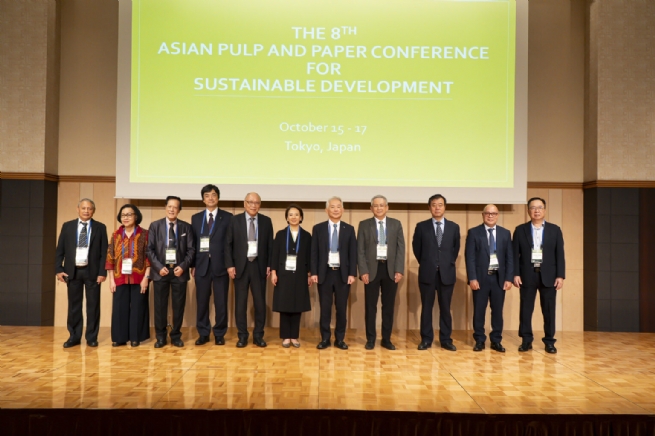
Hoang Trung Son (second from right) at the 8th Asian Pulp and Paper Conference (APPIC 2025)
What are the key solutions that regulatory authorities need to implement to improve policy frameworks and support the development of Vietnam’s paper industry in a green and sustainable direction during the upcoming period?
To achieve objectives related to sustainable development, green transition, and digitalization of the paper industry in the coming period, alongside the proactive efforts of enterprises, the Government needs to update policies, widely disseminate information, and support domestic enterprises in accessing and applying environmentally friendly production technologies through technology transfer, in line with standards for sustainable development and green growth.
On that basis, regulatory authorities should review and reference international requirements and standards to formulate and periodically update sectoral regulations and benchmarks related to waste management, energy consumption levels, water use, materials, and chemicals in paper production. At the same time, they should encourage research into new materials and chemicals that are renewable or of natural origin to gradually replace less sustainable inputs, based on life cycle analysis, and support domestic enterprises in accessing and obtaining green growth and sustainable development certifications in accordance with international standards and the requirements of target export markets.
Technical support centers and research units should be developed to accompany enterprises, particularly small and medium-sized enterprises, in R&D activities. It is also necessary to strengthen the capacity of specialized centers and laboratories to meet requirements for research and product quality testing in line with international standards, with due attention to safety and ecological criteria specific to the sector. In parallel, the existing laboratory system should be reviewed to consider focused investment and the development of several key specialized units.
In addition, support policies are needed to: (i) improve the efficiency of domestic waste paper collection through source separation and quality standardization, combined with support policies and tax exemptions for collection activities; (ii) restructure the supply chain toward a circular economy with closer linkages among producers, users, and recovery systems, along with effective implementation of extended producer responsibility regulations; (iii) facilitate the import of recovered paper as production input to ensure a balanced combination of domestic collection, imported waste paper, and domestically produced pulp; and (iv) regulate capacity growth in line with improved competitiveness and balanced supply and demand in the medium and long term.
If implemented consistently and over the long term, these measures will establish a solid foundation for Vietnam’s paper industry to transition toward a greener, more modern, and sustainable development trajectory that meets advanced international standards.
Thank you very much!
By Quoc Hung, Vietnam Business Forum
 April 24–25, 2026
 Kinh Bac Cultural Center, Bac Ninh Province


 Vietnamese





