

9:25:30 AM | 10/6/2020

The General Department of Vietnam Customs has urgently completed the draft “Export and Import Quality Inspection Form Renovation” Project and a draft report on review and proposed settlement of problems caused by customs laws to the Government.
Many shortcomings in specialized inspection
Mr. Nguyen Van Can, General Director of the General Department of Vietnam Customs, said, many imports are subject to specialized inspection. According to statistics from the General Department, as of December 31, 2019, about 70,000 items were still subject to specialized management and inspection, down 12,600 items or 15.6% from 82,698 items (as of the second quarter of 2015. This outcome was well below the target of the Government of reducing by 50% goods subject to specialized management and inspection by 2018-2019.
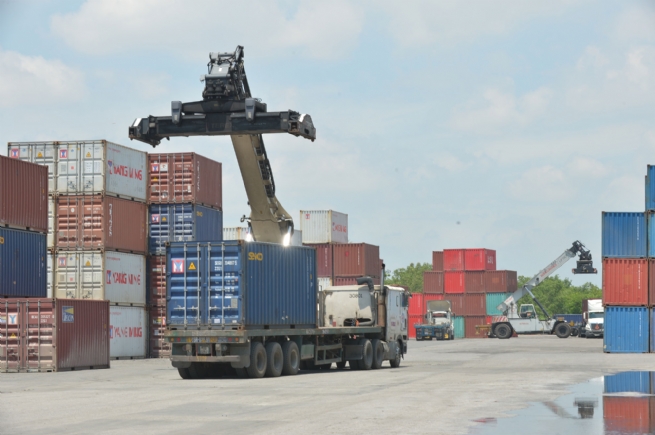
The rate of imported goods subject to specialized inspection is high while the rate of detecting violations is very low. The rate of goods subject to specialized inspection has tended to decrease gradually over the past years, from about 30% in 2015 to 19.1% in 2019. The rate of detecting consignments that do not meet quality over the years is very low: only from 0-0.03%.
Given current shortcomings, specialized inspection procedures are still a burden for businesses. Therefore, following the direction of the Government, the Customs Management and Supervision Department under the General Department of Customs drafted the Project. Accordingly, based on the list of exported and imported goods subject to quality inspection plus relevant mandatory technical regulations issued by authorities that carry out specialized management, customs authorities will apply the risk exposure management principle. High risk consignments will be chosen for specialized inspection or conformity assessment. Companies are responsible to the law for the quality of imported and exported goods in accordance with relevant technical regulations. The Project is made for a 6-year roadmap with five detailed solutions of customs authorities, which will bring a comprehensive change for specialized inspection in the coming time.
What are good for businesses?
According to the General Department of Customs, the order and procedures for quality inspection of imported goods conducted by customs authorities have three fewer steps as compared to those imposed by relevant specialized inspection agencies: The enterprise submits proofs of conformity certification/inspection performed by a certification/inspection agency to quality inspection agency for re-examination; the enterprise receive the quality inspection result from the specialized inspection agency; and finally, the enterprise submits the quality inspection result to customs offices for import procedures.
The order and procedures of food safety inspection according to the ordinary inspection method conducted by customs authorities has two fewer steps than those imposed by the specialized inspection agency: The enterprise receives notification of food safety inspection results from the specialized inspection agency. It submits food safety inspection results issued by the specialized inspection agency to the customs office for import procedures.
The Trade Facilitation Project funded by USAID conducted an independent and objective impact assessment of the Project. It calculated the time and cost saved for importers with goods subject to quality inspection and food safety inspection in the new inspection mode. The number of quality inspection and food safety inspection declarations fell by 86,166 declarations in a year, down 54.4% from 158,424 declarations (in 2019), to 72,258 declarations.
The total number of days of quality inspection and food safety inspection that companies save from the new inspection model in a year: 2,484,038 days (down from 3,965,394 days to 1,481,356 days). The cost saved for enterprises in a year as a result of time reduction was more than VND881 billion (approximately US$37.8 million).
When the new form is applied, it will reduce the number of shipments that need to be tested, leading to a reduction in trade costs by reducing inventory requirements and capital. This will make business more efficient. This will boost the growth of manufacturers and distributors, increase exports and final output. This will bring in more good opportunities for the economy.
Based on the rate of specialized inspection data in 2019 provided by the General Department of Customs, the Trade Facilitation Project funded by USAID based on data in the World Bank’s Doing Business Report estimated that the cost saved for the economy with the new form amounted to VND9,285 billion (approximately US$399 million) a year.
By Le Hien, Vietnam Business Forum


 Vietnamese





