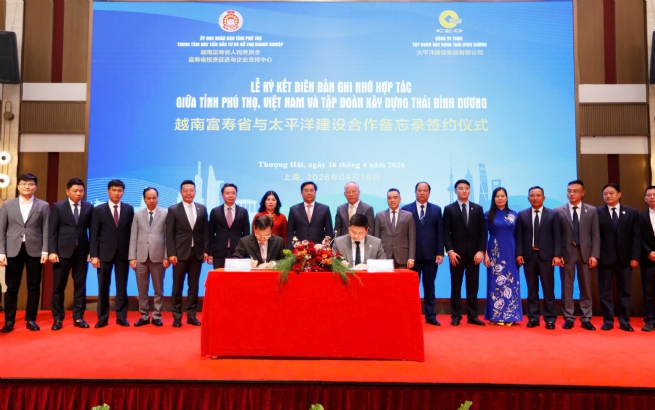
With its well-developed infrastructure facilities and convenient location, the Nomura Haiphong Industrial Zone (NHIZ) is considered one of the most modern IZs in Vietnam. VIB Forum interviewed Eiichi Yumoto, general director of the IZ.
Can you introduce briefly about the NHIZ?
In 1997, the NHIZ started its operation. However, at that time, due to the Asian financial crisis, the attraction of foreign investment into Vietnam and the NHIZ saw a slump. In recent years, since the foreign investment inflow has seen optimistic signs, the IZ has become an attractive address for foreign investors. The IZ has total 153 hectares with well-developed infrastructure facilities, including an independent electric power supply station with a capacity of 50 megawatts, a 13,500 cubic metre per day water supply plant, a 2,000 line telephone switch, and modern waster water treatment system, as well as roads and many other services.
What has the IZ done over the past years?
So far, 42 investors have become operational in the IZ, occupying 63 per cent of the IZ’s total area. These enterprises with total investment of over US$406 million have created jobs for 8,000 people. It is expected that in 2006, when the IZ is filled up it will generate jobs for around 25,000 people. In particular, the Nomura IZ has attracted many hi-tech enterprises, including enterprises manufacturing robots and PCs. This, in turn, will help Vietnam increase its competitiveness during international integration.
In 2005, there was a new wave of foreign investment in Vietnam. How did the wave impact on the IZ’s activities?
After great efforts by the Vietnamese Government to improve the business environment, Vietnam has become more attractive to foreign investors, especially Japanese. This has produced significant impacts on the activities of the IZ. The number of investors attracted by IZ in 2005 saw an increase of ten folds against the previous years’ total number. With total US$100 million, these investors are carrying out projects in automobile accessories, equipment and machines, and hi-tech. We hope that the progress will contribute further to the development of Haiphong city, creating a momentum for the city to complete its socio-economic development in the 2006-2010 period.
As a Japanese investor operating in Vietnam for a long time, what mechanisms and policies should Vietnam have to improve its competitiveness?
What Vietnam needs are stability and transparency in its mechanisms and policies. Also, Vietnam should create equal playground for foreign and local enterprises. Furthermore, Vietnamese should promote administrative procedures to have investors save time and money. There is no better ways for investment promotion than enterprises’ introduction. Once investors gain high business effectiveness in a locality, the locality will become attractive to other investors. Haiphong and the NHIZ are examples.





 Vietnamese