

10:10:27 AM | 12/11/2025

As Vietnam advances its strategic goals for green growth and green transition, the mobilization and effective use of green financial resources have become essential to helping businesses develop and implement sustainable development strategies. This effort contributes to building a sustainable ecosystem that supports the implementation of Vietnam’s National Green Growth Strategy.
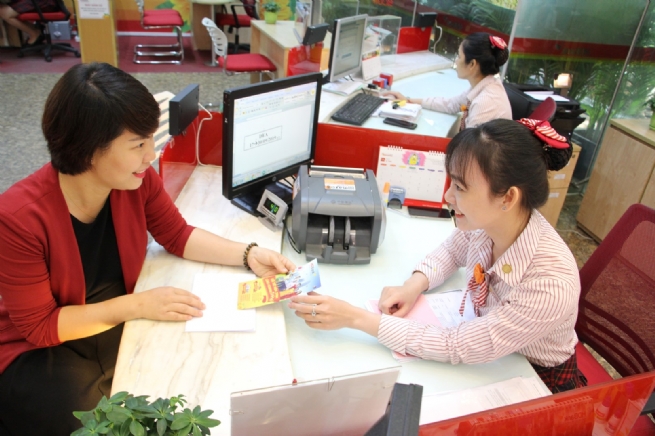
Vietnam has established comprehensive legal framework for green finance development
Legal framework and green finance mechanisms
In recent years, Vietnam’s legal framework on financial policies for green growth has been continuously reviewed and updated to meet the country’s development needs.
A key milestone was the approval of the Vietnam National Green Growth Strategy for the 2011-2020 period, with a vision to 2050, by the Prime Minister on September 25, 2012. The strategy focused on three main tasks: reducing greenhouse gas emission intensity and promoting the use of clean and renewable energy; greening production; and encouraging green lifestyles and sustainable consumption.
In October 2021, the Prime Minister issued Decision 1658/QD-TTg, approving the National Green Growth Strategy for the 2021-2030 period, with a vision to 2050. The strategy aims to reduce greenhouse gas emission intensity per GDP unit, green key economic sectors, and promote the circular economy model.
In July 2025, Decision 21/2025/QD-TTg was issued, establishing environmental criteria and procedures for certifying investment projects under the Vietnam Green Taxonomy. This decision demonstrates the government’s strong commitment to mobilizing green capital and aligning with the global expansion of green credit and green bond markets. The Vietnam Green Taxonomy identifies 45 types of projects across seven sectors, forming a solid legal foundation for the domestic green finance market, including both green credit and green bonds. The unified environmental criteria framework helps identify and select eligible projects for green financing, thereby promoting sustainable transformation in Vietnam’s key industries. The flexible certification mechanism also enables businesses to access green capital more easily while improving transparency and credibility for lenders and investors.
Notably, Resolution 68 of the Politburo on private sector development highlights the promotion of green credit. The state provides interest rate support and encourages credit institutions to offer lower rates for private enterprises implementing green, circular, and ESG-compliant projects.
Alongside these major strategies, the government and relevant ministries have also introduced regulations to promote green projects and mobilize green capital. For example, Decree 08/2022/ND-CP (January 10, 2022) defines categories of projects eligible for green credit and green bond issuance; Decision 1726/QD-TTg (December 2023) approves the Strategy for Stock Market Development to 2030, focusing on expanding green financial instruments, promoting sustainable finance, and accelerating digital transformation in the securities sector; and Decision 768/QD-TTg (April 15, 2025) adjusts the Power Development Plan VIII, while Decision 21/2025/QD-TTg on the Vietnam Green Taxonomy further specifies priority renewable energy projects eligible for investment and green credit access.
The Ministry of Finance and the State Securities Commission (SSC) have also issued guidelines for green bond issuance aligned with standards from the International Capital Market Association (ICMA). This has opened long-term green financing channels for renewable energy and climate adaptation projects. The SSC is currently implementing the Green Capital Market Development Plan, which includes developing infrastructure for the green and carbon markets. Phase 1 (2025-2027) focuses on establishing legal frameworks, piloting a carbon exchange, and building technical infrastructure, while Phase 2 (from 2028) will officially operate the exchange, expand trading activities, and connect with international markets.
The State Bank of Vietnam (SBV) has also issued Circular 17/2022/TT-NHNN, requiring credit institutions to integrate Environmental, Social, and Governance (ESG) factors into their appraisal and risk management processes for green credit.
Overall, Vietnam has established a comprehensive legal framework that lays a strong foundation for developing the green finance market. These policies are helping direct capital flows into sustainable projects, advancing the goals of green growth and aligning economic development with environmental, social, and governance (ESG) standards.

Green credit balance on the rise
According to data from the SBV, as of the end of March 2025, Vietnam’s outstanding green credit reached more than VND704.24 trillion, up 3.57% from the end of 2024 and accounting for 4.3% of the total outstanding loans in the economy. Green credit is concentrated mainly in renewable and clean energy (over 37%) and green agriculture (over 29%). Between 2017 and 2024, the average annual growth rate of green credit exceeded 21.2%, higher than the overall credit growth rate of the economy.
The banking system is also placing increasing emphasis on assessing environmental and social risks. To date, 57 credit institutions have incorporated environmental and social risk assessments, covering total outstanding loans of VND3.62 quadrillion. The number of loans evaluated for environmental and social risks has increased fifteenfold compared to 2017.
Between 2019 and 2023, Vietnam issued approximately US$1.16 billion in green bonds. In 2024 alone, total green bond issuance reached about VND10.3 trillion (more than US$400 million), nearly 1.9 times higher than in 2023, reflecting growing interest among issuers and investors. Major commercial banks such as Vietcombank, BIDV, HDBank, and SeABank have also participated in green bond issuance to finance environmental protection projects in renewable energy, sustainable transportation, and water management, contributing to sustainable development.
Vietnam is also in the early stages of developing its domestic carbon credit market. Between 2018 and 2024, the country successfully transferred forest carbon credits, generating revenue of US$51.5 million.
As Vietnam accelerates its green growth and sustainable energy transition, international organizations such as the International Finance Corporation (IFC), the World Bank, and the Organization for Economic Co-operation and Development (OECD) have issued key recommendations to support the development of Vietnam’s green finance ecosystem. These include enhancing the legal and financial frameworks for sustainable finance, expanding green credit products, establishing guarantee mechanisms, and mobilizing private capital through instruments such as sustainability-linked loans (SLLs) and blended finance.
The IFC has recommended that Vietnam develop a transparent green investment portfolio to help banks and investors identify eligible projects, while the OECD has emphasized the need to standardize ESG criteria to mitigate greenwashing risks. International organizations have also suggested that Vietnam adopt long-term incentive policies, reduce investment costs, and promote long-term capital markets to support renewable energy.
However, experts note that Vietnam’s green bond market remains relatively small and slow to develop. It still lacks independent verification mechanisms, standardized information disclosure, and faces high issuance costs, which prevent it from becoming a major capital mobilization channel for green growth.

Sustainability Talk organized by VBCSD at Vinamilk Green Farm 2025
Improving the legal framework and guidelines for green credit
To concretize and effectively implement the National Strategy on Green Growth, the SBV said that in the coming time, it will align its actions with the socio-economic development objectives, the national green growth strategy, and assigned tasks. The SBV will continue to carry out policies and solutions to promote the banking sector’s contribution toward green growth and climate change adaptation.
Accordingly, the SBV will continue to manage credit growth carefully, focusing lending on production and business sectors, priority fields, and key economic growth drivers identified by the government, including both traditional and emerging areas, to support economic growth in line with national targets.
At the same time, the SBV will continue reviewing and improving the legal framework and guidelines for green credit. It will propose revisions and supplements to preferential credit mechanisms and policies that encourage high-tech agriculture, organic agriculture, and circular economy-based agricultural models. The SBV will also instruct credit institutions to mobilize resources and facilitate access to capital for enterprises, especially private businesses, implementing green, environmentally friendly, and circular economy projects.
In particular, the SBV will study mechanisms for interest rate support and propose innovative methods for the State to subsidize interest rates for private-sector borrowers undertaking green projects, circular economy models, and ESG-standard frameworks, in line with Resolution 198/2025/QH15 on special mechanisms and policies to develop the private economy. It will also provide timely support to address difficulties in implementing environmental risk management in credit activities of credit institutions.
Additionally, the SBV will strengthen connections and cooperation with domestic and international organizations to attract financial and technical assistance for green finance and green banking activities, particularly to enhance the capacity of banking personnel in green banking, green credit, and climate change response.
By Quynh Anh, Vietnam Business Forum





 Vietnamese





