

11:12:46 AM | 12/16/2025

The draft revised Personal Income Tax (PIT) Law, now submitted to the National Assembly at the 10th Session of the 15th National Assembly, proposes major adjustments aimed at ensuring fairness, aligning with real-life conditions, supporting business operations, and significantly reducing the tax burden on individuals.
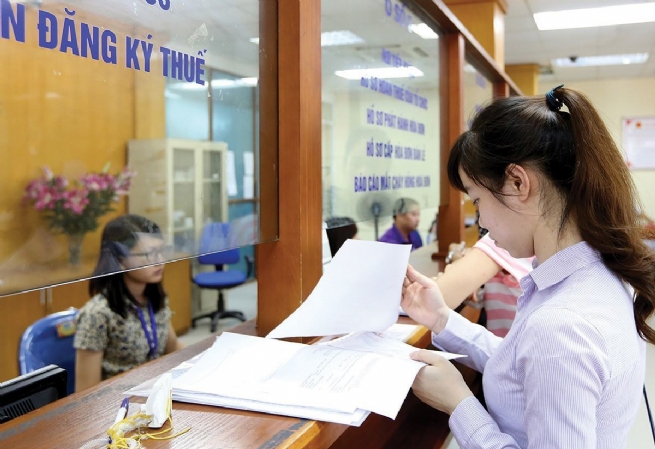
The revisions were prepared by the Ministry of Finance based on feedback from National Assembly delegates, experts, and scholars, while also fully assessing potential impacts before advising the Government for submission to the National Assembly. These changes are viewed as the most comprehensive in recent years, directly affecting tens of millions of taxpayers and millions of households and individual business operators.
Significant increase in the tax exemption threshold
One of the major adjustments for households and individual business operators is the government’s proposal to raise the annual revenue threshold for tax exemption from VND200 million to VND500 million. This is considered a strong adjustment that reflects rising prices and input costs over multiple years. Importantly, the VND500 million threshold is deducted directly before calculating tax, which significantly reduces the tax liability compared to current regulations.
According to estimates from tax authorities, raising the exemption threshold and revising the tax calculation method could reduce total taxes for households and individual businesses by about VND11,800 billion per year, creating space to support the small business sector that accounts for a large share of the economy.
Along with this adjustment, the draft law introduces a tax calculation method based on actual income, meaning revenue minus expenses, to more accurately reflect the nature of income taxation. Households and individuals with annual revenue above VND500 million will apply the income-based method. For those with revenue between VND500 million and VND3 billion, taxpayers may choose either the income-based method or percentage of revenue method depending on their circumstances and ability to document expenses. In all cases, the first VND500 million of revenue will be deducted before calculating tax to ensure practical support.
In addition to changes under the Personal Income Tax Law, the Ministry of Finance also proposes corresponding adjustments in the draft amended Value Added Tax Law, raising the non-VATable revenue threshold for households and individual business operators to VND500 million per year. Aligning these two tax policies is intended to reduce policy inconsistencies and limit discrepancies in determining tax obligations.
Simplifying tax brackets and reducing rates
For employees earning income from salaries and wages, the draft revised Personal Income Tax Law focuses on adjusting the progressive tax table by streamlining brackets and reducing the overall tax burden.
The new tax table cuts the number of brackets from seven to five and widens the income ranges between brackets. Two key rates are reduced: the second bracket decreases from 15% to 10%, and the third bracket decreases from 25% to 20%. The revised brackets are as follows: Bracket 1, income up to VND10 million per month with a tax rate of 5%; Bracket 2, income above VND10 million to VND30 million per month with a tax rate of 10%; Bracket 3, income above VND30 million to VND60 million per month with a tax rate of 20%; Bracket 4, income above VND60 million to VND100 million per month with a tax rate of 30%; Bracket 5, income above VND100 million per month with a tax rate of 35%.
Under this structure, all individuals currently paying tax under the existing progressive system will experience reduced tax obligations, regardless of bracket. Expanding the income ranges between brackets also helps ease sudden bracket jumps, which often create challenges and do not accurately reflect real income growth.
The tax reduction effect is strengthened by adjusting personal and dependent deductions in line with Resolution 110/2025/UBTVQH15 of the National Assembly Standing Committee. Raising the personal deduction is expected to further reduce annual payroll related tax by VND21,000 billion. This adjustment is particularly important as workers’ real incomes continue to face pressures from inflation, living costs, and rising essential service prices.
Flexible adjustment of personal deductions
A notable legislative improvement is that the draft law incorporates the personal deduction level directly into the law, ensuring alignment with the National Assembly’s constitutional authority over key tax provisions. Previously, the deduction was set by a resolution of the National Assembly Standing Committee, which often delayed adjustments in response to economic changes.
The new draft introduces a more flexible mechanism in which the Government may propose adjustments to the personal deduction to the National Assembly Standing Committee based on price movements, income levels, and socioeconomic conditions. This approach allows tax policy to respond more promptly to changing conditions without frequent legislative amendments.
The Ministry of Finance has also clarified provisions related to other types of income, exemptions, and the definition of dependents. Notably, the category of other income as regulated by the Government has been removed to improve transparency, ensure clarity, and reduce the risk of disputes in practice.
Toward a fair and practical tax system
Overall, the adjustments in the draft revised Personal Income Tax Law reflect the Government’s and Ministry of Finance’s consistent approach to reducing the tax burden, ensuring fairness across income groups, and encouraging business activity. Raising the tax exemption threshold, adjusting tax brackets, lowering rates, and updating personal deductions in line with real economic conditions are expected to create a more favorable environment for citizens, business households, and small enterprises.
Amid ongoing macroeconomic challenges, these changes are not only technical tax adjustments but also measures to increase disposable income, stimulate consumption, and support economic recovery. The Ministry of Finance has stated that it will continue to consider feedback from National Assembly deputies to finalize the draft, ensuring its feasibility, transparency, and suitability before submission for approval.
By Huong Hau, Vietnam Business Forum






 Vietnamese





