9:43:42 AM | 1/5/2026

“EU partners look beyond price and delivery timelines. They ask detailed questions about raw material origins, production conditions, environmental and labor standards, and supply chain transparency. Without clear and consistent answers, even highly competitive pricing offers little chance for cooperation.”
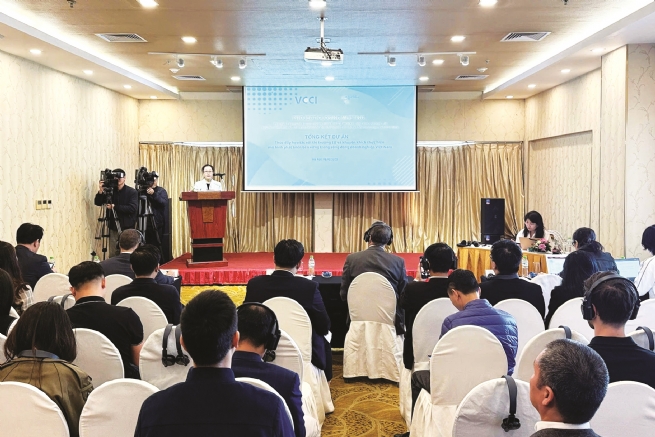
VCCI Secretary General Tran Thi Lan Anh addresses the closing ceremony of the project aimed at promoting cooperation with the EU market and encouraging sustainable development models among Vietnamese enterprises, December 18, 2025
This was shared by Hoang Ngoc Oanh, a specialist in international trade policy and law, at the closing ceremony of a project aimed at promoting cooperation with the EU market and encouraging sustainable development models among Vietnamese enterprises. The project was implemented by the Vietnam Chamber of Commerce and Industry (VCCI) and funded by the Ministry of Foreign Affairs of Bulgaria through the Embassy of Bulgaria in Vietnam, attracting broad participation from businesses nationwide.
According to Secretary General of VCCI Tran Thi Lan Anh, the project was implemented as Vietnam works to achieve the Sustainable Development Goals (SDGs) by 2030 and fully capitalize on opportunities from the Vietnam-EU Free Trade Agreement (EVFTA). Its core objective is to strengthen the capacity of Vietnamese small and medium-sized enterprises (SMEs), helping them access the EU market, adopt inclusive business models, comply with European standards and best practices, and move toward sustainable development.
The project delivered a range of practical activities. These included a national forum on sustainable development and Vietnam-EU partnerships, which served as a key platform to update enterprises on new EU policies such as the Corporate Sustainability Reporting Directive (CSRD), address challenges, and provide guidance on EVFTA implementation. The project also produced the handbook “Exporting Wood Products to the EU and What You Need to Know,” a practical reference offering comprehensive insights into market requirements, environmental standards, and sustainable development criteria for the wood sector, one of Vietnam’s major export industries.
For Vietnam-EU relations, the project directly supported greater understanding and more effective implementation of the EVFTA, a new-generation agreement with advanced provisions on sustainable development and labor. Through dialogue forums and guidance materials, hundreds of Vietnamese enterprises gained the knowledge needed to meet stringent EU requirements on sanitary and phytosanitary measures (SPS), rules of origin, and environmental and social standards. This not only expands access to a large market but also strengthens the internal capacity and global value-chain position of Vietnamese businesses. The project shows that cooperation with the EU goes beyond trade, encompassing shared values, management experience, and a common commitment to a green, circular, and responsible economy.
For Vietnam-Bulgaria relations, the project is a concrete example of the long-standing and steadily deepening partnership between the two countries. While the Bulgarian business presence in Vietnam remains modest, the project has laid an important foundation for trust-building and closer, more direct ties between the business communities of both sides.
“VCCI is committed to continuing to maintain and expand information, advisory, and business connectivity channels with partners in the EU and Bulgaria. The database of enterprises interested in the SDGs and the EVFTA will be updated and used more effectively. At the same time, the project’s results and recommendations will be shared with relevant authorities to help improve policies that support sustainable business development,” Lan Anh said.
According to Hoang Ngoc Oanh, a key change resulting from participation in the project is that enterprises have become much more proactive in updating information and regulations related to the EU market. In the past, many businesses only paid attention to compliance after problems arose, such as when shipments were delayed, additional documentation was required, or partners raised difficult questions. Following the project, enterprises have begun to study EU legal frameworks and new standards earlier and in a more systematic way.
She said that many companies have actively engaged in discussions on issues such as REACH (Registration, Evaluation, Authorization and Restriction of Chemicals), and the Carbon Border Adjustment Mechanism (CBAM). Businesses no longer see these simply as “requirements from EU partners,” but recognize them as regulations that must be clearly understood and proactively complied with to maintain long-term, stable cooperation with the EU market.
“When enterprises understand regulations such as REACH or CBAM from the outset, they can proactively adjust production processes, prepare documentation and data from the input stage, work more effectively with partners and consultants, and, most importantly, significantly reduce legal, cost, and time risks in the export process. In a context where logistics costs, compliance costs, and capital costs are rising, risk reduction itself becomes a very important competitive advantage,” added Oanh.
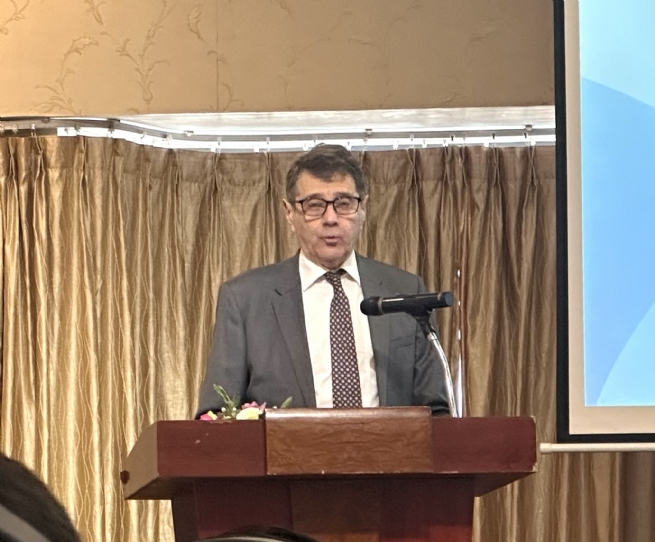
Bulgarian Ambassador to Vietnam - Pavlin Todorov “The year 2025 is a very special one for Bulgaria and Vietnam. We are marking 75 years of diplomatic relations between our two countries. Since the establishment of these relations in 1950, Bulgaria and Vietnam have built a friendship based on mutual trust, equality and respect, and have developed multifaceted cooperation to the benefit of our two nations. In this important anniversary year, our relations reached a new milestone. At the invitation of H.E. Mr. Rumen Radev, President of the Republic of Bulgaria, H.E. Mr. To Lam, General Secretary of the Central Committee of the Communist Party of Vietnam, paid an official visit to Bulgaria in October 2025. During this visit, the two sides agreed to elevate Bulgaria-Vietnam relations to the level of a Strategic Partnership. This Strategic Partnership reflects our shared confidence in the future of our relations. It aims to raise cooperation to a new level, both bilaterally and multilaterally, by strengthening existing mechanisms and creating new ones. Most importantly, it focuses on practical cooperation and tangible results that bring real benefits to our peoples, while contributing to peace, stability and prosperity in both our regions and beyond. Within this framework, economy and trade play a central role. They are one of the key driving forces behind the transformation of our relations from traditional friendship to a strategic, substantive and effective partnership. Bulgaria and Vietnam have expressed a strong willingness to further develop mutual trade and investment, building on existing bilateral and multilateral agreements. Bilateral economic and trade cooperation between Bulgaria and Vietnam has reached a stage at which tangible acceleration is both realistic and achievable. By leveraging the opportunities arising from the EU-Vietnam Free Trade Agreement (EVFTA), the sustained growth of the Vietnamese economy, and the competitive strengths of Bulgarian companies in selected sectors, concrete results can be delivered in the short term. With active coordination between public institutions and the business community, Bulgaria can further consolidate its role as a reliable partner and a gateway for Vietnamese companies to the European Union, while Vietnam can strengthen its position as Bulgaria’s strategic partner in Southeast Asia. This synergy creates substantial opportunities for businesses on both sides, particularly in agriculture and food processing, pharmaceuticals, information and communication technologies, mechanical engineering, and tourism”. |
Anh Mai (Vietnam Business Forum)
 April 24–25, 2026
 Kinh Bac Cultural Center, Bac Ninh Province


 Vietnamese