

11:03:00 AM | 1/19/2026

Effective and coordinated management of financial, natural, product, social, and especially human resources is crucial to the success of Vietnam’s 10-year Socioeconomic Development Strategy in the 2021-2030 period.
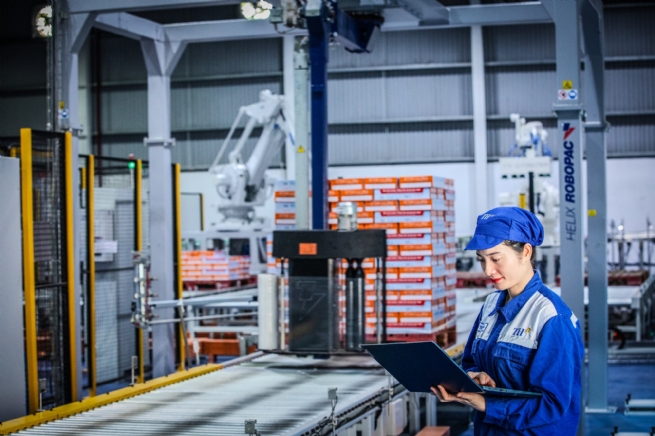
Vietnam must adopt flexible, innovation-driven governance to create quality jobs and sustainable prosperity
In the 21st century, strong economic progress has been driven by advances in science and technology in the digital age, particularly within the market economy. In such an economy, macroeconomics examines indicators such as GDP, inflation, and unemployment to assess overall economic health, guide governments in designing effective fiscal and monetary policies to stabilize growth and manage business cycles, and help enterprises and investors forecast performance and make strategic decisions based on development trends.
However, economists agree that the macroeconomic picture offers only broad guidance for the economy. For example, while GDP is seen as the most important macroeconomic indicator because it measures the total value of final goods and services and reflects economic size, condition, and growth, it has several limitations that must be considered in policymaking and business management.
First, GDP growth is often high in developing economies that depend on large-scale infrastructure and real estate projects, or on export-oriented strategies and FDI projects whose products do not directly serve domestic living needs. Moreover, GDP can continue to rise even when projects are low in quality, poorly coordinated, lack connectivity, operate below capacity, are wasteful or delayed, lack maintenance plans, or are eventually dismantled.
Second, through indicator-based analysis, macroeconomics addresses only the “what” of the economy. It does not deal with the systems and processes for managing national resources to achieve those macroeconomic outcomes. In practice, this requires sound economic governance to create a stable environment that supports macroeconomic stability and growth. Governance, in essence, is the “how” of managing the economy.
Vietnam is actively preparing to implement the 2026-2030 Five-Year Plan, aiming for rapid and sustainable growth, maintaining macroeconomic stability, and achieving an average annual GDP growth of 10% or higher. To reach this target, economists emphasize that a sustainable economic governance model based on five key development resources must be applied consistently and comprehensively in planning, directing, operating, and effectively supervising national programs. Effective, coordinated management of financial, natural, product, social, and especially human resources is crucial to the success of the 10-year Socio-Economic Development Strategy 2021-2030.
Applying the principle of putting people at the center and following President Ho Chi Minh’s teaching, “For the sake of ten years, we must plant trees; for the sake of 100 years, we must cultivate people,” sustainable economic governance prioritizes the development of human resources.
Long-term strategies concentrate on education and training for younger generations. Recently, the National Assembly issued Resolution 217/2025/QH15 on tuition exemptions and support for preschool children, general education students, and learners in general education programs within the national education system. However, in a person’s life, most time is devoted to work (on average around 40 years), so the concept of “labor” carries decisive meaning for an individual’s destiny.
In 1951, President Ho Chi Minh renamed the Party the “Workers' Party of Vietnam.” This change aligned with the principle of great national unity and the importance of the labor force that he consistently pursued. As a result, in today’s efforts to build and develop human resources, employment governance plays a central role, as it not only underpins sustainable GDP growth but also contributes to human well-being and progress.
Globally, many leading economic figures have affirmed the importance of employment, alongside other resources, to societal happiness, prosperity, and sustainability.
Former UK Prime Minister David Cameron said that it was time to recognize that there is more to life than money and to focus not only on GDP but also on general wellbeing.
Professor Paul Krugman, Nobel Prize in Economics laureate in 2008, argued that the core factor of happiness is having a job, which, beyond providing stable income, gives a person confidence and self-respect, and that more jobs must be created to increase public happiness.
With a population of about 100 million, Vietnam has a large labor force of more than 52 million people aged 15 and above as of 2024-2025. The labor market shows positive signs, including higher employment and rising average income. Average monthly income increased from VND7.5 million (US$300) in Q2/2024 to VND8.2 million (US$328) in Q2/2025, representing a rise of 10.7%.
Employment structure is shifting toward services and industry, and labor productivity is increasing. However, working conditions face many constraints, job shortages persist due to small-scale manufacturing industries, low wages (one worker’s income does not support one dependent), noncompetitive benefits, limited incentives, workplaces lacking occupational safety and hygiene, and shortcomings in training, recruitment, and wage scale systems. These factors make it difficult for workers to achieve adequate living standards commensurate with their contributions, leading to lower productivity and limited ability to attract talent.
In addition, environmental pollution, pandemics, natural disasters, and particularly wide income gaps among regions and social groups remain significant, leaving Vietnam behind many countries in the region. At the same time, digital technology and AI are expected to automate many jobs, disrupt traditional growth models and development strategies, weaken the link between wage growth and productivity, and increase unemployment and inequality.
These practical risks make it essential to carry forward the foundations of economic governance, particularly the management of human and social resources, including institutions and legal frameworks, into the future. This approach will help Vietnam adapt to new socio-economic realities, create more jobs with better working conditions, ensure that “no one is left behind,” and prevent the next global crisis.
Furthermore, as the market economy continues to be refined, it is necessary to recognize that sustainable economic governance is not only about establishing frameworks of rules, procedures, and institutions for conservative management, but also about allocating space for constructive action to proactively shape a positive environment, healthy competition, guidance, and decision-making that serves national strategies and objectives, while being supervised by governance structures.
Moreover, it must establish a flexible framework that allows and guides creative processes rather than merely imposing rigid rules. Governance can be understood as the establishment of clear legal and institutional frameworks, strategic alignment, and accountability, while permitting innovation within those boundaries, ensuring that creative ideas are implemented toward effective economic governance and the gradual improvement of people’s living and working conditions, delivering sustainable happiness and prosperity for the nation.
Dr. Doan Duy Khuong
Source: Vietnam Business Forum


 Vietnamese





