

9:16:22 AM | 2/5/2026

After a year of strong recovery and impressive growth, Vietnam’s tourism industry has entered a new phase that requires repositioning its value, expanding markets, and strengthening international competitiveness.
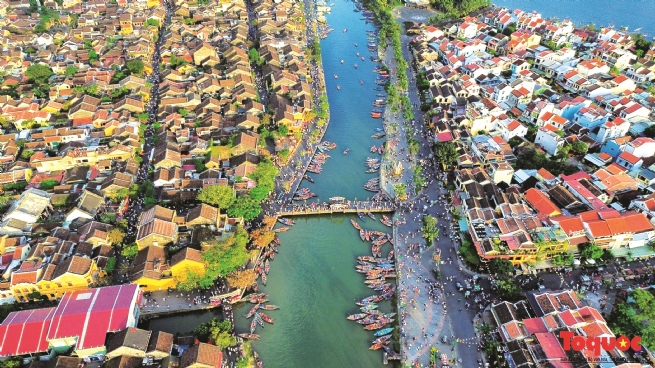
Aerial view of Hoi An ancient town
Strong growth
The year 2025 closed with results that exceeded expectations for the tourism industry. Vietnam welcomed approximately 21.5 million international visitors, the highest level on record, reflecting a broad-based market recovery. According to data from the Vietnam National Authority of Tourism, total sector revenue exceeded VND1 quadrillion (US$40 billion) in 2025, accounting for nearly 9% of GDP and making a substantial economic contribution.
These outcomes reflected not only recovery but also improvements in growth quality. “Vietnam tourism has affirmed its position as a leading destination in the region, not only through growth in visitor numbers but also through continued efforts to improve service quality and visitor experience,” said Nguyen Trung Khanh, Director General of the Vietnam National Authority of Tourism. This progress was reflected in the introduction of new tourism products, the expansion of higher-end services, and adjustments to supply chains to better serve international visitors.
Major tourism centers such as Hanoi, Da Nang, Khanh Hoa, Quang Ninh, Phu Quoc, and Ho Chi Minh City, along with many other localities, reported sharp increases in visitor arrivals, particularly during the year-end peak season.
“There has never been a year as vibrant and dynamic as 2025. More open visa policies and expanded air connectivity provided a strong boost for the entire sector,” said Pham Tien Dung, Vice President of the UNESCO Hanoi Travel Club.
This momentum came from both higher visitor numbers and stronger revenue generation. Accommodation, food and beverage, transport, and destination experience services recorded increased spending, showing that not only did arrivals rise, but the value generated per visitor also increased. This reinforced tourism’s role as a key economic sector, contributing directly to the growth of related service industries and job creation. Higher spending was driven not only by traditional products but also by premium services, distinctive cultural experiences, and innovative tourism offerings that gained traction in international markets. As a result, the sector’s performance in 2025 was not only record-setting but also strategically significant within the broader socio-economic landscape.
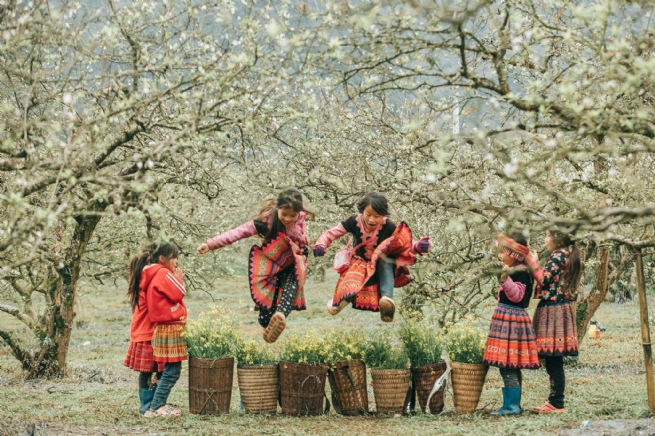
Vietnam’s Northwest is a dream destination for those who love nature and unspoiled landscapes
Shifts in market structure
Beyond strong growth in visitor numbers, Vietnam’s tourism industry in 2025 also saw shifts in market structure. South Korea and China remained the two largest source markets, accounting for the highest shares of international arrivals. Traditional markets such as Japan, Europe, and the United States also showed encouraging recovery, supported by targeted promotion efforts and more flexible visa policies.
Notably, India and the Middle East began to emerge as promising new markets. The launch of additional direct flights from Bangalore, Mumbai, and Dubai to major Vietnamese cities contributed to rapid growth in visitor arrivals from these regions. “This is a favorable time for Vietnam to engage more deeply with the Middle East market, especially in the premium and value-focused tourism segments,” affirmed Hoang Lan, Executive Director and representative of Hoabinh Airlines under Hoabinh Group. Visitors from these markets tend to have high spending levels and prioritize premium services, which aligns with Vietnam’s strategy of upgrading its tourism products.
Even so, many tourism experts noted that expansion into new markets must go hand in hand with product upgrading. New markets generate tangible benefits only when Vietnam offers an appropriate product ecosystem, consistent service quality, and sufficiently in-depth communication strategies. These factors shape differentiation from destinations with similar advantages in the region and create requirements to improve service quality, strengthen workforce training, and develop distinctive products - key elements in retaining visitors and increasing spending.
Entering 2026, Vietnam’s tourism industry has set a goal of continued development based on three strategic pillars: enhancing destination competitiveness, upgrading service and product quality, and advancing sustainable development. Under this orientation, many localities are continuing to promote green products, cultural and heritage-based experiential tourism, MICE tourism (Meetings, Incentives, Conferences, Exhibitions), and wellness tourism to attract higher-spending visitors with longer-term expectations. At the same time, competition is increasingly centered on quality, requiring enterprises to accelerate transformation to meet new visitor expectations and align with international standards. Accordingly, the business community is looking to supportive policies such as expanded e-visa schemes, streamlined immigration procedures, aviation infrastructure development, and measures to strengthen international competitiveness.
As Thailand, Singapore, and Malaysia adjust their strategies to attract international visitors, rising competitive pressure is requiring Vietnam’s tourism industry to shift toward a growth model based on quality and added value. This orientation reflects not only growth ambitions but also a change in thinking across the sector, from extensive growth to deeper development centered on quality and value creation. If implemented in a coordinated manner, these measures will help drive a fundamental shift, bringing the tourism industry closer to its goal of becoming a modern and sustainable key economic sector. With alignment among the Government, local authorities, and the business community, Vietnam’s tourism industry faces a strong opportunity to consolidate its position on the global tourism map and continue contributing to the country’s socio-economic growth.
By Giang Tu, Vietnam Business Forum


 Vietnamese





