

8:42:45 AM | 1/21/2026

As global tourism increasingly shifts toward eco-friendly models that preserve nature and local culture, green tourism has become a key trend in Vietnam. In Ho Chi Minh City and the Mekong Delta, it is seen as a strategic approach to enhance both quality and sustainability in the tourism sector.
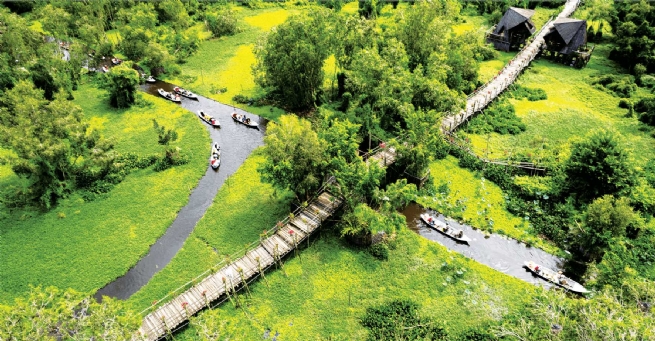
Eco-friendly practices are viewed as a strategic approach to boost quality and sustainability in the tourism sector in Ho Chi Minh City and the Mekong Delta
The Mekong Delta is rich in natural resources, including river networks, mangrove forests, fruit orchards, and a distinctive orchard-based culture, providing a strong foundation for green tourism, agricultural tourism, and community-based tourism.
Diverse green models from agriculture to community
According to a report by the Mekong Delta Tourism Association, total tourism revenue in the first six months of 2025 reached approximately VND53.8 trillion (US$2.15 billion), an increase of about 54.5% compared with the same period in 2024. The region recorded more than 35.2 million visitor arrivals, including over 2 million international visitors. Total service revenue across the Mekong Delta exceeded VND55 trillion (US$2.2 billion), with green tourism destinations contributing a meaningful share of this performance.
In 2025, Ho Chi Minh City welcomed nearly 8.6 million international visitors (up 40.3%) and almost 46 million domestic visitors (up 20%). Total tourism revenue reached VND278.566 trillion (US$11.14 billion), marking an increase of 45.8% year on year.
In the Mekong Delta, a notable example is nature-aligned tourism at Con Chim (formerly Tra Vinh Province, now Vinh Long), where local residents have integrated organic farming with ecotourism experiences. Daily life and agricultural activities are combined with experiential offerings such as coconut nectar harvesting, ecological walks, and cycling through orchards, creating attractive tourism products while preserving the environment.
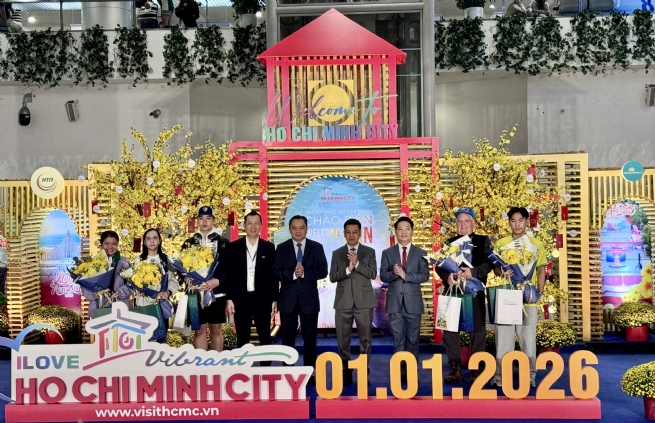
Ho Chi Minh City holds a welcoming ceremony for the first tourists of 2026
Lam Huu Phuc, Deputy Director of the Department of Culture, Sports and Tourism of Vinh Long Province, stated that the locality has implemented a Green Tourism Criteria Framework to promote tourism products that align with environmental protection, local cultural values, and investment attraction.
In Can Tho City, many accommodation providers have taken early steps to adopt green standards, maintaining approximately 80% green space, using recycled materials, and organizing monthly waste collection activities to improve river and canal environments.
Vo Xuan Thu, Director of Victoria Can Tho Resort, stated that the hotel system had earned the Travelife Gold Certification for sustainable tourism. “Green certifications in tourism operations help businesses enhance responsibility and boost brand recognition, especially in international markets,” she said.
However, many tourism experts believe that green tourism models in the Mekong Delta remain unstandardized and lack a unified brand identity to compete internationally. According to Le Dinh Minh Thy, Director of Vietravel Can Tho, specific criteria for Mekong Delta green tourism are necessary to enable enterprises to engage more deeply and promote sustainable regional development.
Ho Chi Minh City connects green products across the region
As the southern tourism hub, Ho Chi Minh City has actively partnered with Mekong Delta provinces and cities to develop green tourism products, focusing on river-based tourism, ecotourism, and agricultural tourism.
This interregional cooperation aims not only to expand business opportunities but also to enhance standardization, promotion, and market connectivity for tourism products.
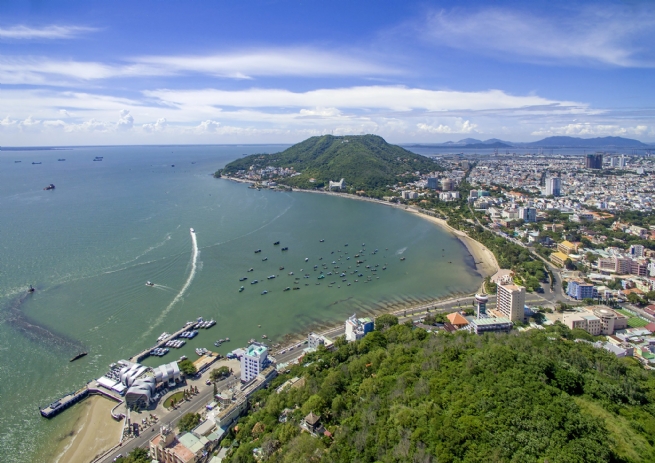
Ba Ria-Vung Tau area in Ho Chi Minh City boasts a lot of scenic beauty
Nguyen Thi Anh Hoa, Director of the Ho Chi Minh City Department of Tourism, said that collaboration between the urban center and the Mekong Delta should prioritize building green tourism products linked to cultural identity and environmental conservation, while leveraging digital technologies such as 3D smart maps to support promotion and destination management.
In practice, Ho Chi Minh City has introduced attractive green tourism routes, including river tours from the city center to Mekong Delta provinces, visits to the Can Gio mangrove ecosystem, a UNESCO-recognized biosphere reserve, and agricultural experiences at nearby fruit orchards. These offerings have attracted domestic and international visitors, especially those seeking nature-based experiences, outdoor activities, and community engagement.
Challenges and future directions for green tourism
One of the major challenges for green tourism in the Mekong Delta has been the impact of climate change, including saltwater intrusion, land subsidence, and extreme weather.
According to Dr. Doan Manh Cuong, Lecturer at Nguyen Tat Thanh University in Ho Chi Minh City, these factors have directly affected several river-based ecotourism sites, requiring tourism products to adapt to environmental changes and protect natural landscapes. He noted that sea-level rise, saltwater intrusion, and extreme weather have directly impacted many destinations.
A recent report by the Ministry of Agriculture and Environment indicated that saltwater intrusion and land subsidence in the Mekong Delta have reduced approximately 30% of cultivated land and mangrove forest area over the past 10 years, affecting ecotourism tours.
To enhance the development of green tourism, experts have proposed the establishment of standardized green criteria nationwide. Phung Quang Thang, Chairman of the Vietnam Green Tourism Association, said that standardization would improve service quality and competitiveness while creating opportunities to attract foreign investment and access international markets.
Vu The Binh, Chairman of the Vietnam Tourism Association, added that the green tourism trend has been evolving clearly and that travelers are willing to pay more for sustainable and environmentally safe experiences. “The Mekong Delta has strong potential for green transformation because its resources are highly diverse. Enterprises here in particular, and in Vietnam more broadly, have been actively pursuing green tourism. The destinations we surveyed have almost reached a 70–80% green transition rate. These are very encouraging signals,” he said.
Source: Vietnam Business Forum






 Vietnamese





