

9:50:45 AM | 3/3/2026

For decades, Vietnam has been an export-driven economy, with growth supported by sectors such as textiles and agricultural products including cashews, coffee, and vegetables. Annual export value of each above sector reaches tens of billions of dollars, yet behind these impressive numbers lies a perspective worth pondering: exports remain weighted toward “selling resources” than “selling brand value,” causing businesses to miss out on the most valuable part of the global supply chain.
Take the example of the coffee industry, a pride of Vietnam. Vietnam is the world’s largest exporter of Robusta, but 90% of the output is in the form of green coffee beans (raw material). A ton of exported green coffee brings in about 3,834 USD (2024), but after being roasted, ground, packaged, and carrying an international brand, its value can increase by 2-3 times. Similarly with cashews, Vietnam has been the world's largest exporter of cashew kernels for 18 consecutive years (as of January 2025), accounting for over 80% of global export volume, yet the majority of profits fall into the hands of foreign processors and distributors. We are selling “gold” at the price of “ore”.
However, a new wave of Vietnamese enterprises is refusing to accept this paradox. They are not just selling goods; they are rewriting the rules of the game by turning e-commerce exports, specifically Amazon, into a strategic lever to reclaim the missed portion of value.
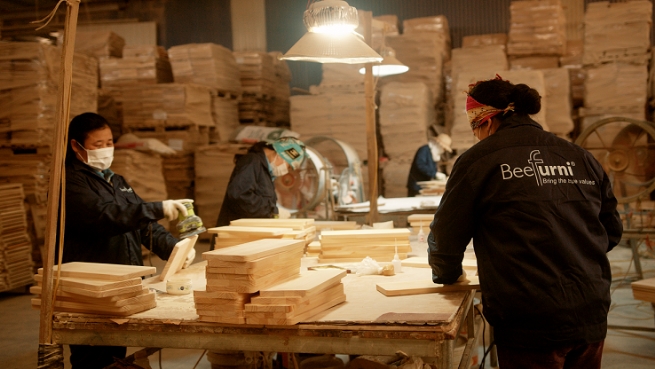
An increasing number of Vietnamese businesses are leveraging e-commerce exports and building their own brands to unlock greater value for Made-in-Vietnam products
The success of these brands does not lie in selling a good product, but in executing a value transformation strategy smartly and effectively.
Transforming Vietnamese agricultural products into a “healthy snacking lifestyle”
NEWBAM is a Vietnamese cashew brand founded by Ms. Nguyen Huynh Thu Truc - a businesswoman who made a bold directional turn from the field of education to online exports. Instead of being just an agricultural trading unit, NEWBAM positions itself as a supplier of high-quality healthy snacks for the international market through e-commerce.
NEWBAM’s story is a typical example of breaking away from the shadow of “selling raw products”. Founder Nguyen Huynh Thu Truc, with a pioneering mindset from the Montessori education, had identified the “pain point” of Vietnamese cashews: leading the world in raw exports but being almost absent from international supermarket shelves.
Rather than relying on the traditional model of exporting standardized 500g or 1kg packages with limited value capture, Mrs. Truc and NEWBAM chose a separate path. Leveraging data tools from Amazon like the Product Opportunity Explorer, NEWBAM recognized a trend: American consumers, with a fast-paced lifestyle, needed a “healthy snack on-the-go” instead of raw products to serve cooking or processing.
From that mindset, NEWBAM moved beyond selling cashews as a commodity to offering a proposition centered on convenience and health. As a result, the brand introduced 42g and 54g small-pack formats—portion-sized for single consumption and designed to fit easily into a handbag or an office drawer.
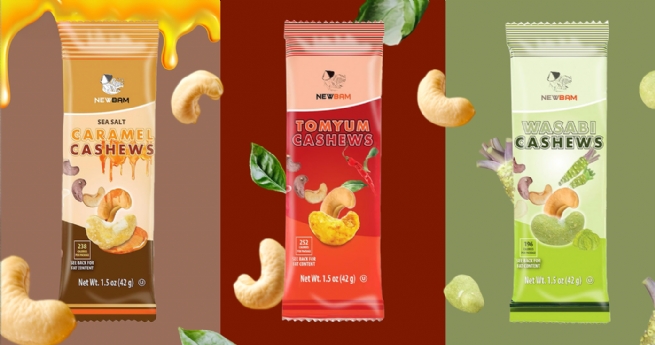
NEWBAM cashew nuts enhance the value of Vietnamese agricultural products through flavor innovation and brand building, responding to the global consumer trend for “healthy snacks on-the-go.”
Additionally, NEWBAM monitored customer reviews on Amazon and identified that the American taste needed more sophistication than just salty or sweet. The R&D team developed bold flavors such as Wasabi, Tom Yum, and Sea Salt Caramel, while simultaneously reducing saltiness to fit the health trend of consumers.
Moreover, by leveraging Fulfillment by Amazon (FBA), NEWBAM ensured their cashew snacks could reach Prime customers with same-day and next-day delivery—critical for perishable food products competing in the 'healthy snack' category. This FBA adoption directly addressed Prime members' expectations for fast, reliable delivery of everyday essentials and grocery items, which now represent half of Amazon's fast-delivery shipments. The combination of innovative packaging, bold flavors, and Prime-speed fulfillment enabled NEWBAM to capture impulse purchases and repeat orders, enter the Top 100 Best Sellers Rank and received the “Amazon’s Choice” badge, contributing to their 200% year-on-year growth within six months.
Transforming natural ingredients into sustainable beauty solutions
While agricultural products have long been a traditional strength for Vietnam, the beauty industry is a far more competitive arena, historically dominated by global players from South Korea, Japan, and France. Against this backdrop, Abera - a Vietnamese beauty brand led by an all-male leadership team - identified a new opportunity by rethinking its value proposition, shifting from selling “natural ingredients” to selling "sustainable beauty solutions".
Vietnam is rich in natural ingredients such as turmeric, ginger, and aloe vera, which are widely recognized for their medicinal benefits. However, selling these ingredients in raw or semi-processed forms - such as turmeric powder or ginger extract - typically generates limited value. Abera therefore took a more practical and intelligent approach. Instead of producing generic products like general whitening creams, the brand used Amazon data to identify specific, underserved consumer needs, including concerns such as keloid scars, back acne, dark circles, and dental plaque.
Abera does not sell “turmeric roots”, they sell a “scar clearing solution”. They do not sell “coffee beans”, they sell a “bright white smile”. By focusing on a niche market with specialized treatment products, combined with a premium brand image and professional A+ content, Abera has persuaded the demanding customers in the US.
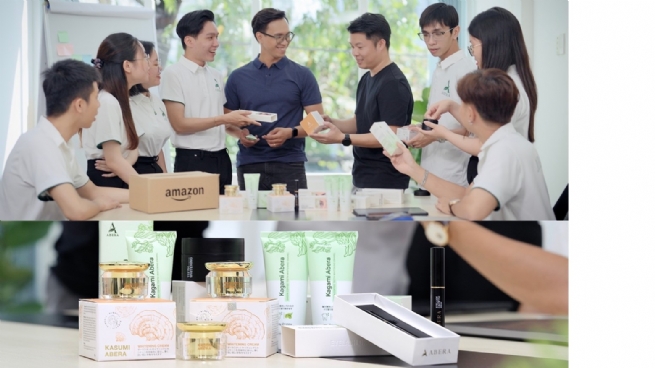
The Abera team focuses on research and product development for the specialized treatment cosmetics segment, aiming to deliver sustainable beauty solutions
As a result, Abera reached million-dollar revenue within a year, with positive ratings of up to 95%. The brand demonstrates that when Vietnamese expertise is effectively applied to local herbal resources, we can compete on equal footing with established global beauty players on the global e-commerce playground.
Transforming “raw-material advantages” into “lifestyle solutions”
While NEWBAM and Abera represent younger startups, Green Mekong’s story reflects a more fundamental transformation within a traditional manufacturing enterprise.
Originating from Thien Minh—a “quiet giant” with over 20 years of experience in B2B wood product manufacturing—Mr. Tran Lam Son was long concerned that his most carefully crafted products were consistently sold under other brands’ names. This aspiration to build an independent brand led him to empower his Gen Z daughter, Tran Ngoc Lam Giang to execute a transformation on Amazon.
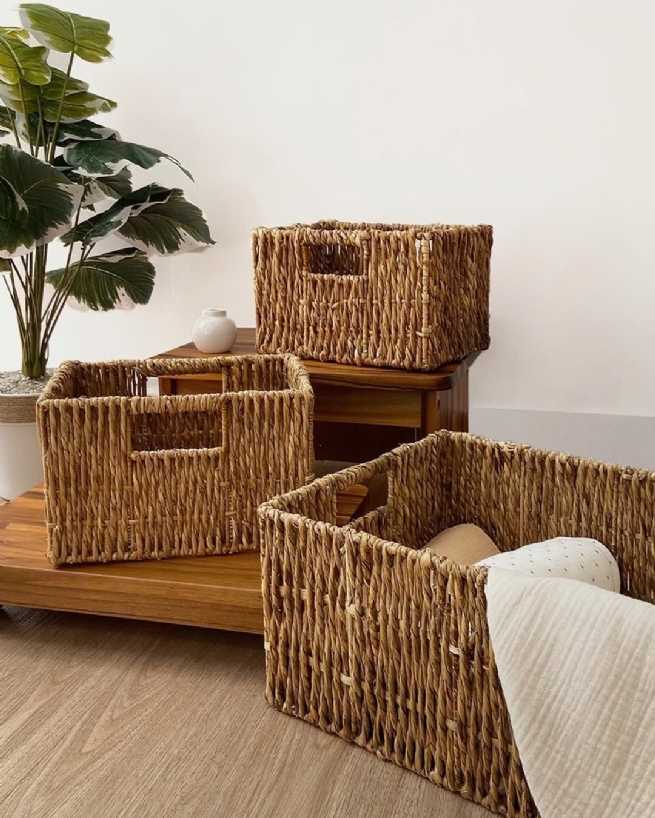
By developing acacia raw material zones (acacia wood, melaleuca wood) with farmers in the Mekong Delta, Green Mekong focuses on creating products that deliver a "lifestyle" and "aesthetic taste" to U.S. consumers. From durable acacia deck tiles and anti-slip bath mats to convenient portable tea tables and exquisite handcrafted baskets, these products are more than utensils, they convey a message of sustainable living in harmony with nature.
The strength of Green Mekong lies in the combination of the “Production Roots” of the previous generation and the “Technology” of the following generation. A team of just four Gen Z members leverages Amazon’s AI tools to craft product descriptions, create advertising videos, and use the feedback of international customers to reverse-engineer the R&D process at the factory.
Within just a year, Green Mekong achieved the Top #1 "Amazon Most Wished For" and Top #2 Best Seller in the Decking category, directly proving that: Vietnamese manufacturers can totally transform their product and value to become global brands.
 |
 |
GreenMekong leverages its unique raw materials from the Mekong Delta to offer lifestyle-driven products and refined aesthetics to U.S. consumers through Amazon
The stories of NEWBAM, Abera, and Green Mekong are not random occurrences. They are signals of a major mindset shift within the Vietnamese business community. The solution to the billion-dollar paradox lies not only in trying to increase export volume but in proactively upgrading the enterprise’s position in the global value chain through branding, product innovation, and data-driven insights to understand global market needs and customers. Vietnam’s potential lies not only in natural resources or agricultural output, but in the creativity and ability to transform that potential into high-value products.
Opportunities enabled by e-commerce exports are creating a more level playing field, where factory scale matters less than customer understanding and the speed of innovation. Will Vietnamese businesses seize this chance, or will they refuse the opportunity to transform? The choice made today is not just a story of revenue, but a deciding factor for the position of the "Made in Vietnam" brand on the global trade map.
By Vietnam Business Forum


 Vietnamese





