

10:57:21 AM | 2/16/2026

Against a backdrop of continued volatility in the global economy, Vietnam faces both opportunities and significant challenges in sustaining growth and advancing sustainable development. In a discussion with our reporter, Shantanu Chakraborty, Country Director of the Asian Development Bank (ADB) in Vietnam, shared his latest assessments of the economic outlook, support priorities, and policy recommendations to help Vietnam make effective use of growth drivers in the period ahead.
 |
How do you assess Vietnam’s economic performance in 2025, and what is the outlook? Which factors will shape growth momentum in 2026 and subsequent years?
Despite mounting global challenges, Vietnam achieved economic growth in 2025 that ranked among the highest in the region. Growth was supported by strong expansion in trade and export-oriented manufacturing, resilient foreign direct investment (FDI), faster disbursement of public investment, and a sharp rise in international tourist arrivals.
Vietnam’s economy is expected to continue expanding at a positive pace in 2026. According to ADB’s latest forecast published in mid-December 2025, Vietnam’s GDP growth is projected at 6.4% in 2026 despite rising global uncertainty. Stable domestic demand, steadily increasing public investment, sustained FDI inflows, and export-based industrial production are expected to underpin growth in 2026. Inflation is projected at 3.8%, indicating a stable macroeconomic environment.
To achieve sustainable growth, Vietnam needs to rely on expanding domestic demand while strengthening its capacity to capture external demand, implement policy reforms to improve efficiency and competitiveness, and raise value added within global supply chains.
On domestic demand, Vietnam can strengthen household consumption through fiscal stimulus and market reforms. Greater public investment in transport infrastructure, digital infrastructure, and climate adaptation projects will play an important role. In addition, higher spending on social welfare, healthcare, and workforce skills development will help raise incomes and reinforce consumer confidence.
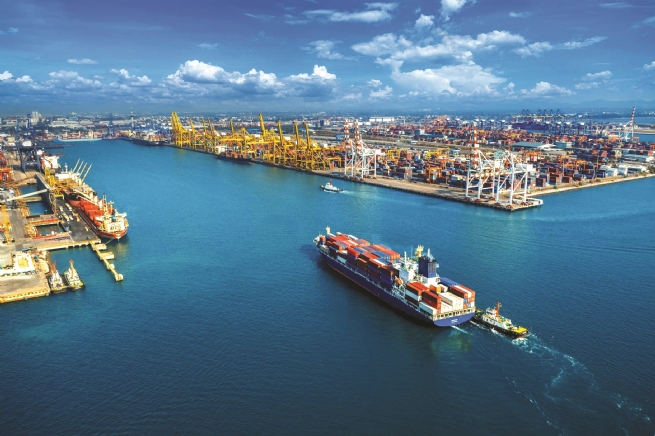
Export market diversification and FDI attraction will continue to drive growth, expand production capacity, and deepen Vietnam’s integration into global value chains
External demand, through the promotion and diversification of export markets and the attraction of FDI, will continue to play a central role in generating growth by expanding production capacity, strengthening competitiveness, and integrating Vietnam’s economy more deeply into global value chains.
Vietnam also needs to accelerate the effective implementation of ongoing structural reforms to further improve the business environment, raise productivity, and advance digital and green transitions. Streamlining regulatory and market-operating frameworks, reducing compliance costs, and expanding access to finance will strengthen competitiveness at both the enterprise and economy-wide levels.
Vietnam needs to build well-functioning markets for science and technology services, research and development, and startups to accelerate technological upgrading, high-tech adoption, digital transformation, and the development of a dynamic startup ecosystem. A clear and enabling legal framework, together with closer public–private coordination, will be key to advancing science and technology markets and innovation activities.
How do you view the effectiveness of Vietnam’s fiscal and monetary policies implemented in recent years?
Vietnam has managed macroeconomic conditions in a proactive and flexible manner. Policymakers have balanced two objectives: supporting growth and maintaining macroeconomic stability.
Fiscal policy has been expanded to support the recovery of consumer demand during difficult periods, through higher public investment spending, value-added tax reductions, increased social spending, and other social programs. However, implementation has been slow in several areas, limiting the impact and effectiveness of expansionary measures in strengthening domestic demand.
At the same time, despite positive outcomes, potential risks remain. Credit growth accelerated sharply, estimated at about 18% in 2025 compared with a target of 16%, pushing the bank credit-to-GDP ratio above 135%. This reliance on bank credit may constrain higher growth in the period ahead, pointing to the urgent need to develop broader capital markets to provide additional funding alongside the banking system and lending to the economy.
Effective coordination between fiscal and monetary policy will be critical to achieving demand stimulation objectives. Faster disbursement of public investment projects and targeted support policies for households and businesses will help achieve fiscal stimulus goals, while monetary policy should focus on channeling credit to productive sectors and controlling financial system risks. Without close coordination, excess liquidity could drive asset price increases, or tighter credit conditions could suppress growth momentum.
Entering 2026, Vietnam needs to address challenges from weaker global growth and international financial volatility by combining fiscal measures that stimulate domestic demand with efforts to diversify export opportunities and continue attracting international capital, while guarding against exchange rate volatility and the risk of excessive credit expansion. In other words, policy coordination is necessary to sustain growth momentum and macroeconomic stability.
What assessments and recommendations do you offer to improve access to capital and enhance competitiveness for Vietnamese enterprises, particularly amid accelerating digital and green transitions?
Over recent decades, Vietnam has made considerable progress in expanding access to finance and promoting enterprise development. However, domestic firms, especially small and medium-sized enterprises (SMEs), continue to face significant barriers.
Policies to expand public–private partnerships and develop capital markets are also needed to strengthen private sector participation in digital and green transition sectors. Accelerating capital market reforms is an important and urgent measure to broaden enterprise access to finance. Stronger reforms are required to deepen and widen markets to mobilize diverse funding sources, including improving credit information systems, strengthening collateral frameworks and financial products for SMEs, and introducing green finance and blended finance instruments to attract private investment into areas such as clean energy, digital infrastructure, and innovation.
Effective implementation of structural economic reforms will help strengthen competitiveness across the economy and among enterprises. Firms seeking to enhance competitiveness need to adopt digital technologies and cleaner production standards more decisively, and connect with international supply chains through higher-quality cooperation with the FDI sector to raise value added.
Institutional capacity development also plays an important role in improving economic efficiency through transparent and predictable policymaking that is implemented consistently. Institutional capacity includes legal frameworks for data governance, carbon markets, and digital transactions, as well as the implementation of private sector development policies across different levels of government. Clear and predictable regulations, together with effective enforcement, require stronger institutional capacity built through sustained, long-term reform efforts.
ADB remains committed and ready to support Vietnam through financing, knowledge sharing, and policy dialogue to help the Government implement development projects more effectively and advance private sector development reforms that support enterprise access to capital, enhance competitiveness, and enable businesses to seize opportunities in the green and digital economy.
Thank you very much!
Anh Mai (Vietnam Business Forum)


 Vietnamese





