

10:54:05 AM | 2/17/2025

Recently, the Hanoi People's Committee has approved the "Master plan for craft village development in Hanoi for the period 2025-2030, with a vision to 2050".
The project is expected to remove bottlenecks and help craft villages increase growth and develop sustainably.
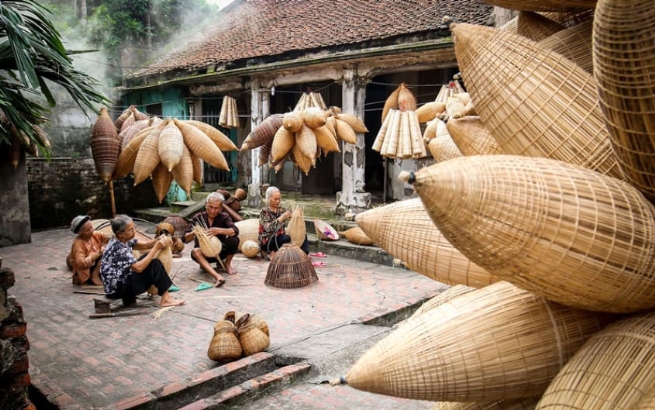
More support for craft villages
Hanoi currently has 1,350 craft villages and villages with crafts, of which 327 craft villages and traditional craft villages have been recognized by the City People's Committee. In addition to the achievements, the work of preserving and developing craft villages in the city still reveals some shortcomings, limitations, and unsustainable development.
According to the assessment of the Hanoi Department of Agriculture and Rural Development, the capacity to supply and proactively source local production materials for craft villages is still limited and dependent on neighboring provinces. The production scale of craft villages is still small, interspersed in residential areas, with limited financial capacity. Craft village infrastructure has not met practical production requirements; lack of high-quality human resources, human resources with technology proficiency... Therefore, in the "Overall project for developing craft villages in Hanoi for the period 2025-2030, with a vision to 2050" that has just been approved, the city sets a goal of restoring and preserving at least 5 traditional crafts and craft villages that are at risk of fading or being lost by 2030. The city strives to recognize at least 10 new crafts and 25 traditional craft villages; develop 10 villages from "craft villages" to "traditional craft villages". Hanoi also plans to invest synchronously in infrastructure and preserve and restore the cultural space of craft villages, aiming to develop at least 3 craft villages associated with tourism, forming 10 craft village tourism spots and routes.
At the same time, the city strives for at least 80% of workers in craft villages and traditional craft villages to be trained, retrained, and trained to improve their vocational skills, occupational safety and hygiene skills, and basic information technology knowledge. Hanoi expects to have more than 50% of craft villages and traditional craft villages recognized as having products that meet OCOP (One Commune One Product) certification; at the same time, support digitalization for these craft village products. Strive for an average production value growth rate of 10%/year in craft villages and at least 30% of craft villages to have display spaces, product introduction and sales points, or sales on e-commerce platforms...

Director of the Hanoi Department of Agriculture and Rural Development Nguyen Xuan Dai said that the city will focus on craft village planning; promote propaganda, mobilization, and improve state management capacity for the conservation and development of craft villages. At the same time, the city will complete the mechanism and policies to support the preservation and development of craft villages; review and build local raw material supply areas, ensuring the supply of a part of raw materials for craft villages. In addition, agencies and localities will promote trade, build brands associated with OCOP products and form more craft village models associated with tourism, suitable for the socio-economic development of the locality.
Effective implementation of the project
Chairwoman of the Hanoi Handicraft and Craft Village Association Ha Thi Vinh commented that the approval of the Master Plan for the development of craft villages in Hanoi for the period 2025-2030, with a vision to 2050, is good news for craft villages. Currently, the products of craft villages and traditional craft villages in Hanoi still have a lot of potential, advantages and room for development. The Party and the State have also issued many important policies and guidelines for the development of rural industries and craft villages. In particular, the National Assembly has passed the Capital Law, creating a strong breakthrough opportunity for Hanoi, including craft villages.
Ms. Ha Thi Vinh hopes that Hanoi will soon issue a detailed implementation plan for the project, linked to the specific implementation of each agency, unit, and organization. Departments, branches, and sectors will quickly take measures to support craft villages in changing production processes, promoting trade, etc.
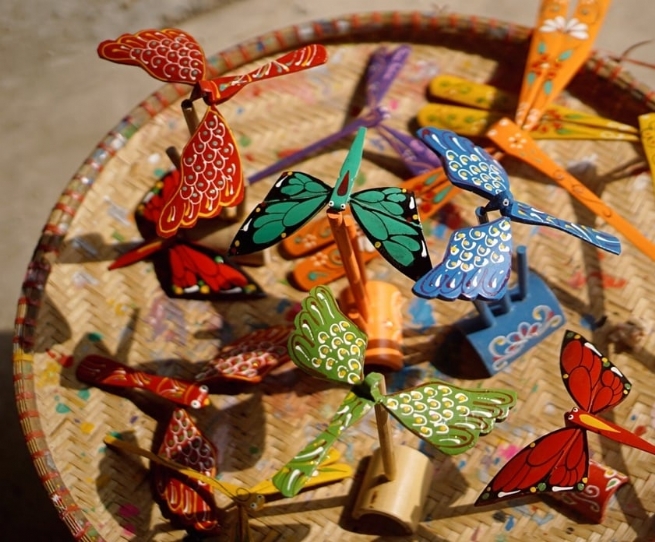
In Son Tay town, craft villages operate in many fields, mainly processing agricultural products and food. Many households in craft villages have introduced machinery into production. Deputy Head of the Economic Department of Son Tay town Bui Hong Ha shared that Phu Nhi rice cake village used to grind flour, slice meat, onions, and wood ear mushrooms completely by hand, but now households have machines to grind flour, slice onions, wood ear mushrooms, beat flour, etc. When implementing the project, craft villages will receive more support to apply science and technology to production, creating better development conditions.
To implement the project, the Hanoi Rural Development Department (Department of Agriculture and Rural Development) is advising the city to include the project's contents in the city's annual plan for implementation. In particular, in 2025, the Department of Agriculture and Rural Development has drafted a plan to send to departments, branches, districts and towns for comments before specific implementation. The project is considered a "lever", creating conditions for craft villages to develop sustainably and expand, associated with preserving traditional values and cultural identity; contributing to creating more jobs, increasing income for workers; thereby contributing to economic restructuring, increasing growth rate in rural areas.
Source: Vietnam Business Forum






 Vietnamese





