


Under Decision 3389/QD-BTC issued by the Ministry of Finance, the project titled “Transformation of Tax Management Models and Methods for Business Households upon Elimination of Presumptive Rate Tax” will take effect on January 1, 2026. In line with this directive, Phu Tho province is overhauling its tax management system for more than 60,000 business households, shifting to a self-declaration and self-payment mechanism. This marks a major step toward building a transparent, modern, and equitable tax system.
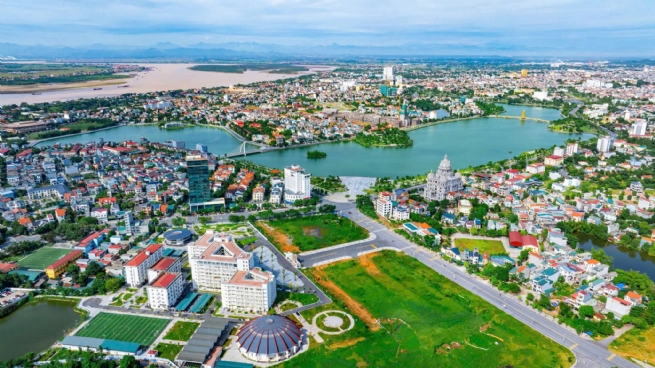
Phu Tho’s tax sector contributes significantly to the province’s socio-economic development
Infrastructure challenges and digital transformation solutions
Information technology infrastructure, especially among small business households, remains a major bottleneck. To address this issue, Phu Tho’s tax sector has instructed 12 functional divisions and 16 local tax sub-departments to urgently implement the provisions of Decision 3389.
The department has reported to the provincial People’s Committee, proposing coordination among relevant departments and commune-level People’s Committees. It has also sought approval for support measures to improve digital infrastructure, including initial installation costs for households that have not yet met the requirements to implement e-invoices generated from cash registers. The goal is to ensure that no business household is left behind in this mandatory digital transformation process.
This reform is technically grounded in Project 420 of the Department of Taxation of the Ministry of Finance, which focuses on digital transformation and e-invoice implementation. Currently, more than 21,000 business households in Phu Tho use the eTax Mobile application, accounting for 77.8% of the total, with over 14,000 households (50.7%) making electronic tax payments. The tax sector is intensifying outreach to make e-payment the new standard. These digital tools not only enhance management efficiency but also help households reduce manual work while improving transparency and accuracy in tax declarations.
Expanding communication and practical support
The provincial tax authority has launched a multi-platform communication campaign through newspapers, the sector’s website, Zalo, and Facebook under the slogan “End Presumptive Rate Tax, Increase Transparency, Grow Together.” The campaign emphasizes the rights and responsibilities of business households transitioning to self-declaration or formal enterprises while promoting the advantages of eTax Mobile and cash register-based e-invoices.
Alongside reform, the Phu Tho provincial tax authority continues to support enterprises and individual businesses through tax, fee, and charge policies, helping boost production and ensure sustainable revenue sources. In the first nine months of 2025, the department conducted 1,147 communication sessions across media platforms and provided direct assistance to 31,879 taxpayers at its one-stop service counters.
These efforts have been well received, improving tax compliance awareness and reducing tax debt delinquency across the province.
Strengthening inspection and supervision
The Phu Tho provincial tax authority is also overhauling its internal procedures to ensure greater transparency and efficiency. Eight inspection teams have been established to review administrative tax procedures at the Provincial Public Administration Service Center, local tax sub-departments, and one-stop service counters at the commune level. These teams focus on assessing document reception, processing, and transfer; coordination with local authorities and service providers; and promptly addressing bottlenecks to shorten processing times.
Tax debt management and enforcement are being carried out strictly in accordance with the Law on Tax Administration. Outstanding debts are being reviewed, classified, and closely monitored, with enforcement measures such as exit bans for representatives of enterprises that deliberately delay payments. Public disclosure of tax debt information through media channels has also been intensified, particularly for large or long-overdue cases.
Anti–tax loss efforts target high-risk sectors such as transportation, gold and jewelry trading, real estate, natural resource extraction, and e-commerce. The department has been directed to strengthen tax administration for business households operating on e-commerce platforms and digital marketplaces.
|
According to reports, in the first nine months of 2025, state budget revenue managed by the Phu Tho provincial tax authority was estimated at nearly VND38 trillion, equivalent to 109.7% of the annual target and up 39.6% year-on-year. Revenue from the production and business sector reached over VND18.2 trillion (83.1% of the target), including VND1.652 trillion from state-owned enterprises, VND11.251 trillion from foreign-invested enterprises, and VND5.347 trillion from the non-state sector. With eight out of fifteen revenue indicators exceeding 100% of the target, these results demonstrate the tax authority’s effective management and the strong tax compliance awareness of enterprises and individual business owners, laying a solid foundation for the province’s upcoming comprehensive tax reform. |
To support tax management, the department is building a comprehensive database of business households, covering registration status, industry, product categories, operating costs (premises, labor, utilities), input invoice revenue, and expected turnover. This database provides a foundation for managing revenue and invoice risks after the Presumptive-rate tax is abolished. Local tax sub-departments are classifying households by revenue scale, prioritizing larger ones for early transition while offering step-by-step support to smaller ones. Dedicated task forces have been deployed in key localities to guide taxpayers on filing procedures, software usage, and electronic invoicing.
In parallel, the tax authority is expediting the digital transfer of land-related dossiers through an interconnected system with the Departments of Agriculture and Environment, in cooperation with the Land Registration Office branch and commune-level People’s Committees to resolve pending cases. It also works with the State Treasury to ensure the timely collection of taxes from construction projects across the province.
By Huong Ly, Vietnam Business Forum


 Vietnamese
