


Facing the risk of decline among many traditional craft villages, Hanoi organized the workshop “Solutions for Preserving and Developing Craft Villages in Connection with Tourism…” to seek ways to transform traditional values into new growth drivers for the rural economy and tourism.
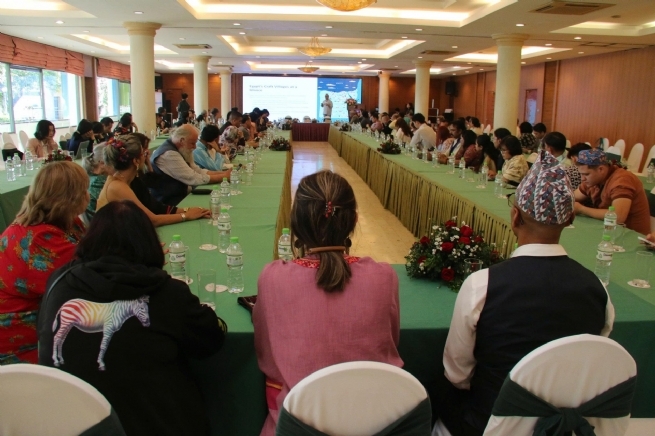
Workshop “Solutions for Preserving and Developing Craft Villages in Connection with Tourism, Preserving Cultural Values, and Creating Multi-Value for Craft Villages”
Craft Villages – Hanoi’s Distinctive Economic Resource
Hanoi currently has 1,350 craft villages and villages with crafts, of which 337 craft villages and traditional crafts have been officially recognized. With diverse products, sophisticated designs, and strong competitiveness, craft villages are making an important contribution to the rural economic structure, creating jobs and increasing incomes for local residents. Across the city, there are 881 OCOP products associated with craft villages, accounting for 26.6% of the total number of OCOP products.
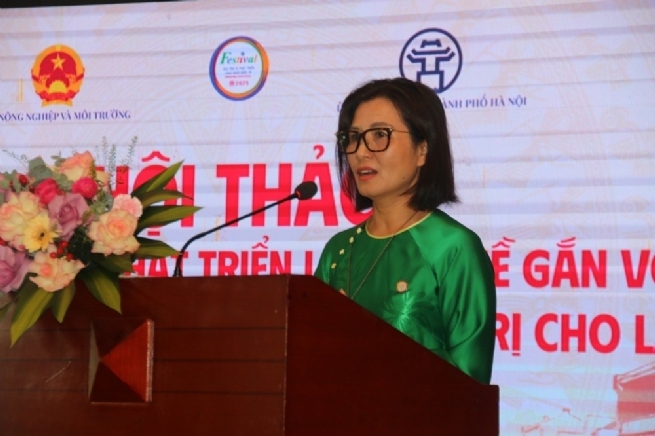
Speaking at the workshop, Ms. Nguyễn Thị Hoàng Yến, Deputy Director General of the Department of Cooperative Economy, affirmed: “Craft villages are ‘living museums’ that preserve culture and indigenous knowledge, while also generating increasingly significant economic value.” However, she also pointed out challenges such as market fluctuations, green standards requirements, competition for raw materials, and difficulties in developing a new generation of young artisans.
According to her, linking craft villages with tourism will open up a more sustainable development pathway, helping to increase product value, expand markets, and enhance local cultural standing.
Optimizing Economic Potential from Vietnam’s Craft Village System
Presenting at the workshop, Ms. Trần Thị Loan, Head of the Industry Division, Department of Cooperative Economy and Rural Development, stated that nationwide there are currently 1,975 craft villages, with the Red River Delta accounting for 40%. Vietnam has 17,316 OCOP products rated three stars or higher, contributing to the transformation from fragmented small-scale production to value-chain-based production and more effective utilization of indigenous raw materials.

She noted that demand for handicraft products in the service and tourism sectors has increased sharply, ranging from restaurants, hotels, and resorts to new urban development projects. Some craft villages such as Sơn Đồng (Hanoi) or La Xuyên (Nam Định) generate annual revenues of trillions of dong, demonstrating significant potential if trends in experiential tourism and cultural tourism are effectively leveraged.
However, craft villages are also under pressure from international market requirements for being “green – digital – creative.” Product digitalization, development of digital maps of craft villages, and strengthened traceability are urgent tasks.
International Experience: Linking Handicrafts with Creativity and Tourism
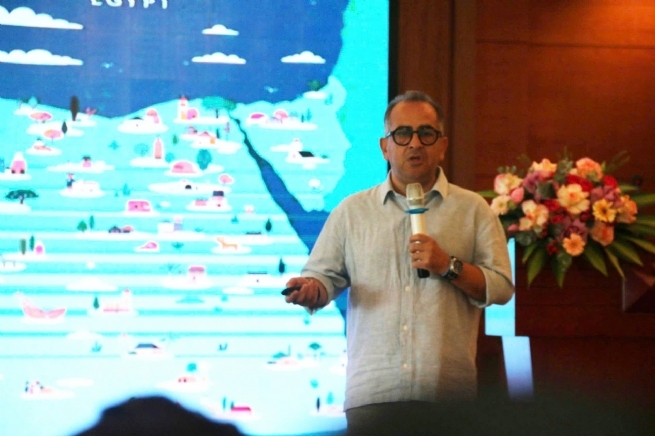
Representing the Africa – Middle East region, Mr. Hisham Elgazzar shared experiences in preserving traditional crafts in Egypt. According to him, the biggest challenges are the shortage of successor artisans and limited capital. Linking handicrafts with cultural tourism, expanding training programs, and providing financial support are directions prioritized by Egypt.
Meanwhile, Ms. Barbara Velasco Hernandez, President of the World Crafts Council for the Latin America region, emphasized the role of communities—especially women—in sustaining handicrafts. In Latin America, artisan forums are regularly organized to connect creative thinking with market demand, helping traditional products better align with tourists and modern consumption trends.
She affirmed: “Handicrafts are not just products, but cultural stories. When products are linked with tourism experiences, their value is multiplied.”

Mr. Ma Xiang, Vice President of the China Handicraft Association, shared policies for handicraft development in China.
Elevating Craft Villages through Cultural – Tourism – Economic Linkages
Opinions at the workshop unanimously agreed that the value of craft villages can only be truly sustainable when connected to the economic and tourism ecosystem. Developing craft village tourism models, digitalizing products, standardizing green production processes, and leveraging cultural and historical narratives will help increase value, expand markets, and attract international visitors.
Hanoi and other localities are expected to continue building support mechanisms, encouraging businesses to invest in craft village value chains, developing OCOP products oriented toward tourism experiences, and turning craft villages into distinctive “cultural – economic – tourism destinations” of Vietnam.
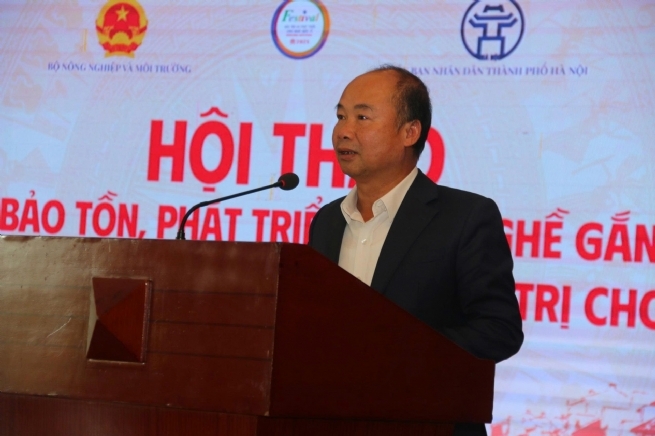
In his concluding remarks at the workshop, Mr. Nguyễn Đình Hoa, Deputy Director of the Hanoi Department of Agriculture and Rural Development, emphasized that the workshop provided many valuable insights into the preservation and development of craft villages. The opinions highlighted the pivotal role of artisans in safeguarding traditional crafts, along with the important support of the State, craft village organizations, and individual countries.
He proposed that localities focus on solutions including land-use planning, environmental protection, support for skills transmission, trade promotion, product promotion, linkage of raw material regions, and tourism development associated with craft villages.
He affirmed: “Craft villages are where the essence of national culture converges and connects with heritage.” At the same time, he recommended introducing vocational training into schools and strengthening links between craft villages and culture, arts, cinema, and literature, with artisans and skilled craftsmen at the center. The Department will continue supporting skills transmission and hopes to promote participation in international fairs and exhibitions so that artisans and businesses can learn from experience, improve production, and promote Vietnamese cultural values.
In the coming period, the Department expects to cooperate closely with countries and the World Crafts Council to jointly preserve and develop craft villages and organize events honoring traditional crafts.
Source: Vietnam Business Forum
|
This special section is supported by Hanoi Department of Agriculture and Environment |


 Vietnamese
