


Hanoi currently has 1,350 craft villages and villages with crafts, of which 337 traditional crafts have been officially recognized. Craft villages have helped raise incomes and create jobs for thousands of workers. The development of craft villages not only preserves traditional cultural identity but also creates leverage for building new rural areas.
Each year, craft villages generate revenue of more than VND 24 trillion, with average worker income exceeding VND 7 million per person per month.
Preserving the Essence of Traditional Culture and Creating Sustainable Livelihoods for Workers
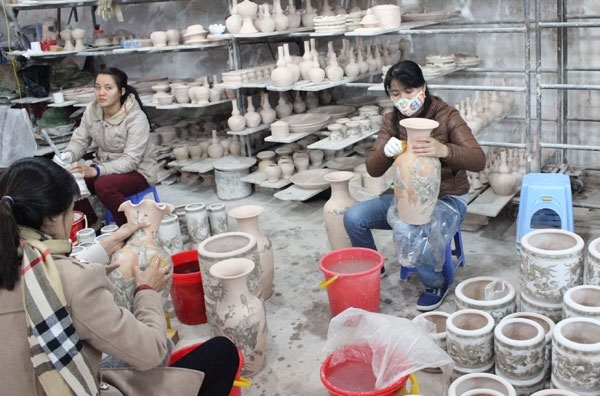
Bat Trang is a famous ceramics village in Vietnam. According to Mr. Pham Minh Khoi, Chairman of the People’s Committee of Bat Trang Commune, Gia Lam District, Hanoi, the commune’s main income comes from ceramics production and business; the annual value of ceramics production and trade is estimated at over VND 2 trillion. Every day, from 3,000 to 5,000 workers from other localities come to work in Bat Trang. Average per capita income reaches nearly VND 90 million per person per year, higher than the average level of Vietnamese craft villages. The average wage for factory workers is VND 11–15 million per month. In particular, artisans with more than 20 years of experience earn monthly incomes of VND 50 million or more.
Mr. Tran Duc Tan, Chairman of the Board of Directors and Director of Tan Thinh Ceramics Production and Trading Cooperative, said that the average wage for factory workers is VND 11–15 million per month. In particular, artisans with more than 20 years of experience earn monthly incomes of VND 50 million or more.
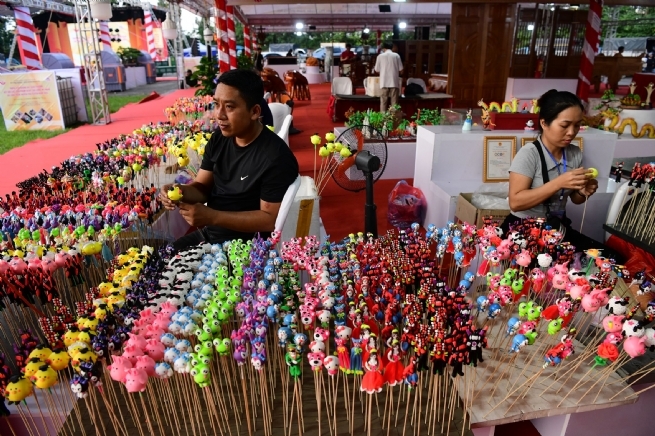
Craft villages—places with inherent potential, professional secrets, and distinctive products—are holding the most important factors for business success and need to be further supported and facilitated to develop into thriving enterprises.
Not only focusing on raising people’s incomes, traditional craft villages also pay attention to product promotion to spread product value. In the embroidery village of Hong Son Commune, Hanoi, the promotion of the traditional silk weaving craft has been intensified among people at home and abroad. Artisan Phan Thi Thuan shared that what she values most is not only creating beautiful silk fabrics, but preserving the soul of her hometown weaving craft so that younger generations can have jobs right on this land. When local people have stable incomes from the craft, the village can truly be sustainable, and rural life becomes more prosperous and happier.
Born into a family with four generations engaged in weaving, with a passion ranging from silkworm rearing to weaving, artisan Thuan has created unique silk fabrics. This creativity has not only left a distinctive mark on Phung Xa silk but has also contributed to bringing Vietnamese silk to demanding markets around the world.
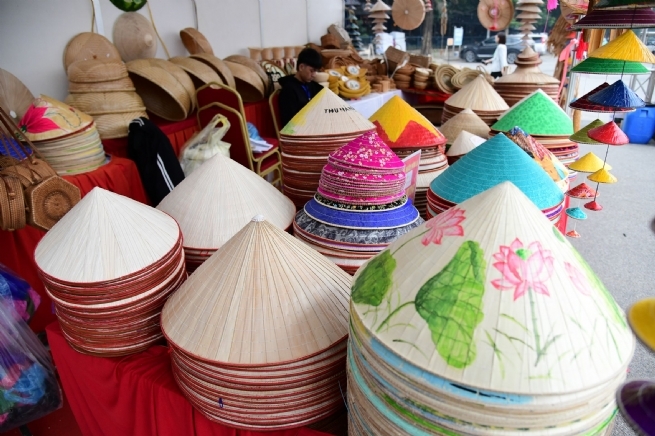
As a result, many local workers have gained stable employment, and incomes have gradually increased. Ms. Thuan’s success has strongly inspired local people to continue their attachment to traditional crafts. Not only serving as places that preserve the essence of traditional culture, many of Hanoi’s long-established craft villages such as Bat Trang ceramics, Phung Xa silk, Van Phuc, Kieu Ky gold leaf beating, Phu Vinh rattan and bamboo weaving, or Ha Thai lacquerware have also found their own ways to leverage their strengths, becoming attractive shopping and experiential destinations for domestic and international tourists thanks to the creativity and skillful hands of artisans.
Preserving and Developing Craft Villages
According to the Hanoi New Rural Development Coordination Office, in recent times the agency has advised on many plans to preserve and develop craft villages. Party committees and grassroots authorities also consider this the pathway for the capital’s craft villages to unleash their potential and assert their brands in domestic and international markets. Therefore, in socio-economic development policies, the city always attaches importance to developing the craft village economy. The craft village economy is identified not only as an economic task but also as a responsibility to preserve traditional cultural values and create momentum for building new rural areas.
From practical experience in developing the craft village economy, the city has compiled a list of 175 traditional craft heritage items that need to be preserved and safeguarded. Of these, eight traditional crafts have been included in the national list of Intangible Cultural Heritage; 20 traditional crafts are on Hanoi’s priority protection list through 2025; and the city has recognized seven tourism sites associated with craft villages.
The success of traditional craft villages is an important foundation for Hanoi to continue affirming its position as the country’s largest craft village center, while also realizing the goal of building new rural areas. In the coming period, the city will persist in accompanying artisans, skilled workers, and economic stakeholders, transforming craft villages not only into places that preserve cultural essence but also into drivers of sustainable economic development, contributing to building a capital that is increasingly prosperous, civilized, and modern.
In addition, the city will plan the development of craft villages; in which craft development is associated with villages to restore, preserve, and develop craft villages linked with tourism and experiential education to create multiple values; craft villages that cause pollution or pose risks of environmental pollution will be planned for relocation to industrial zones, clusters, or concentrated production areas to expand production and ensure environmental sanitation. At the same time, the city will continue to effectively implement mechanisms and policies from the central government and the city.
Also within the strategy of developing the craft village economy and creating strong internal resources for building new rural areas, the city aims that by the end of 2025, at least two more Hanoi craft villages will join the “World Crafts Creative Cities” network. To achieve this goal, Hanoi will strengthen domestic and international trade promotion and marketing, regularly organize contests, fairs, and festivals on craft village products, and participate in domestic and international events to introduce and promote handicraft products and craft villages to consumers at home and abroad.
By Dinh Bao, Vietnam Business Forum
|
This special section is supported by Hanoi Department of Agriculture and Environment |


 Vietnamese
