


For the first time, Hanoi is developing a comprehensive strategy that links preferential support mechanisms with the goal of creating an innovation ecosystem, aiming to position craft villages as a new driver of cultural industries, tourism, and rural economic development in the coming decade.
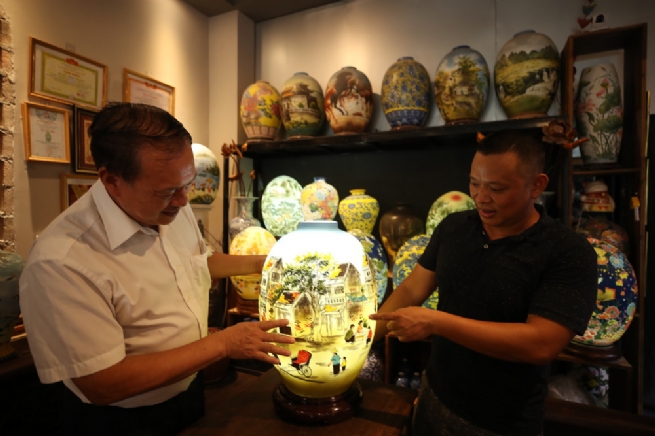
Bat Trang has long been regarded as the finest pottery and ceramics craft village of Hanoi
Hanoi is developing the craft village economy by strengthening support policies, along with building One Commune One Product (OCOP) product brands and expanding cultural tourism in craft villages. The capital now has about 1,350 craft villages and villages with traditional crafts, contributing an estimated revenue of more than VND24,000 billion each year, playing an important role in rural economic restructuring and job creation.
Policy reform
On November 26, the Hanoi People’s Council approved a resolution on support policies for preserving and developing craft villages and rural occupations in the city. The resolution takes effect on January 1, 2026 to implement Capital Law 2025 on supporting the preservation and development of craft villages and rural occupations. This is considered the most comprehensive and robust policy framework to date for the craft village sector.
The resolution sets support policies for artisans in handicrafts who have been conferred the titles of People’s Artisan, Meritorious Artisan, and Hanoi Artisan.
The city provides a one-time support of VND40 million per person for People’s Artisans; VND30 million per person for Meritorious Artisans; and VND20 million per person for Hanoi Artisans. People’s Artisans who provide training receive VND500,000 per person per session; Meritorious Artisans and Hanoi Artisans receive VND300,000 per person per session.
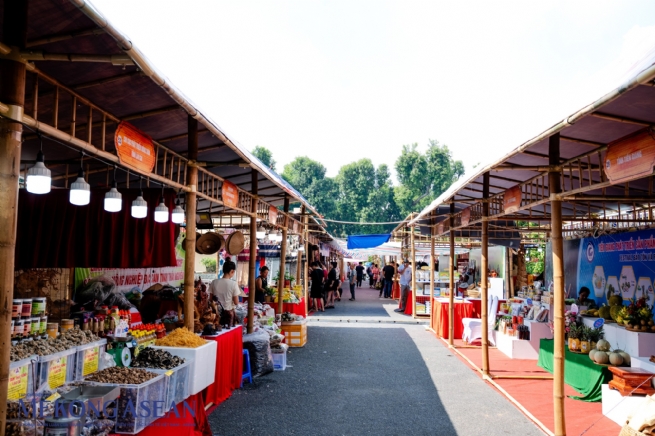
Products displayed at Hanoi’s craft village festival
The city covers 100% of travel expenses, accommodation allowances, meals, and lodging for organizations and individuals participating in field trips to connect with raw material regions; and supports 50% of costs for rural production facilities to purchase new machinery, equipment, and production lines, capped at VND500 million per facility.
For the policy on relocating production facilities in residential areas or facilities in occupations not encouraged for development in rural craft villages, the Resolution provides support for dismantling and transporting machinery, equipment, and workshops at VND50,000 per square meter of workshop area, with a maximum of VND500 million per facility.
In addition, relocated facilities are exempted from land and water surface rent for 10 years and receive a 50% reduction for the remaining period; they are subject to a 5% corporate income tax rate, including four years of tax exemption and a 50% reduction for the following nine years.
It is worth noting that digital transformation is another important pillar in Hanoi’s craft village development strategy. Experts emphasize that digital infrastructure must become a priority. Traceability systems, e-commerce platforms, product showcase platforms, and digital skills training programs for young workers are proposed as key solutions to help craft villages access larger markets and meet international standards. When digital technology is integrated with culture and tourism, craft village products will gain new vitality, reaching cross-border customers instead of being sold only within local communities.
Developing human resources for craft villages
At the 28th session of the Hanoi People’s Council, Vu Manh Hai, Chairman of the Association of Artisans and Skilled Workers of the city, emphasized the special role of craft villages in the socio-economic structure of the capital. To improve effectiveness, craft villages must be regarded as unified economic, cultural, and tourism spaces. A craft village is no longer only a production site but a creative environment that reflects the spirit of the land, the artisans’ craftsmanship, and the stories of history.
Craft villages are facing many new opportunities, but experts said that the biggest challenge is not technology or infrastructure, but human resources. Artisan Nguyen Van Tinh from Phu Nghia craft village noted that the gap between design and fine arts training and the practice of traditional crafts remains wide. Young people have modern knowledge but lack experiential environments, while traditional craftsmen are aging. Without mechanisms connecting artisans with universities and without cooperation models linking scientists, young artists, and skilled workers, traditional crafts risk fading even in their own environments.
Artisan Ha Thi Vinh, Director of Quang Vinh Ceramic Co., Ltd., proposed developing dedicated innovation centers for craft villages, where craftsmen can work with modern equipment and young people can explore attractive career opportunities with incomes ranging from VND20 million to VND30 million per month. Regarding product display infrastructure, Nguyen Duy Truong, Chairman of the Phung Xa Weaving Craft Village Association, proposed establishing a shared center to present the stories of multiple craft villages. This not only saves public investment costs but also helps build a “living museum” of the capital’s traditional crafts, creating a cultural and tourism landmark similar to models in other countries.
When visitors can understand the journey behind Bat Trang ceramics, Van Phuc silk, Phu Vinh bamboo and rattan, or Thuong Tin embroidery, the value of handicraft products lies not only in their appearance but also in the cultural heritage they represent.
Hanoi is shifting from the traditional craft village management model to building an integrated creative ecosystem that combines culture, technology, infrastructure, human resources, and markets. The city’s goal is not only to preserve traditional crafts but also to integrate them into the cultural industry value chain, strengthening Thang Long’s identity in the context of international integration while driving rural economic development in a green, sustainable, and modern direction.
By Minh Ngoc, Vietnam Business Forum
|
This special section is supported by Hanoi Department of Agriculture and Environment |


 Vietnamese
